
Log #07 - Hull, Roof & Saloon: Racing Against Winter
Summer 2025 - Late Summer
With strip-out complete and systems assessed, focus shifted decisively to the exterior hull, saloon walls, and roof. Reality — and the weather — dictated the order: nothing internal could be addressed until the structure above and around it was secure.
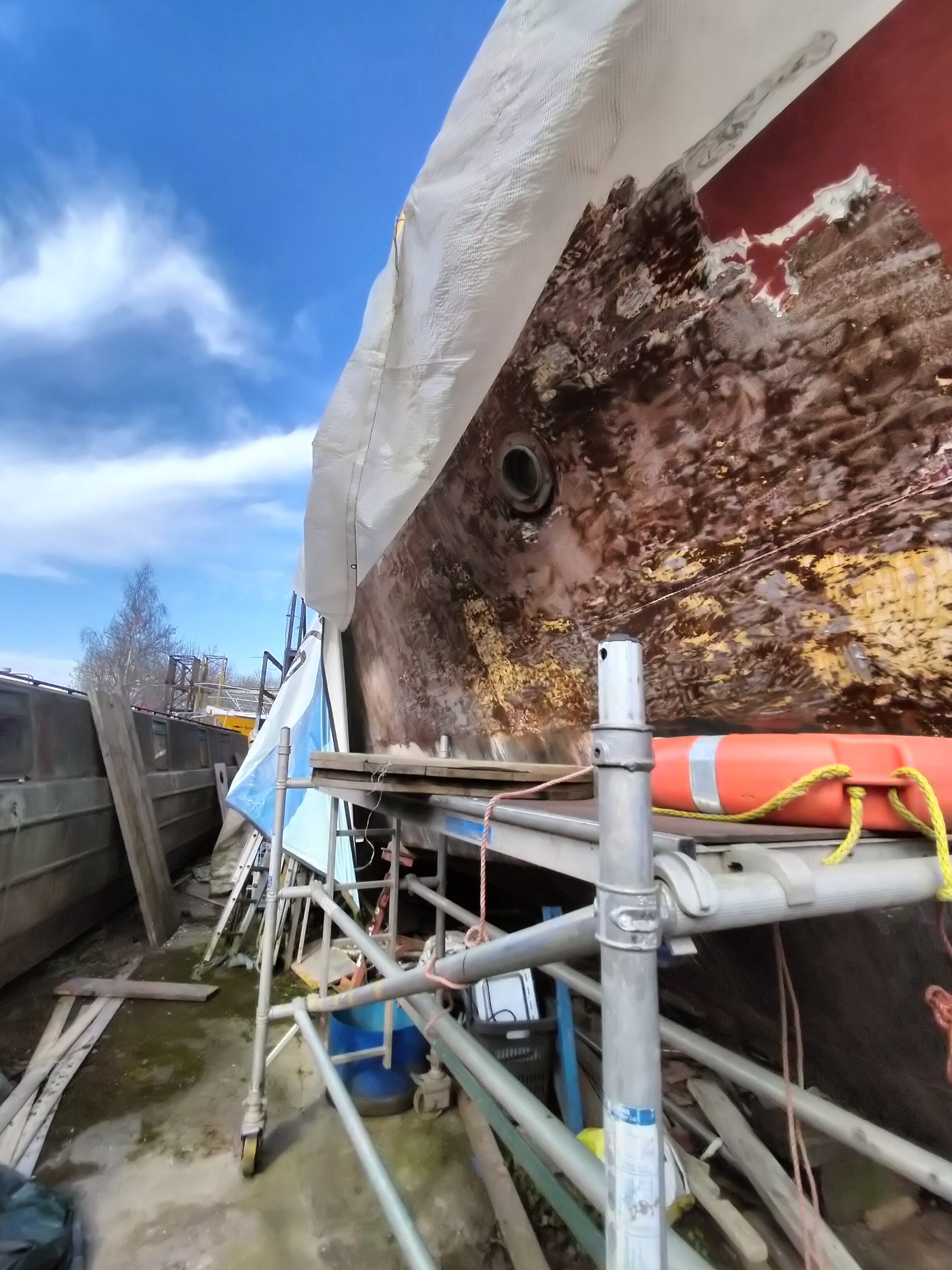
The exterior hull sides were systematically treated whilst the weather held good: flood pump-outs, grinding, rust treatment, and red oxide priming stabilized steel against further corrosion. Every square metre treated felt like progress made; a small victory in the ongoing race against winter.
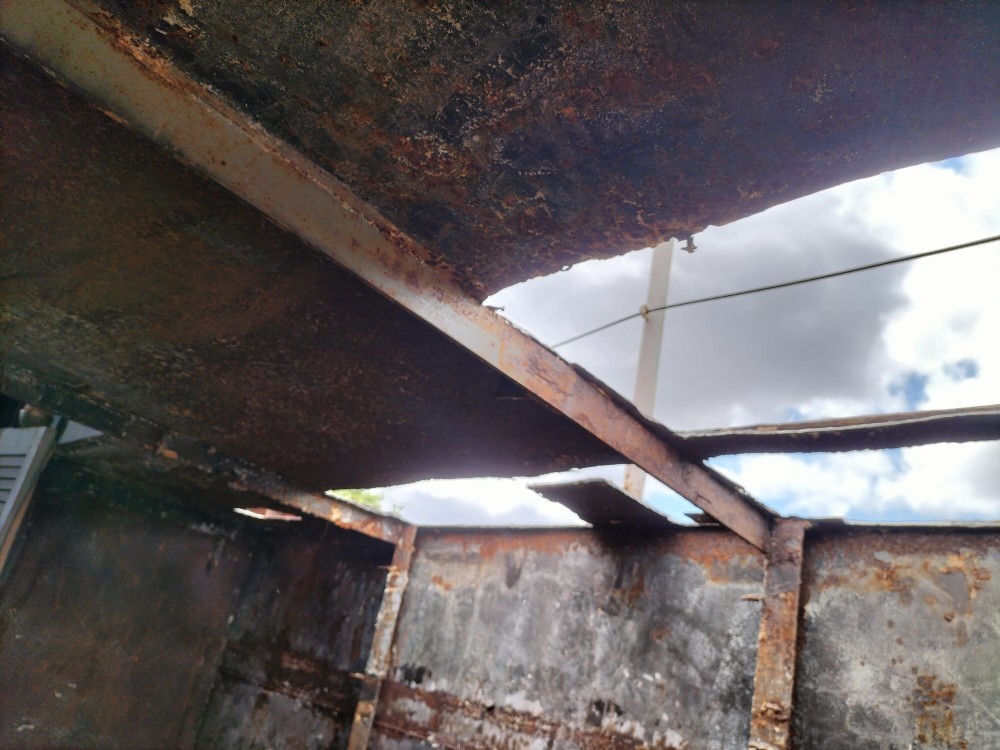
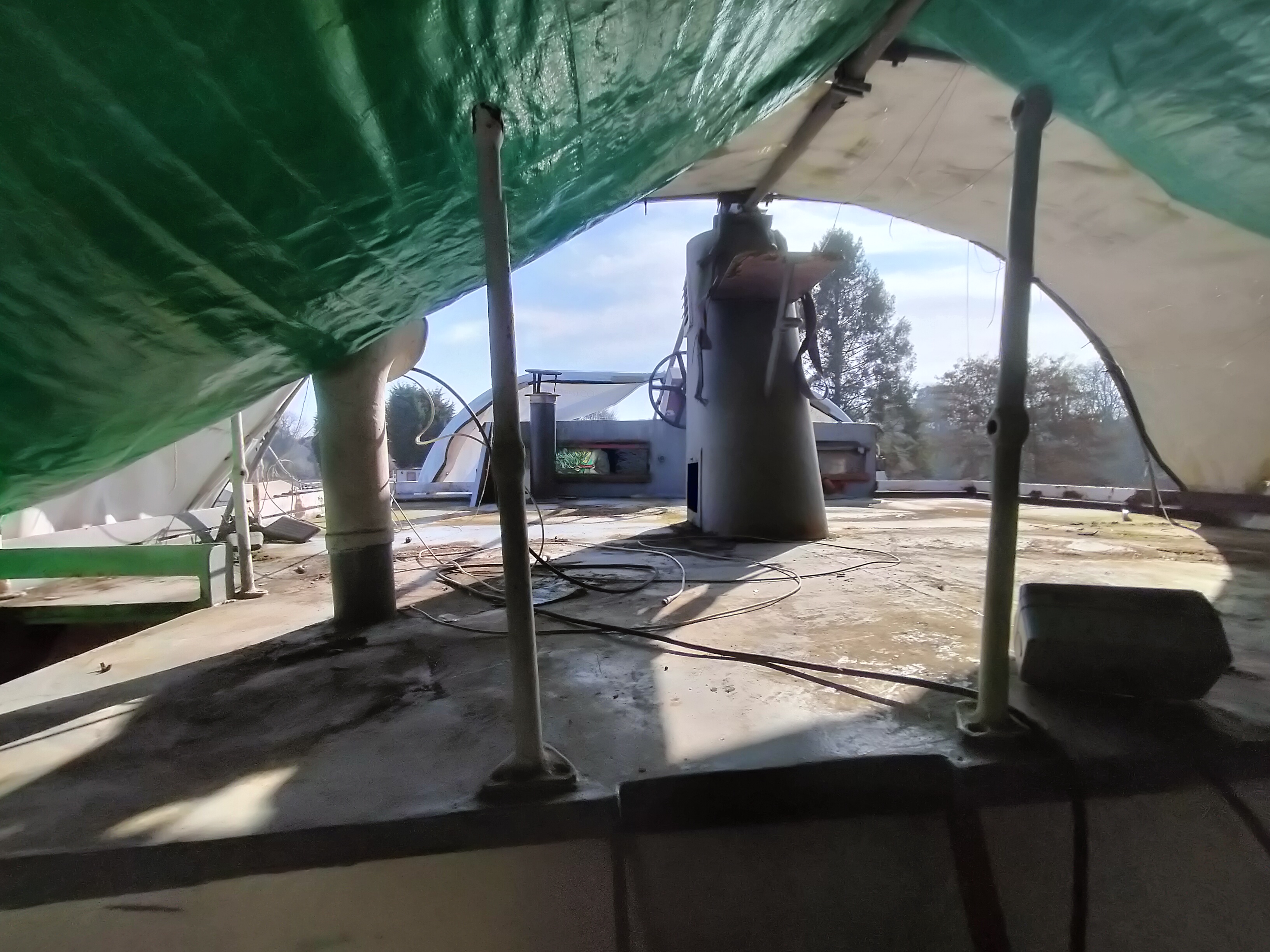
The after deck leaks demanded attention. Temporary emergency deck plating was installed to keep the after cabin areas beneath accessible. Simultaneously, the funnel and the entire internal exhaust piping along with the wood-burning outlet pipes that ran through both the engine room and saloon roofs were completely removed to allow structural bracing and repairs to proceed, but it wasn’t just the roof that mattered.
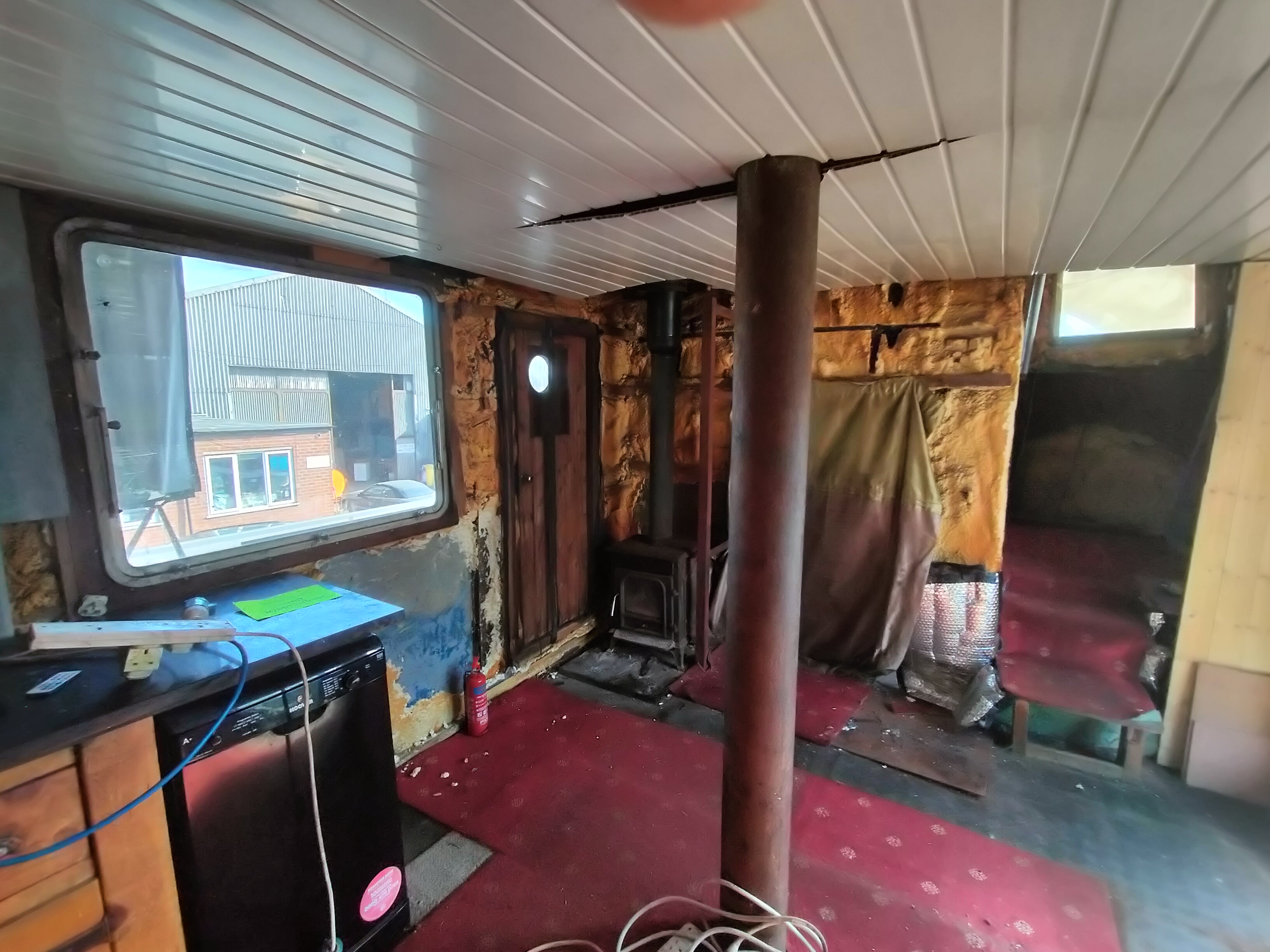
During this period productivity ramped up significantly. The entire port-side saloon bulkhead and half the starboard side bulkhead underwent substantial redesign. A previous owner in the distant past removed the Starboard window and left it on board. That was a win for the team and we quickly cut a hole in the steel to reinstate it in a more appropriate position.
The surrounding bulkhead was welded. It was made good and the Port side window was also removed. Likewise, it was also reinstated appropriately and whilst Acrows supported the saloon deckhead and bulkheads, the opportunity was taken to completely cut away the steel door leading onto the Port deck before reconfiguring the bulkhead to accept a substantial sliding door after which both bulkheads were welded and secured.
Existing windows were reconfigured. New double sliding saloon doors were installed. The work required cutting out and rebuilding large sections of bulkhead wall while simultaneously strengthening and securing the saloon roof — and it was all done under the constraints of unpredictable weather.
Practical realities dominated every decision at this time and living in Manchester whilst working in Stourport-on-Severn substantially limited the available work hours. Nevertheless, winter loomed so work had to be adaptable, weather-dependent, and carefully sequenced. Nothing, from missing internal framework to interior finishes, could proceed until the roof and external walls were solid. They took priority.
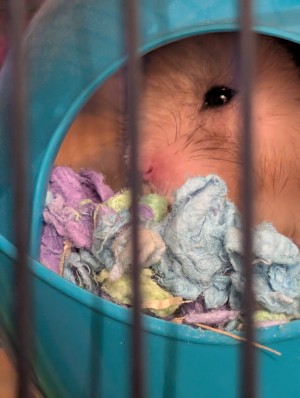
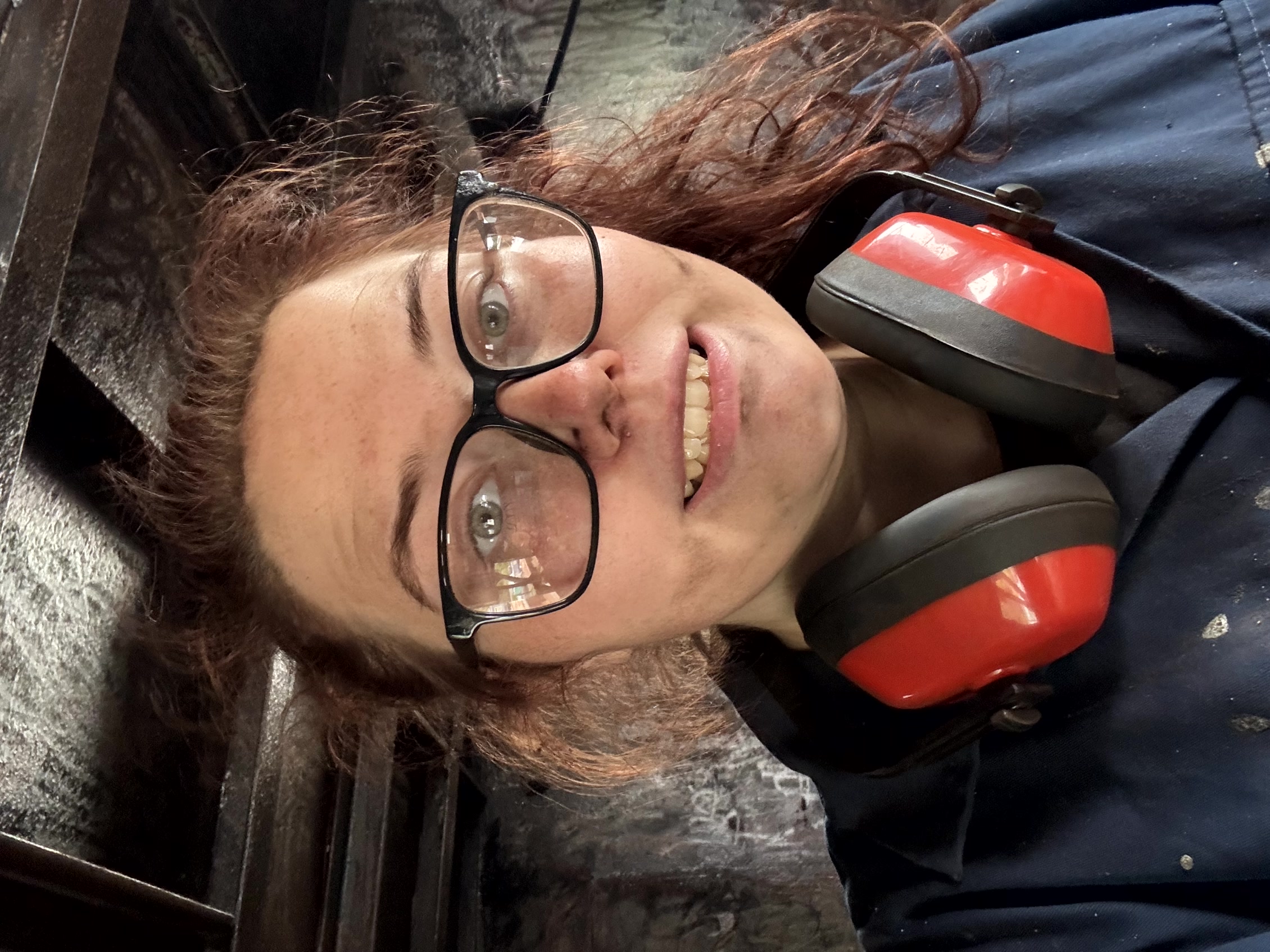
A word to anyone attempting similar work: bring plenty of sandwiches because opportunities to visit restaurants are fleeting when days revolve around welding, grinding, and keeping water out of the boat. It is essential to have reliable and willing assistants. I was lucky. I had Esmeralda, my Granddaughter, Gemima my daughter plus a hamster called Pedro to carry the load and take up the slack. They proved more than capable and could probably move mountains were they so inclined.
By the end of this phase, the hull sides were protected, the saloon walls rebuilt, and the roof braced sufficiently to carry loads and shed water. The boat was no longer open to the weather in the way it had been earlier in the summer.
That mattered more than progress elsewhere. Until the exterior envelope was stabilised, nothing inside could be trusted to last. With the bulkheads secured, windows reinstated, and temporary deck plating in place, the worst vulnerabilities had been addressed.
The vessel was still incomplete, and far from comfortable — but it was contained. Rain could be kept out, structure could be relied upon, and the boat could finally be left alone without actively deteriorating.
What followed would be slower, dirtier, and largely invisible. The work was about to turn inward — not because it was time, but because winter would soon make the decision unavoidable.
Between Seasons: Closing the Boat
By late summer, the project reached a natural pause point — not because the work was complete, but because its character had changed.
The hull had been stabilised. The saloon walls rebuilt. The roof braced sufficiently to survive the coming months. Rain could be kept out, loads could be carried, and the boat could finally be left alone without actively deteriorating.
That milestone did not mark readiness. It marked containment.
From this point onward, progress would be governed less by ambition and more by daylight, temperature, and endurance. The remaining work would be internal, slower, dirtier, and largely invisible — but structurally essential.
What follows documents the turn inward: insulation, steelwork, framework, and the arithmetic of deciding what must be completed before winter closed the door entirely.
Relevant References
- Sequencing Structural Steelwork in Older Steel Boats
- Weather-Driven Work Sequencing in UK Boatyards
- The Point of No Return in Long Boat Projects
About the Author

Jack Allen is a former Royal Navy seamanship rating, boat skipper, boat builder, and project manager. He is the creator and administrator of HamstersAHOY.com and currently coordinates the HamstersAHOY! Project, converting a derelict 48ft steel trawler into a modern 60ft liveaboard cruiser at Stourport-on-Severn.
Jack holds SMSTS and RYA Day Skipper certifications and is formally trained in the Natural Sciences through the Open University, Manchester University, and Sussex University.
👉 Follow Jack’s latest adventures and his articles at the HamstersAHOY! Project.
Comments