
Introduction
In any extensive steel boat refit, enthusiasm and ambition cannot override the physical realities of labour. Logs #08 and #09 illustrate a critical phase: the initial discovery and corrective work is complete, and further progress depends entirely on consistent, deliberate human effort. Labour and momentum are not interchangeable. Understanding the arithmetic of effort — the balance between sustainable work, fatigue, and cumulative progress — is central to project planning and success.
The Nature of Repetitive Work
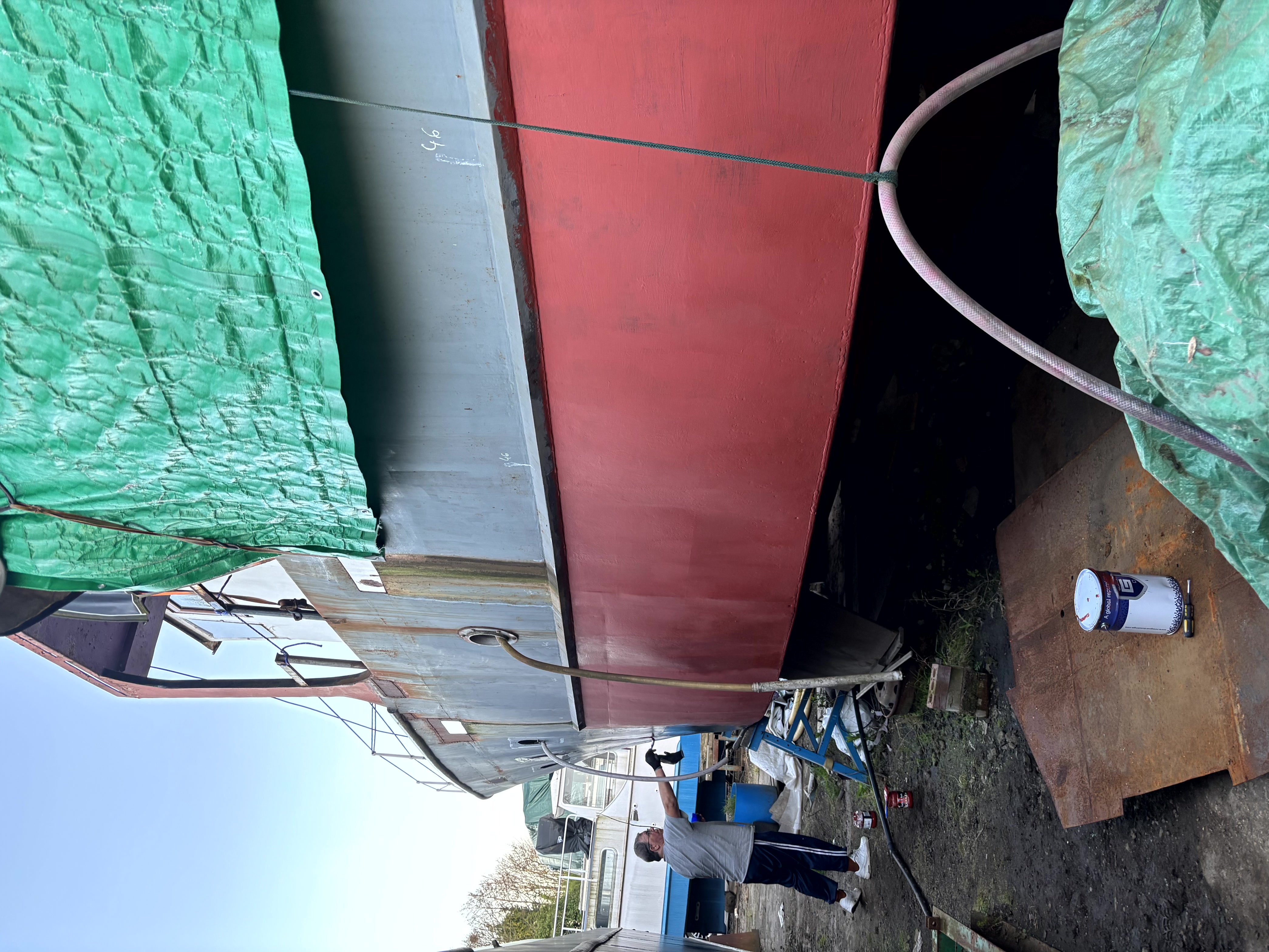
Stripping insulation, cleaning steel, grinding corrosion, applying treatments, and welding framework are deceptively simple yet physically demanding tasks. Logs #08 and #09 detail hours spent on the same bulkhead or deck section, where each pass contributes to structural stability but provides little immediate gratification. Repetition is not monotony; it is the engine of cumulative progress.
Neglecting even a single step — an improperly welded frame, a missed corrosion patch, or incomplete insulation removal — can ripple forward, forcing rework and slowing momentum. Labour is both metric and discipline: it measures daily achievable work and establishes standards for long-term stability.
Momentum vs. Sustainability
Logs #08 and #09 emphasize that bursts of high-intensity work often backfire. Pushing beyond human limits increases mistakes, fatigue, and rework. Sustainable momentum requires steady, realistic output — consistent effort over time rather than short bursts of speed. Effective pace accounts for environmental conditions, physical endurance, and task complexity.
For instance, framework installation requires precise preparation, fitting, and welding. Attempting to “save time” by rushing these steps usually results in corrections that consume more effort than careful initial work.
Quantifying Workload
The arithmetic of effort is fundamentally about measurement. Logs #08 and #09 show how breaking work into repeatable units — preparing one bulkhead, grinding a single frame, welding a deck section — allowed realistic prediction of daily and weekly output. This quantification enables better scheduling, resource allocation, and avoidance of frustration from over-ambitious targets.
Prioritization also benefits from this approach. Labour-intensive or weather-dependent tasks are sequenced to maximize daylight and favourable conditions, while smaller preparatory tasks occupy constrained periods. Concrete measurement transforms abstract plans into executable steps.
The Physical and Mental Reality of Labour
Refit work is physically relentless: back strain, sore hands, fatigue from awkward welding positions. Logs #08 and #09 reinforce that recognizing these realities allows better planning for rest, recovery, and consistent progress. Equally important is the mental arithmetic: accepting slow visible progress while maintaining confidence in long-term results. Discipline and patience are essential to cumulative gains.
Sequencing and Workflow
Effective momentum depends on sequence. Log #08 shows that some framework installations cannot proceed until bulkhead alignment or steel repairs are complete. Attempting to accelerate these steps independently leads to repeated adjustments and rework. Breaking tasks into manageable daily segments — alternating heavy steelwork with lighter preparatory work — preserves energy, reduces errors, and ensures cumulative progress.
Team endurance also matters. Even in solo projects, energy fluctuates daily and weekly. Scheduling work to match these cycles, as illustrated in the logs, sustains reliable momentum over the long term.
Balancing Quality and Speed
Shortcuts compromise safety and long-term usability. Logs #08 and #09 show that taking time to clean steel thoroughly, weld accurately, and align framework prevents downstream problems. Labour is therefore measured not only in hours but in quality of execution. Sustainable momentum respects standards, ensuring visible progress is reliable and cumulative.
Adapting to Challenges
Unexpected events — hidden corrosion, misaligned steel, missing materials — require recalculation of effort. Logs #08 and #09 demonstrate that effective project rhythm combines flexibility with disciplined execution. By adjusting priorities and redistributing effort without sacrificing quality, the team maintained momentum despite variability.
Lessons Learned
- Break work into discrete, achievable units; measure effort realistically.
- Alternate high-intensity and lighter tasks to balance fatigue and maintain momentum.
- Sequence tasks according to structural dependencies to maximize value of each hour.
- Recognize cumulative effects of repetitive work; each correctly executed pass counts.
- Prioritize quality to prevent rework and preserve long-term structural integrity.
- Factor in human endurance, environmental constraints, and material behaviour for sustainable workflow.
Conclusion
Labour and momentum are inseparable in liveaboard steel refits. Logs #08 and #09 show that sustainable, measured effort produces steady, reliable progress, while bursts of enthusiasm often undermine long-term goals. Understanding the arithmetic of effort — balancing physical limits, task sequencing, quality standards, and cumulative repetition — turns persistent labour into dependable momentum.
For anyone undertaking a steel boat refit, the lesson is clear: work consistently, respect human limits, sequence tasks intelligently, and maintain quality. Momentum is valuable, but only when it is backed by disciplined, sustainable effort. By adhering to these principles, fitters ensure that cumulative labour carries the project forward safely, predictably, and efficiently.
Related Insights: From Survey to Action, Managing Work Under Weather Constraints, Sequencing Steel Repairs.
About the Author

Jack Allen is a former Royal Navy seamanship rating, boat skipper, boat builder, and project manager. He is the creator and administrator of HamstersAHOY.com and currently coordinates the HamstersAHOY! Project, converting a derelict 48ft steel trawler into a modern 60ft liveaboard cruiser at Stourport-on-Severn.
Jack holds SMSTS and RYA Day Skipper certifications and is formally trained in the Natural Sciences through the Open University, Manchester University, and Sussex University.
👉 Follow Jack’s latest adventures and his articles at the HamstersAHOY! Project.

Comments