
Sponsored by:
Marine and boat building tools form the backbone of one of the world’s oldest and most technically demanding crafts. From traditional wooden boat construction to modern composite and aluminium fabrication, the tools and equipment used in boat building directly influence safety, durability, performance and finish. Whether applied in a professional shipyard, a specialist marine workshop or a private boat building project, the correct selection of tools is essential to achieving reliable, seaworthy results.
This introductory guide explores the role, scope and importance of marine and boat building tools, outlining the core equipment categories used across the industry and explaining how modern technologies have transformed boat construction. Designed for professionals, enthusiasts and decision-makers alike, this overview provides a clear foundation for understanding today’s boat building equipment landscape.
The Importance of Specialised Tools in Boat Building
Boat construction differs significantly from general fabrication or carpentry. Marine environments expose vessels to saltwater corrosion, vibration, temperature changes and constant mechanical stress. As a result, professional boat building tools must meet higher standards of precision, strength and durability than conventional workshop equipment.
Marine-grade tools are engineered to handle specialist materials such as marine plywood, hardwoods, aluminium alloys, stainless steel, fibreglass and advanced composites. The accuracy of cutting, shaping, bonding and fastening processes determines hull integrity, hydrodynamics and long-term maintenance costs. For this reason, experienced builders place as much emphasis on their tools as they do on materials and design.
Core Categories of Marine and Boat Building Tools
While boat construction methods vary by vessel type and material, most projects rely on a consistent set of tool categories. The following overview highlights the main groups of marine fabrication tools used throughout the industry.
1. Measuring, Marking and Layout Tools
Precision begins long before cutting or assembly. Accurate measurement ensures structural symmetry, correct alignment and compliance with design specifications.
- Marine-grade tape measures and steel rules
- Squares, bevel gauges and straight edges
- Laser levels and alignment tools
- Marking gauges and waterproof markers
These tools are critical for hull layout, bulkhead positioning and deck construction, where small errors can have significant consequences once the vessel is launched.
2. Cutting and Shaping Equipment
Cutting tools form the core of tools for boat construction, enabling the shaping of timber, metal and composite materials with accuracy and consistency.
- Marine-rated circular saws and jigsaws
- Band saws for timber and composite panels
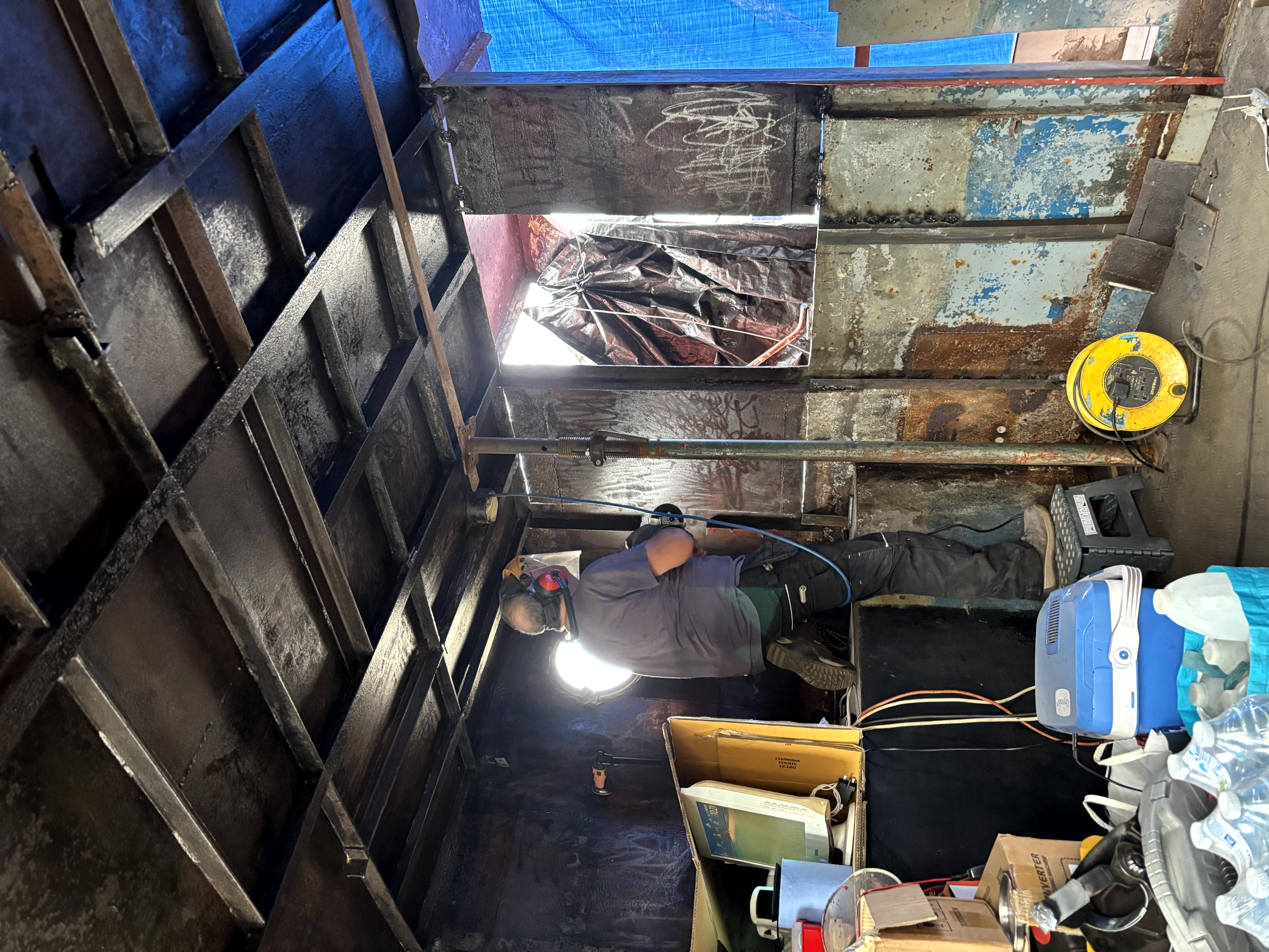
- Angle grinders and cut-off tools for metal
- Hand planes, chisels and rasps
In modern workshops, dust extraction and blade quality are particularly important, ensuring clean cuts and protecting both operators and materials.
3. Drilling, Fastening and Assembly Tools
Secure assembly is essential for structural strength and watertight integrity. Marine fasteners must be installed accurately to avoid weakening materials or introducing corrosion points.
- Heavy-duty drills and drill presses
- Marine-specific drill bits and countersinks
- Screwdrivers, impact drivers and torque tools
- Riveting and bolting equipment
Correct fastening techniques are particularly important in aluminium and composite boat construction, where material behaviour differs from traditional timber builds.
4. Surface Preparation and Finishing Tools
Surface quality affects both aesthetics and performance. Hull smoothness influences hydrodynamics, while proper surface preparation ensures coatings bond effectively.
- Sanders (orbital, belt and long-board)
- Abrasives designed for marine materials
- Scrapers and fairing tools
- Polishing and buffing equipment
These marine workshop equipment categories play a vital role in achieving professional finishes on hulls, decks and interiors.
5. Bonding, Sealing and Composite Tools
Modern boats increasingly rely on adhesives, sealants and composite materials rather than mechanical fasteners alone.
- Resin mixing and dispensing systems
- Vacuum bagging equipment
- Caulking guns and sealant applicators
- Fibreglass rollers and laminating tools
Precision in bonding processes ensures strength, flexibility and resistance to water ingress, especially in high-stress areas.
Traditional Craftsmanship Meets Modern Technology
Boat building has always balanced craftsmanship with innovation. While traditional hand tools remain indispensable for fine detail and bespoke work, digital and automated technologies now enhance accuracy and efficiency.
CNC cutting systems, digital measuring tools and advanced power equipment have transformed the way boat building equipment is used in professional environments. These technologies reduce waste, improve repeatability and allow builders to meet increasingly demanding design standards.
Despite these advances, skilled hands and experience remain irreplaceable. The best results come from combining modern tools with proven marine construction techniques.
Safety and Compliance in Marine Tool Selection
Safety is a critical consideration in any marine workshop. Boat building involves heavy materials, sharp tools and potentially hazardous substances such as resins and solvents.
High-quality professional boat building tools are designed with safety features including anti-kickback mechanisms, insulated handles and dust control systems. Equally important are personal protective equipment and proper workshop layout.
Compliance with industry standards and manufacturer recommendations ensures tools perform as intended and remain reliable over extended service lives.
Choosing the Right Marine and Boat Building Tools
Selecting appropriate tools depends on vessel type, construction method and production scale. A small wooden boat project may rely heavily on hand tools, while a commercial yard building composite hulls requires advanced fabrication equipment.
When evaluating marine and boat building tools, builders should consider:
- Material compatibility
- Accuracy and repeatability
- Durability in marine environments
- Ease of maintenance and support
Investing in quality tools not only improves results but also reduces downtime and long-term costs.
Summary of Key Tool Categories
| Category | Primary Function |
|---|---|
| Measuring & Layout | Accuracy, alignment and design execution |
| Cutting & Shaping | Material preparation and structural forming |
| Drilling & Fastening | Secure assembly and structural integrity |
| Surface Finishing | Hydrodynamics, aesthetics and protection |
| Bonding & Composites | Strength, sealing and modern construction |
Conclusion: The Foundation of Quality Boat Building
The success of any boat building project depends on the tools behind it. From traditional craftsmanship to cutting-edge fabrication, marine and boat building tools enable builders to transform designs into seaworthy vessels capable of withstanding demanding marine conditions.
Understanding the role of each tool category allows builders, engineers and enthusiasts to make informed decisions, ensuring efficiency, safety and long-term performance. As materials and construction methods continue to evolve, so too will the tools that support this remarkable industry.
By investing in the right boat building equipment and maintaining a well-equipped marine workshop, builders lay the groundwork for vessels that combine strength, precision and enduring quality.
Comments