
Log #05 - Interior Steelwork & Deck Preparation
Summer 2025 - Early Summer
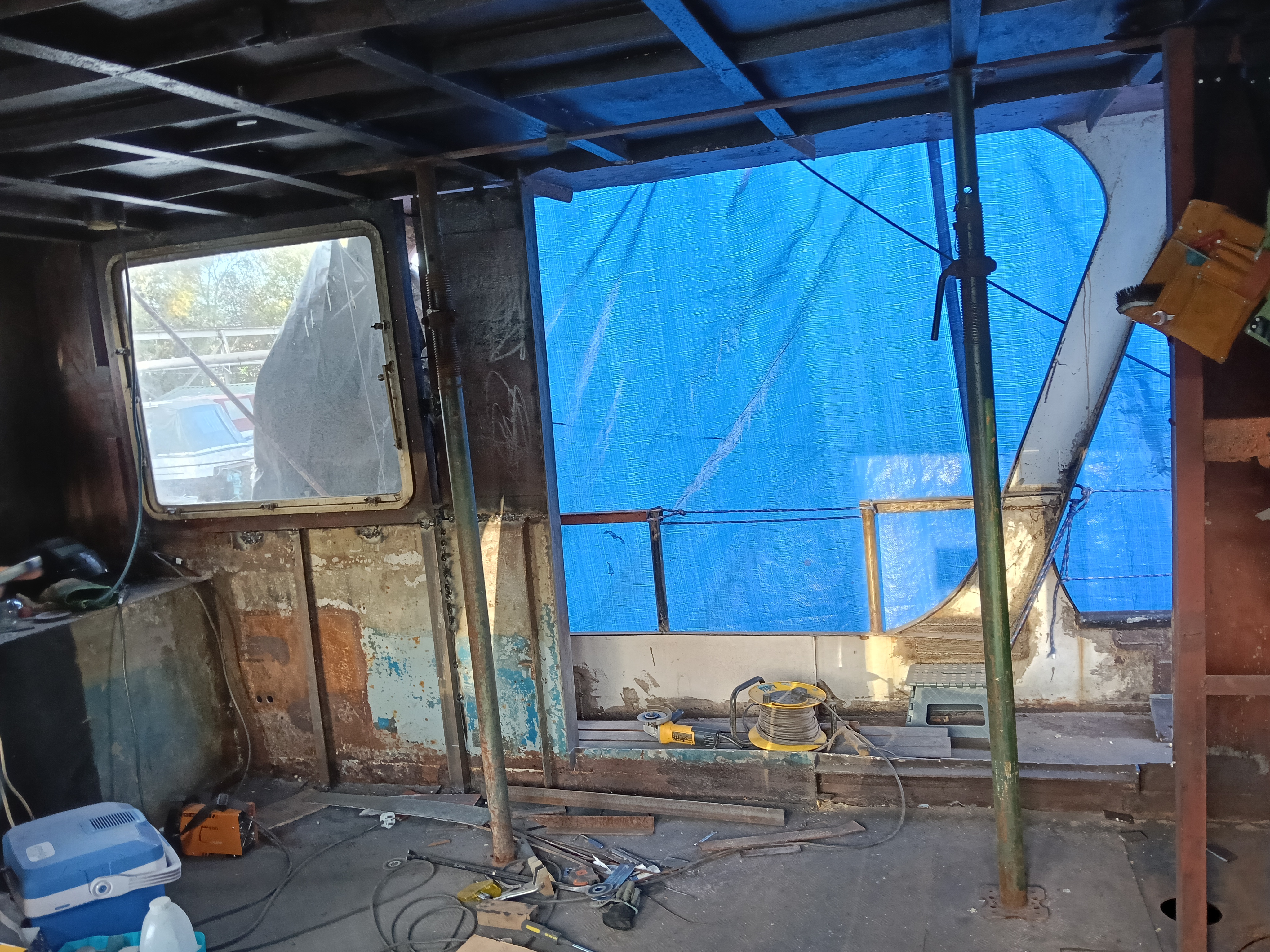
With systems assessed, attention turned to the internal steelwork and foredeck preparation. The stripped-out spaces revealed missing or weakened frames that needed urgent attention. Each section of internal hull steel was cleaned, treated, and welded where necessary.

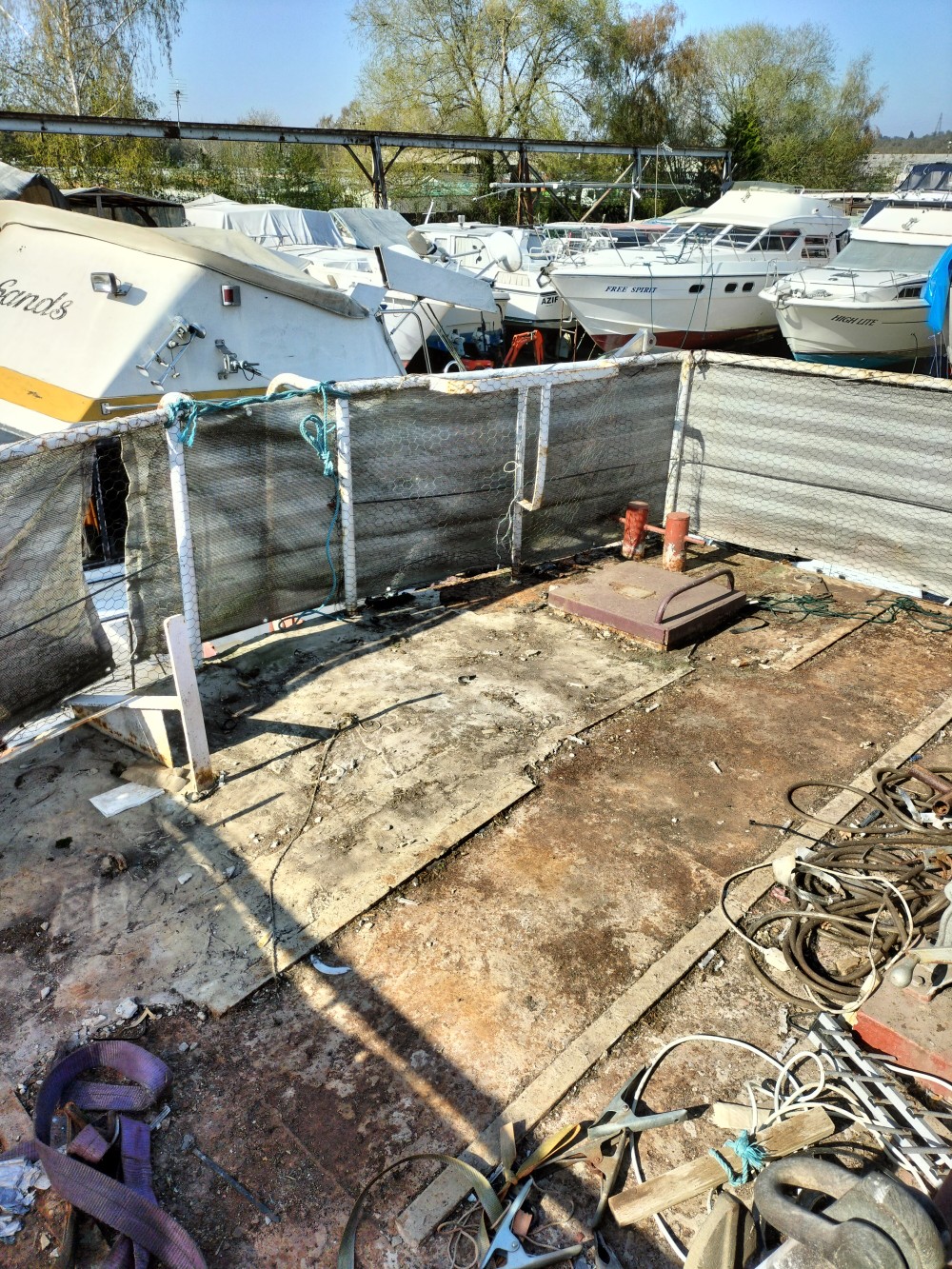
The foredeck showed evidence of past improvisation: deck supports partially rotted, fittings misaligned. Before any insulation or interior finishes could be installed, structural integrity had to be restored.
This was not a matter of ambition or preference; it was necessity. Before anything else could progress, the boat’s physical integrity had to be understood — and addressed.
Progress was methodical and repetitive. Each weld, each cleaned surface, each fitted frame represented not just a small advance, but the foundation for everything to come. By the end of the phase, the interior steelwork was structurally complete, and the deck preparations ensured that future work could proceed without unexpected collapses or leaks.
Exposed frames
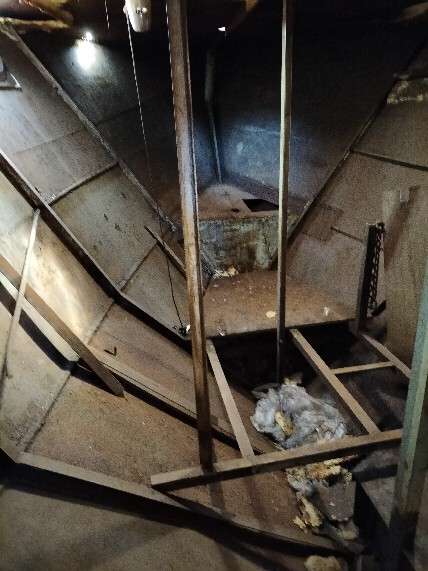
The missing internal frames noted during strip-out and assessment could no longer be ignored. Some had been removed to make space, others sacrificed to earlier modifications, and a few appeared to have simply corroded away over time. Whatever the reason, the result was the same: the interior structure was compromised, and any future build-out would depend on correcting that first.
This marked a shift in mindset. Until now, much of the work had been investigative. This phase was corrective.
Steelwork is honest in a way few materials are. Corrosion is visible. Thickness can be measured. Strength can be restored. That honesty was reassuring, but it also removed any lingering ambiguity. There were no shortcuts available here — only cutting, grinding, welding, and doing things properly.
Deck corrosion laid bare
The fore and aft decks, already identified as weak, became the focus of early effort. Once the artificial grass and saturated layers beneath had been removed, the extent of decay was clear. This wasn’t catastrophic failure, but it was advanced enough to demand full attention. Sections would need to be cut back to sound metal and rebuilt. It was unglamorous work, but essential.
This was also the point at which consequences became tangible. Every structural repair implied knock-on effects: layout constraints, system routing, insulation plans, weight distribution. Decisions made here would shape everything that followed.
Progress during this period was slow by any external measure, but internally it felt decisive. Each repaired frame, each section of replaced steel, reduced uncertainty. The boat was no longer merely being assessed or stabilised — it was being reclaimed.
By the end of June, the scope of the work was no longer theoretical. It was quantified, visible, and unavoidable. The project had crossed a quiet threshold: from discovery to commitment.
Relevant References
About the Author

Jack Allen is a former Royal Navy seamanship rating, boat skipper, boat builder, and project manager. He is the creator and administrator of HamstersAHOY.com and currently coordinates the HamstersAHOY! Project, converting a derelict 48ft steel trawler into a modern 60ft liveaboard cruiser at Stourport-on-Severn.
Jack holds SMSTS and RYA Day Skipper certifications and is formally trained in the Natural Sciences through the Open University, Manchester University, and Sussex University.
👉 Follow Jack’s latest adventures and his articles at the HamstersAHOY! Project.
Comments