
Older working boats rarely fail because of a single catastrophic defect. They fail because of accumulation — small compromises layered over time, hidden beneath paint, insulation, or convenience.
This accumulation is best understood as structural debt.
Structural debt is not always visible, and it is not always dramatic. It is the deferred consequence of past decisions: removed framework, improvised repairs, unaddressed corrosion, and systems installed without regard for load paths or access. Like financial debt, it can be serviced slowly — or ignored until it demands payment all at once.
1. How structural debt is created
Working boats are modified to remain useful. Cabins are altered, equipment is added, access is improved, and layouts are adjusted to suit changing needs. Rarely is this done maliciously or carelessly. It is done to keep the boat working.
Problems arise when:
- Structural members are removed for space or convenience
- Temporary fixes become permanent by default
- Corrosion is painted over rather than arrested
- Systems are added without reinforcing the structure that now carries them
Each change may be defensible in isolation. Over decades, the cumulative effect becomes significant.
2. Why surveys often miss it
Even competent surveys have limits.
Structural debt is frequently concealed by:
- Insulation and lining
- Stored possessions
- Previous owner modifications
- Areas that are inaccessible without dismantling
Surveys assess what can reasonably be seen and tested at the time. They do not excavate history. As a result, structural debt often only becomes visible during strip-out and hands-on inspection — when work has already begun.
This is not a failure of surveying. It is the nature of older boats.
3. The signs to look for during strip-out
Structural debt reveals itself in patterns rather than single faults.
Common indicators include:
- Missing or truncated frames
- Asymmetric reinforcement
- Non-original welds of varying quality
- Bulkheads that no longer carry load
- Decks that rely on interior furniture for support
None of these necessarily indicate imminent failure. They do indicate unresolved obligation.
4. Why cosmetic work makes it worse
Cosmetic improvements applied over structural debt do not reduce it — they increase it.
Finishes conceal defects, complicate future access, and raise the cost of eventual correction. Insulation installed over untreated steel traps moisture. Joinery fixed to compromised structure transfers load where it was never intended to go.
Every layer added before structural correction increases the interest on the debt.
5. Repaying structural debt deliberately
Structural debt can be repaid, but not casually.
Repayment usually involves:
- Exposing steel fully, even when unpleasant
- Removing previous improvisations
- Restoring or replacing missing framework
- Accepting knock-on effects to layout and systems
- Prioritising load paths over convenience
This work is slow, disruptive, and rarely satisfying in the short term. It does, however, reduce uncertainty — which is the real value.
6. Choosing how much debt to repay
Not all structural debt must be eliminated for a boat to function safely. The key is conscious choice.
Some debt may be tolerated where:
- Loads are low and well understood
- Consequences of failure are manageable
- Access remains possible for future intervention
What matters is that the remaining debt is known, documented, and accepted — not discovered later under pressure.
7. Structural debt never disappears on its own
Left unattended, structural debt tends to migrate rather than resolve. Loads shift. Corrosion advances invisibly. Temporary supports quietly become primary ones.
Projects that survive older working boats do so by acknowledging this early — and making structural correction a prerequisite rather than a reward.
The goal is not perfection. It is honesty.
From the build
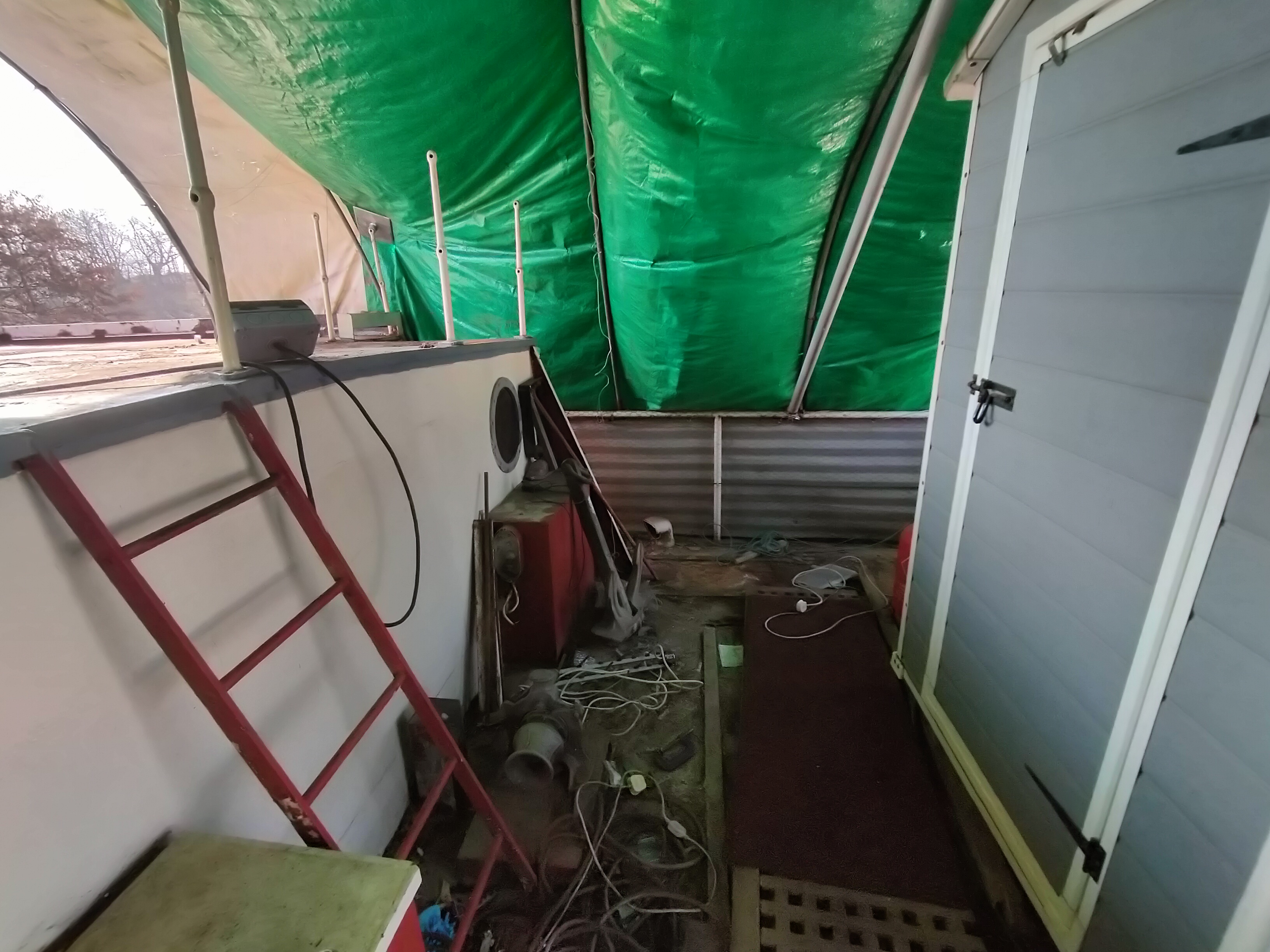
Structural debt became apparent during the strip-out and early steelwork phases of a steel trawler refit, where missing internal framework, improvised past modifications, and concealed corrosion only revealed themselves once interior linings were removed.
Relevant build logs:
- Log #03 — Strip-Out & Discovery
- Log #04 — Systems Assessment
- Log #05 — Interior Steelwork & Deck Preparation
- Log #08 — Insulation, Steel, and Shortening Days
About the Author

Jack Allen is a former Royal Navy seamanship rating, boat skipper, boat builder, and project manager. He is the creator and administrator of HamstersAHOY.com and currently coordinates the HamstersAHOY! Project, converting a derelict 48ft steel trawler into a modern 60ft liveaboard cruiser at Stourport-on-Severn.
Jack holds SMSTS and RYA Day Skipper certifications and is formally trained in the Natural Sciences through the Open University, Manchester University, and Sussex University.
👉 Follow Jack’s latest adventures and his articles at the HamstersAHOY! Project.
Comments