
Most liveaboard conversions do not fail dramatically. They fade.
They stall, become storage, absorb money without direction, or are sold on “as a project” with optimism transferred to the next owner. Technical difficulty is rarely the cause. Skill shortages can be learned around. What sinks most conversions is misalignment — between ambition, time, space, and reality.
1. Confusing seaworthiness with habitability
A boat can be seaworthy and still be an exhausting place to live.
Many conversions begin with a vessel chosen for romance or reputation rather than suitability. Hull form, rig, or pedigree take precedence over volume, access, and systems capacity. Only later does it become clear that:
- Storage is insufficient
- Maintenance access is compromised
- Living spaces are permanently cramped
- Systems upgrades displace the very space meant to be lived in
By the time this becomes obvious, commitment has already deepened.
2. Underestimating the cost of access
Liveaboard conversions demand access: to engines, tanks, wiring runs, seacocks, and structure. Boats not designed for habitation rarely provide this naturally.
Common failure points include:
- Systems installed where maintenance requires dismantling living spaces
- Tanks buried beneath fixed joinery
- Wiring routed without future access
- Structural elements hidden behind finishes
Every access compromise increases future labour — and resentment.
3. Treating layout as aspiration rather than consequence
Layouts that look convincing on paper often fail under real constraints.
Steel thickness, frame spacing, deck camber, window placement, and structural members dictate what is actually possible. Ignoring these realities leads to repeated redesign, abandoned ideas, and half-built spaces that never quite work.
Successful conversions let structure lead. Failed ones fight it.
4. Installing finishes before uncertainty is resolved
Nothing kills momentum faster than undoing “completed” work.
Insulation installed before steel truth is known. Joinery fitted before systems are finalised. Floors laid before drainage paths are proven. Each premature finish raises the emotional and financial cost of correction — which encourages avoidance rather than resolution.
Avoidance compounds problems.
5. Overestimating enthusiasm and underestimating duration
Most people plan for effort. Few plan for endurance.
Liveaboard conversions take longer than expected not because of inefficiency, but because life continues alongside them. Weather intervenes. Health intervenes. Work intervenes. Projects that rely on sustained enthusiasm rather than sustainable routine rarely survive intact.
6. Designing for novelty instead of serviceability
Instagram-friendly solutions age badly.
Complex systems, bespoke fittings, and tightly integrated designs look impressive early on but demand disproportionate maintenance later. Boats are not houses. Movement, moisture, vibration, and corrosion punish unnecessary complexity.
Conversions that survive do so by favouring:
- Simplicity over cleverness
- Access over elegance
- Redundancy over optimisation
7. How to avoid becoming another “unfinished project”
Successful liveaboard conversions share common traits:
- The boat is chosen for space and access, not image
- Structural issues are confronted early
- Systems are designed before finishes
- Weather and seasonality are treated as constraints, not annoyances
- Stopping is accepted as part of progress
Failure is rarely sudden. It is cumulative. Avoidance is its fuel.
From the build
These issues emerged repeatedly during the early stages of a steel trawler liveaboard conversion, influencing decisions around vessel choice, layout restraint, structural sequencing, and systems planning.
Relevant build logs:
About the Author
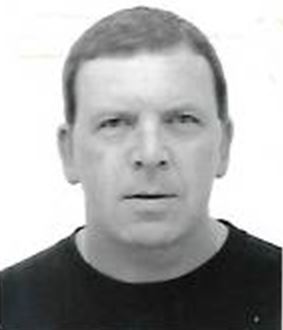
Jack Allen is a former Royal Navy seamanship rating, boat skipper, boat builder, and project manager. He is the creator and administrator of HamstersAHOY.com and currently coordinates the HamstersAHOY! Project, converting a derelict 48ft steel trawler into a modern 60ft liveaboard cruiser at Stourport-on-Severn.
Jack holds SMSTS and RYA Day Skipper certifications and is formally trained in the Natural Sciences through the Open University, Manchester University, and Sussex University.
👉 Follow Jack’s latest adventures and his articles at the HamstersAHOY! Project.

Comments