
Off the north coast of Scotland, the Orkney archipelago presents an exposed maritime environment of low-lying islands, broad voes, and heavily tidal channels. Within pilotage of these waters—where the Atlantic swell meets the North Sea through the Pentland Firth—local tradition preserves a body of folklore long associated with coastal life. Two of the most persistent elements in Orcadian narrative are the selkie bride tradition and accounts of the Nuckelavee. These are treated here as cultural material embedded in seafaring history rather than matters of belief, and are recorded chiefly for their relevance to local heritage and coastal understanding.
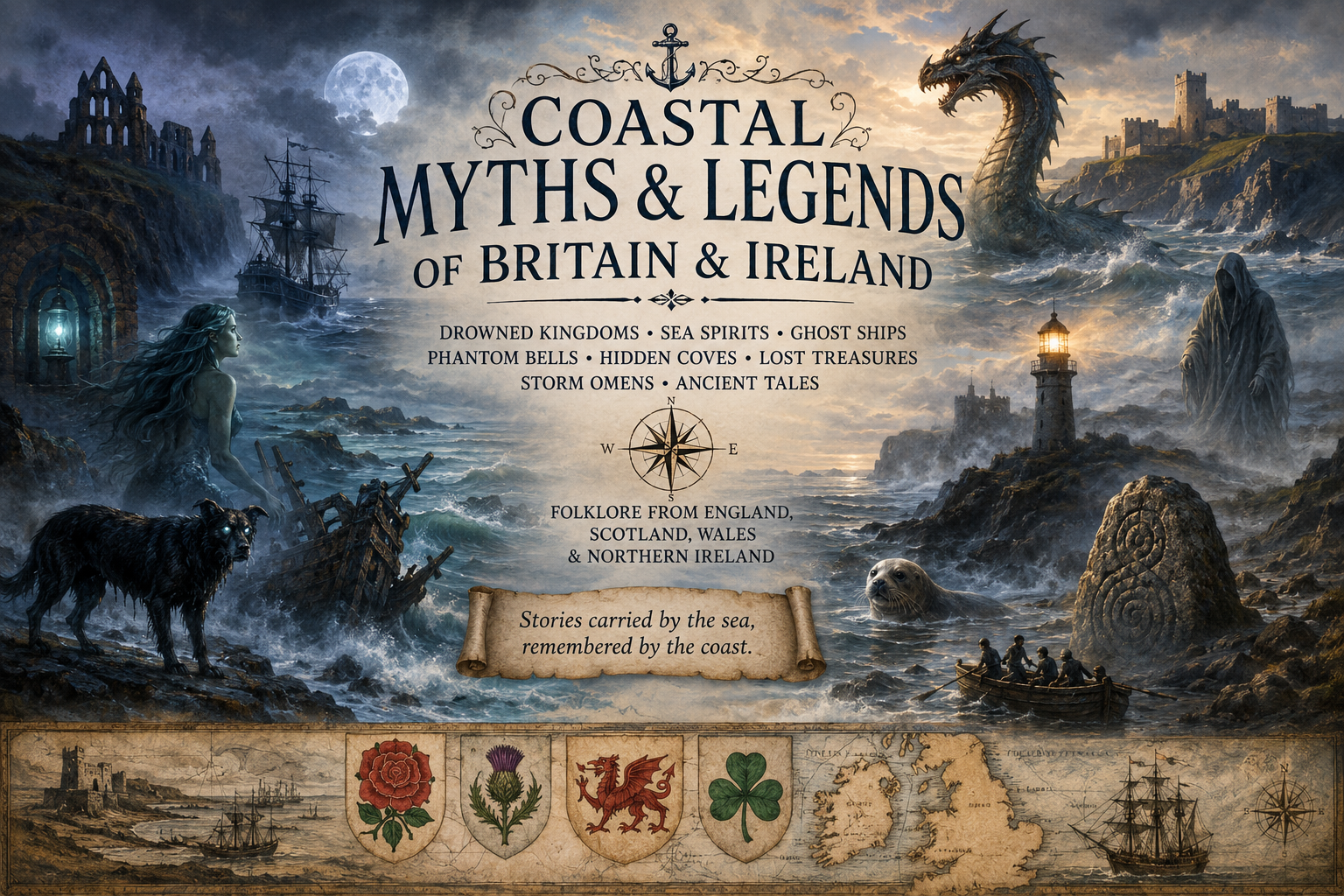
Selkie traditions are most closely tied to inhabited shorelines where seal populations are regularly observed on skerries, sandbanks, and shelving beaches. In Orcadian accounts, the selkie is described as a seal able to shed its skin on land, taking human form while ashore. Stories of selkie brides are often located near sheltered bays and inlets where fishing communities once depended heavily on seasonal catches and small-boat work. The narrative structure is typically domestic rather than maritime in intent, though it reflects a clear awareness of the proximity between human settlement and marine life. The motif has been interpreted by some scholars as an expression of coastal isolation and the precarious balance between land-based households and the sea’s resources. No navigational significance is implied, though such accounts are frequently recorded in oral histories gathered from island parishes including Westray, Sanday, and the Mainland.
The Nuckelavee, by contrast, belongs to a more singular strand of Orcadian folklore, historically associated with Orkney’s Norse-influenced cultural layer and documented in nineteenth-century collections of local testimony. It is generally described in sources as a composite horse-like figure linked with coastal hinterlands and marshy ground, though descriptions vary and are inconsistent between informants. The creature is traditionally said to avoid fresh water and is associated in folklore with periods of hardship affecting livestock or crops. In maritime terms, its relevance is indirect; it is not a sea spirit in the strict sense, but belongs to a wider category of land-sea boundary beliefs found in North Atlantic communities where fishing and crofting economies overlapped. Its association with Orkney is strong, though precise origins remain uncertain and may reflect conflation of earlier Norse and later Scots oral traditions.
From a seaman’s perspective, these traditions sit alongside practical considerations that have always defined navigation in the islands. The Pentland Firth, with its strong tidal streams and overfalls, remains one of the more demanding passages in British waters, while Scapa Flow provides extensive but weather-sensitive anchorage. In such conditions, storytelling has historically served as a social framework for interpreting the environment, particularly in pre-modern communities where observation of wind, tide, and wildlife formed the basis of coastal knowledge. Occasional reports of seals behaving unusually or appearing close inshore may have reinforced selkie narratives, while unexplained agricultural or livestock losses inland were sometimes framed within broader folkloric explanations such as the Nuckelavee tradition. These accounts, however, are not to be read as maritime hazards or predictive systems, but as reflections of how coastal populations recorded experience.
Overall, the folklore of Orkney remains closely aligned with its geography: low, weather-exposed islands, complex tidal waters, and a long history of settlement dependent on both fishing and limited agriculture. The selkie and the Nuckelavee, while distinct in character and origin, both illustrate how the island environment has been interpreted through narrative rather than chart or logbook. For the mariner, they form part of the cultural backdrop to waters where sea state, tide, and weather remain the primary considerations.

Comments