


The shores and estuarial waters of the Merseyside Coast possess a long association with dockside folklore, much of it arising from the commercial and tidal character of the lower River Mersey. Though less isolated than many parts of the British coast, the region developed its own body of maritime tales connected with buried passages, concealed cargoes and apparitions reported around quays, warehouses and river stairs. The traditions are generally practical in tone rather than romantic, reflecting the hard working conditions of the port and the dangers formerly associated with crowded docks, shifting mudbanks and strong tidal streams.
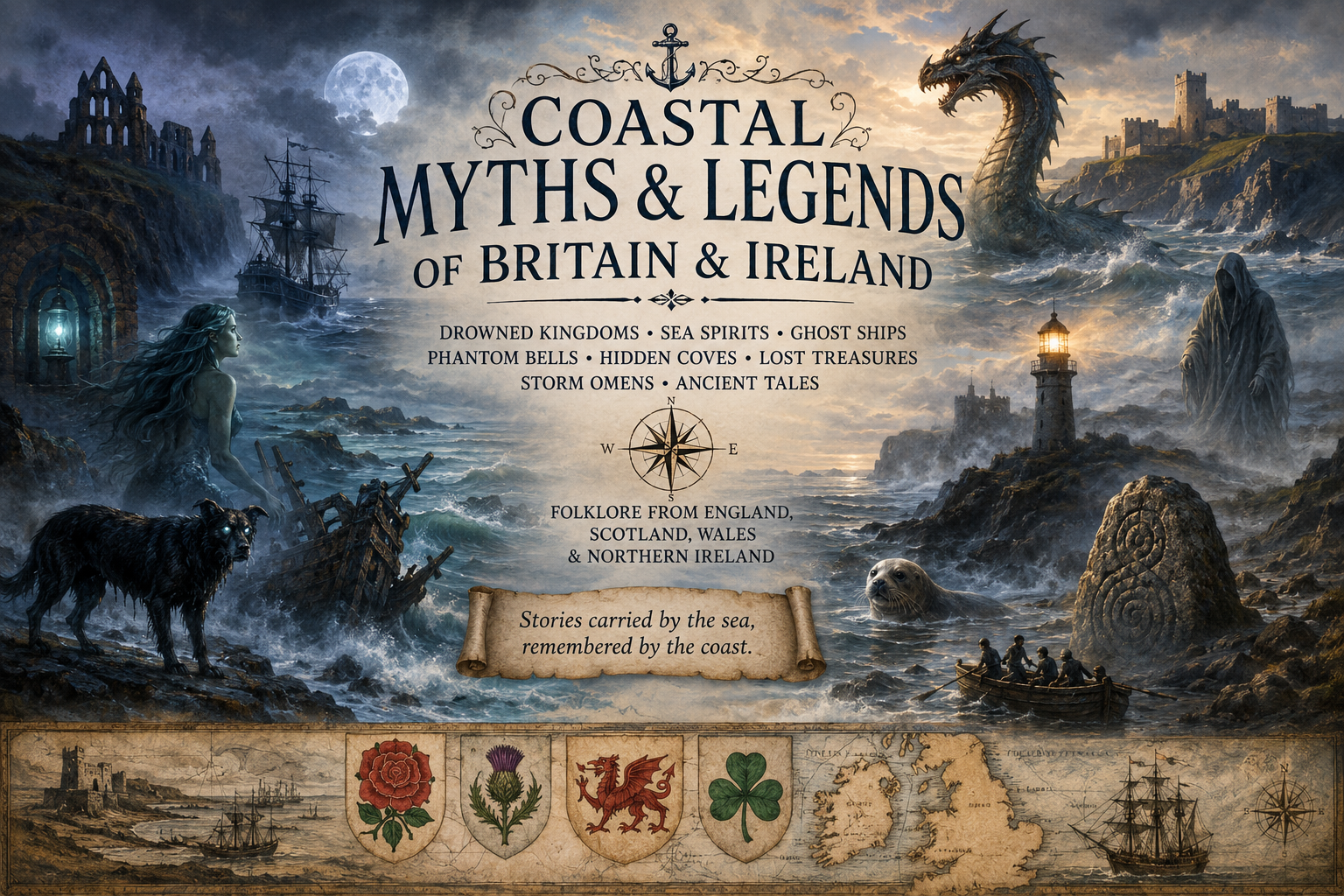
Stories concerning smuggling tunnels occur intermittently along the older waterfront districts of Liverpool and Birkenhead, particularly in connection with eighteenth and early nineteenth century trade. Some accounts likely derive from genuine cellar systems and underground passages once used for storage beneath dockside inns, merchants’ premises and bonded warehouses. Local tradition has long suggested that certain concealed routes linked riverside buildings with the interior of the town, allowing goods to bypass customs supervision during periods when excise controls were inconsistently enforced. Evidence for extensive tunnel networks remains uncertain, and many claims appear to have grown through later retelling, though isolated underground chambers and bricked passages are well documented beneath parts of the old dock estate.
The broad tidal reach of the Mersey, with its difficult sandbanks and powerful ebb streams, contributed to a coastline where illicit landing of spirits, tobacco and small cargoes was at times possible beyond the immediate scrutiny of harbour authorities. The outer approaches towards Formby, Crosby and the Wirral shore were historically subject to shifting channels and poorly marked shallows before modern dredging and buoyage. In poor weather or winter fog, smaller craft could move discreetly along creeks and landing places bordering the estuary. Such conditions helped sustain later folklore connecting isolated storehouses and public houses with contraband traffic, although organised smuggling on the scale associated with the south coast of England is not strongly evidenced here.
Dockside ghost lore is more firmly rooted in the maritime history of Liverpool itself. The former docks, once among the busiest in the world, were places of frequent accident, disease and loss. Sailors from Atlantic and Irish Sea routes mixed with labourers, emigrants and naval personnel, and many stories arose from disappearances along quays and enclosed basins. Reports of unexplained figures seen near warehouse entrances, river stairs or deserted dock roads persisted well into the twentieth century, especially around the older sections of the north docks. Such accounts were usually passed among dock workers rather than promoted as public legend. Most descriptions were restrained and matter-of-fact, often involving sightings during periods of fog, poor visibility or night tide operations.
Several local traditions also connect spectral figures with drowned seamen or watchmen believed to remain near the water’s edge after fatal accidents. In a port where tides could rise rapidly against dock walls and where winter conditions regularly obscured visibility, sudden deaths were not uncommon. Sailors occasionally regarded unusual sounds or solitary figures near lock gates as warnings of hazardous conditions or approaching weather changes. These beliefs were seldom formal superstition, but rather part of the inherited caution of men working close to tidal water and heavy shipping.
The estuary itself has long influenced the character of such lore. The Mersey’s fast-running tides, extensive mudflats and industrial waterfront create an atmosphere distinct from the cliff-bound coasts elsewhere in Britain. Even after redevelopment of many dock areas, traces of the older port remain in surviving warehouses, tunnel vaults and riverside structures exposed at low water. Folklore attached to these places persists largely through local memory, maritime museums and oral accounts preserved by former dock communities.
Although many of the stories cannot be verified in detail, they form part of the wider maritime identity of the Merseyside Coast, where commerce, tidal danger and generations of seafaring labour have left a lasting impression upon the shoreline.

Comments