

The low and shifting coast of Lincolnshire has long encouraged a practical seamanship shaped by shoal water, strong tides and uncertain weather in the outer approaches to the Wash and Humber. Along this exposed frontage, medieval references to sea dragons and great marine serpents appear intermittently in local tradition and ecclesiastical writing, though usually in restrained form and without the elaborate detail found in later romantic folklore. Such accounts were commonly treated less as literal encounters than as signs associated with dangerous waters, storms or unfamiliar marine creatures seen in poor conditions.
The Lincolnshire coast during the Middle Ages differed markedly from the modern shoreline. Extensive marshland, tidal creeks and unstable sandbanks characterised much of the seaward edge between the Humber estuary and the Wash. Ports such as Boston once held considerable maritime importance, trading widely across the North Sea. Mariners approaching these waters encountered broad shallows, rapidly changing channels and strong easterly weather from the German Ocean. In that setting, reports of large unidentified forms in the sea were not unusual, particularly where drifting timber, surfacing seals, porpoises or floating weed beds were glimpsed in heavy seas or dusk light.
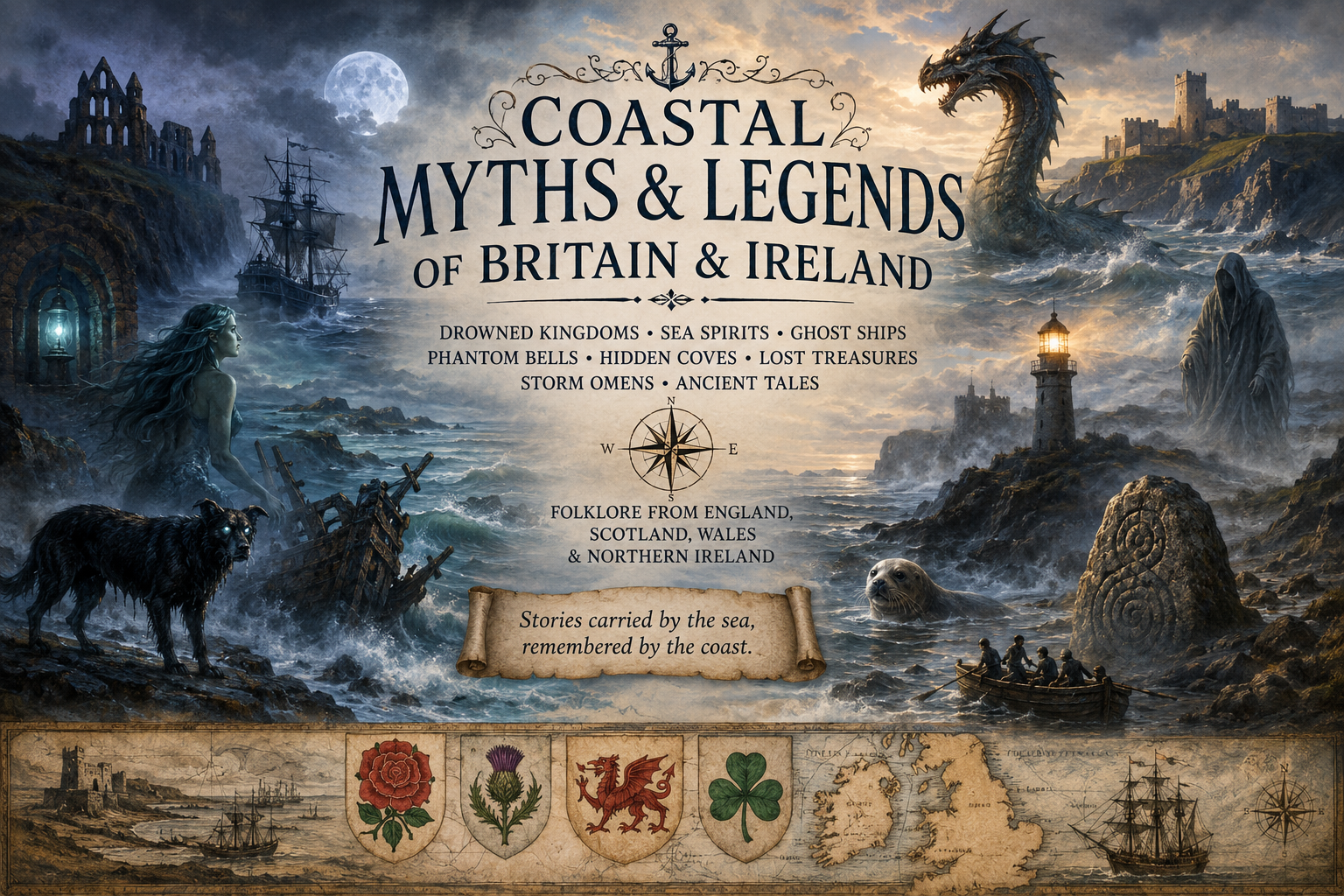
Several antiquarian references from eastern England note medieval beliefs in sea serpents or dragon-like creatures inhabiting remote waters offshore. Lincolnshire possesses no single dominant legend comparable to the better-known dragon traditions of the north-east coast, yet scattered regional associations persisted around the Wash approaches and the deeper offshore grounds east of Skegness and Mablethorpe. Some church carvings and manuscript marginalia from the medieval period also employed dragon imagery in maritime scenes, reflecting broader European symbolism in which dangerous seas were represented by monstrous creatures. Historians generally regard these images as moral or allegorical rather than documentary, though they likely reinforced local superstition among fishing communities.
The tidal conditions of the coast contributed naturally to such beliefs. Off Gibraltar Point and the outer banks of the Wash, steep short seas can develop quickly against an ebb tide during strong northerly or easterly winds. Before the widespread use of accurate charts and lights, these waters acquired a reputation for concealed hazards and sudden losses of small craft. Medieval sailors often explained unexplained movement in the sea through familiar symbolic language, and dragon imagery formed part of that inherited understanding. The appearance of long weed-covered spars, large fish breaking the surface, or lines of feeding seals may all have contributed to occasional reports of serpent-like forms.
Fishing communities along the coast retained fragments of these traditions into later centuries. Some local custom discouraged unnecessary mention of sea creatures before departure, particularly during the herring fisheries, where luck and weather remained closely linked in the minds of crews. Such beliefs were usually understated and practical rather than theatrical. Accounts from the eighteenth and nineteenth centuries describe older fishermen speaking cautiously of “dragons” or “worms” in the sea, terms that in many cases appear to have referred simply to unusually large or unidentified marine animals. There is little evidence that these traditions developed into elaborate narrative folklore on the Lincolnshire coast itself.
The broad beaches and low horizon of the county also lend themselves to optical uncertainty. In haze or poor winter light, objects offshore often appear distorted above the tide line. Along a coast where navigation once depended heavily upon local knowledge of channels and sands, unusual sightings were readily absorbed into existing maritime lore. The persistence of dragon symbolism in parish decoration, harbour talk and coastal storytelling reflects this older seafaring environment rather than any sustained belief in literal monsters.
Today the folklore survives chiefly as a minor but characteristic strand of eastern coastal tradition, connected with the austere nature of the North Sea shore and the historically difficult waters surrounding the Wash and Humber approaches. The restrained sea dragon lore of Lincolnshire remains consistent with a coastline where caution, weather and tide have always carried greater authority than legend.


Comments