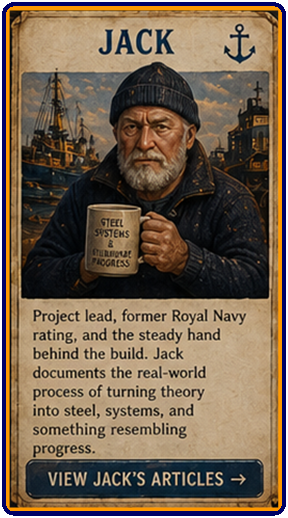

Jack Allen is the driving force behind HamstersAHOY!—the former Royal Navy seamanship rating, professional boat skipper, boat builder, and Project Manager who decided that a neglected 1980s steel trawler was the perfect candidate for a 60ft liveaboard conversion.
Every decision Jack makes is grounded in practical experience, risk awareness, and applied marine science. From hull repairs to onboard systems, he brings structure and discipline to a project that occasionally looks like chaos from the outside.
A Little About Jack
♦ Extensive experience in marine operations, project management, and construction site management
♦ Formal Natural Sciences education (Physics, Chemistry, Earth Science, Biology, Ecology, Environmental Science)
♦ RYA Day Skipper, SMSTS, Electrician, Alarms Systems Engineer, Scaffolder, Heavy Plant and Telehandler Operator
♦ Prolific writer and documenter of hands-on boating and liveaboard conversion experience
Jack and Pedro
Pedro, the slightly bewildered hamster, provides moral support and occasional perspective on the conversion project. While he cannot operate a diesel engine, Jack values the calm example Pedro sets—proof that even in a rolling anchorage, keeping perspective is critical.
Together, Jack and the team tackle the boat in stages, documenting successes, mistakes, and lessons learned. This approach ensures the project remains practical, safe, and ultimately achievable, even if the occasional absurdity creeps in.
Next in the Series
Meet the rest of the crew—some slightly more eccentric than others. Next: Esmeralda Gonzales
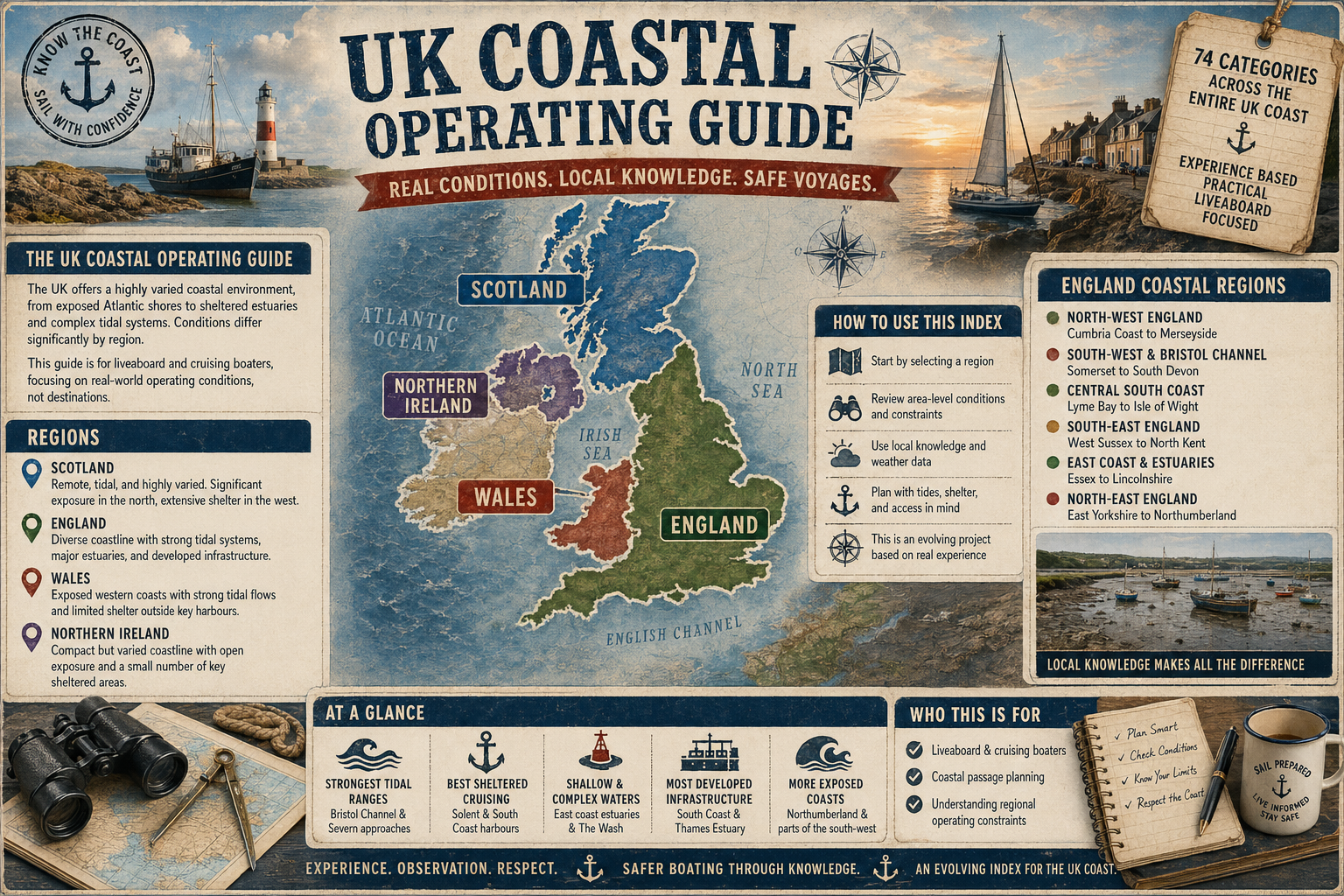
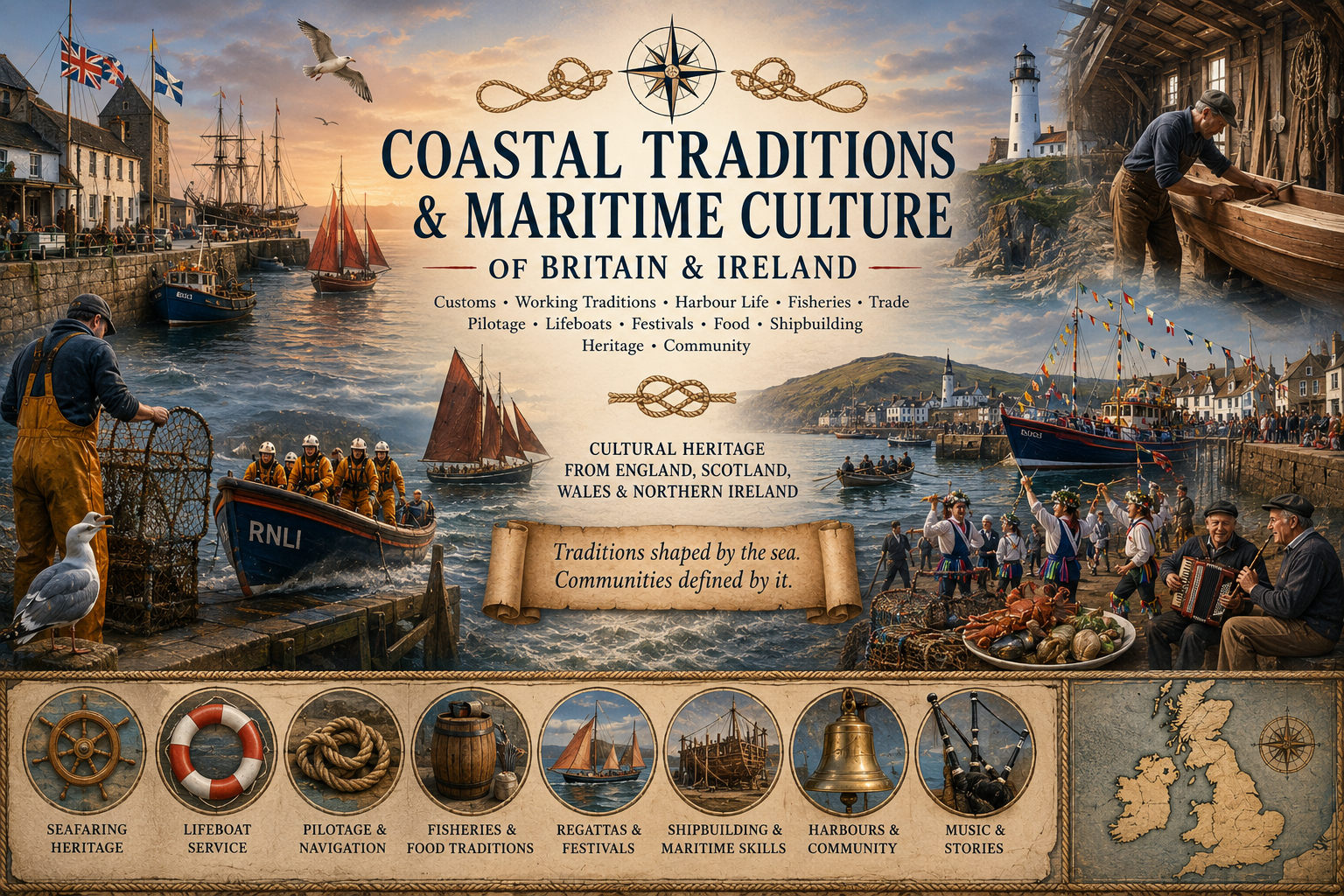
The Isles of Scilly form a compact archipelago lying off the western approaches to the English Channel, where maritime movement between islands and the mainland has long defined daily life. Coastal traditions here are shaped less by large harbour infrastructure than by small working quays, shallow-draught vessels and a persistent dependence on sea transport. The sheltered anchorages around St Mary’s and the surrounding islands remain central to both public services and commercial activity, with inter-island ferry services providing the principal link between scattered settlements and outlying islands.
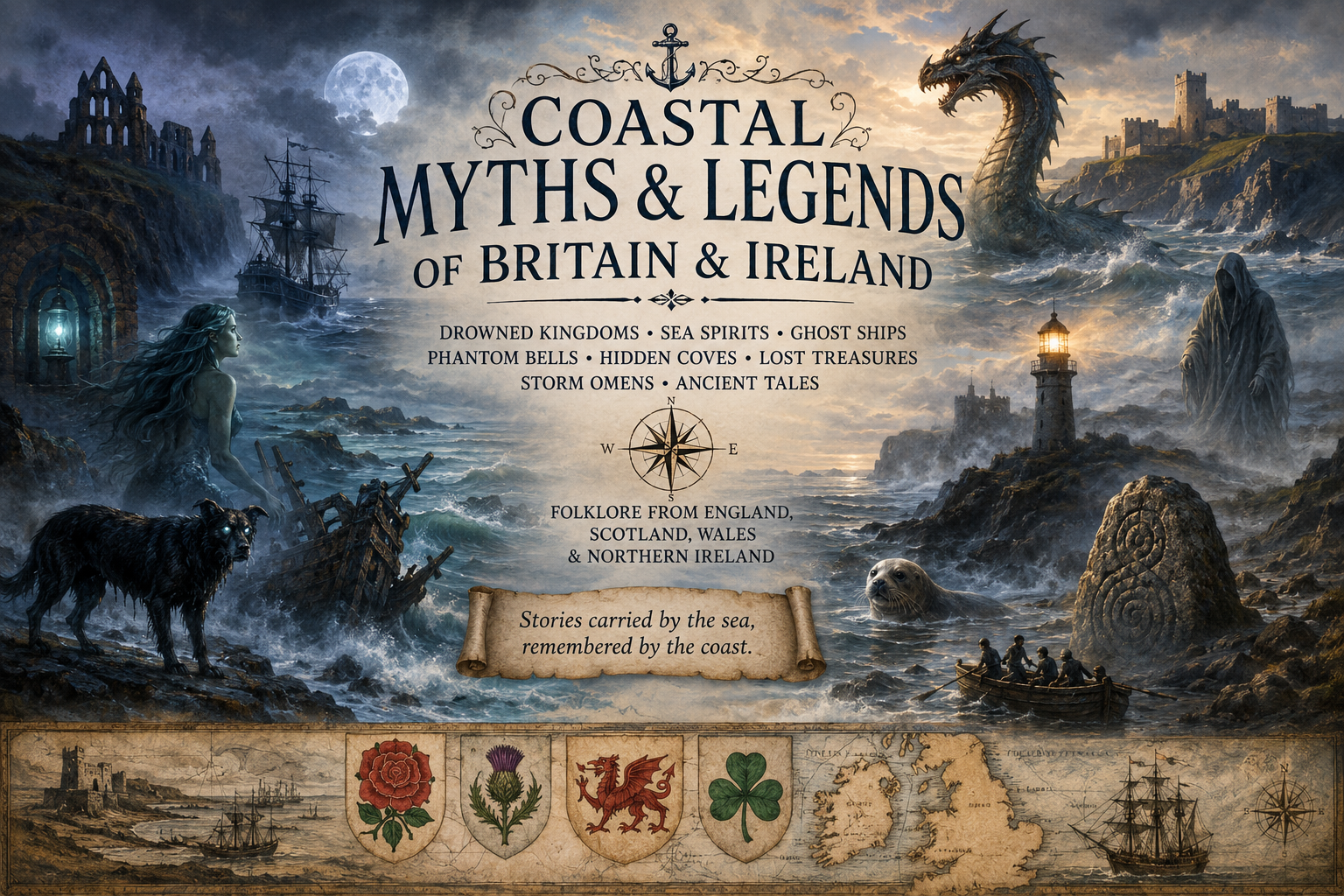
The Isles of Scilly have long been associated with shipwreck tradition arising from the density of hazards surrounding the archipelago rather than from legend in the imaginative sense. The scattered granite islets, reefs and shoals lying off the south-west approaches to the British Isles form one of the most heavily obstructed stretches of water in north-eastern Atlantic navigation. For centuries, vessels making passage into the English Channel or returning from transatlantic routes have been set down upon these dangers, particularly in poor visibility or with uncertain positioning.
The coast of Carmarthenshire, extending along the northern reaches of the Bristol Channel from Pendine Sands to the estuary of the River Loughor, has long carried associations with Merlin, or Myrddin, the prophetic figure of early Welsh tradition. Although much of the surviving legend belongs to inland districts and medieval poetry rather than directly to seafaring life, the western shores of Wales were widely regarded in earlier centuries as part of the landscape through which the Merlin traditions moved and endured. Along the coast between Laugharne, Kidwelly and Carmarthen Bay, references to Myrddin persisted in local antiquarian writing well into the nineteenth century.
In the waters off South Cardigan Bay there persists a long-standing maritime association with the sound of bells said to be heard beneath the sea. The tradition is not recorded as a single fixed legend, but rather as a recurring motif within coastal testimony along the west Wales littoral, particularly between the Teifi estuary and the broader sweep towards Ceredigion’s southern shores. Mariners have long treated such reports with reserve, noting them as part of the wider body of oral coastal tradition rather than as an observable or verifiable phenomenon.
The ballad commonly known as The Great Silkie of Sule Skerry is among the better known seal-folk traditions of northern Britain. Although most closely associated with the northern isles and the skerries west of Orkney, the story long circulated through seafaring communities well beyond its original setting. Along the Scottish shores of the Solway Firth, where shifting tides, grey weather and broad estuarial waters have long shaped local life, the tale found a natural place within coastal tradition. References to seal people, or silkies, were not uncommon among fishing communities of south-west Scotland, though the details varied considerably from harbour to harbour.
The waters off North Argyll, centred upon Oban and the approaches to the Inner Hebrides, are long associated in ecclesiastical tradition with St Columba, the 6th-century Irish monk credited with founding the monastic settlement on Iona. Within early medieval hagiography, particularly the Vita Columbae attributed to Adomnán, Columba is recorded as exercising spiritual authority over sea and weather, though such accounts are framed within the literary conventions of saintly biography and should be read as devotional rather than empirical record.
Among the older traditions of the Firth of Forth, few are more persistent than the accounts connected with the supposed phantom monk of Inchcolm. The small island of Inchcolm lies in the outer estuary north of Edinburgh, between the narrows of the Inner Forth and the more open reaches eastward toward the North Sea. Its well-known medieval abbey, long visible to shipping entering or leaving the firth, has for centuries encouraged stories of solitary religious figures observed near the shore or among the ruined cloisters during poor light or unsettled weather.