
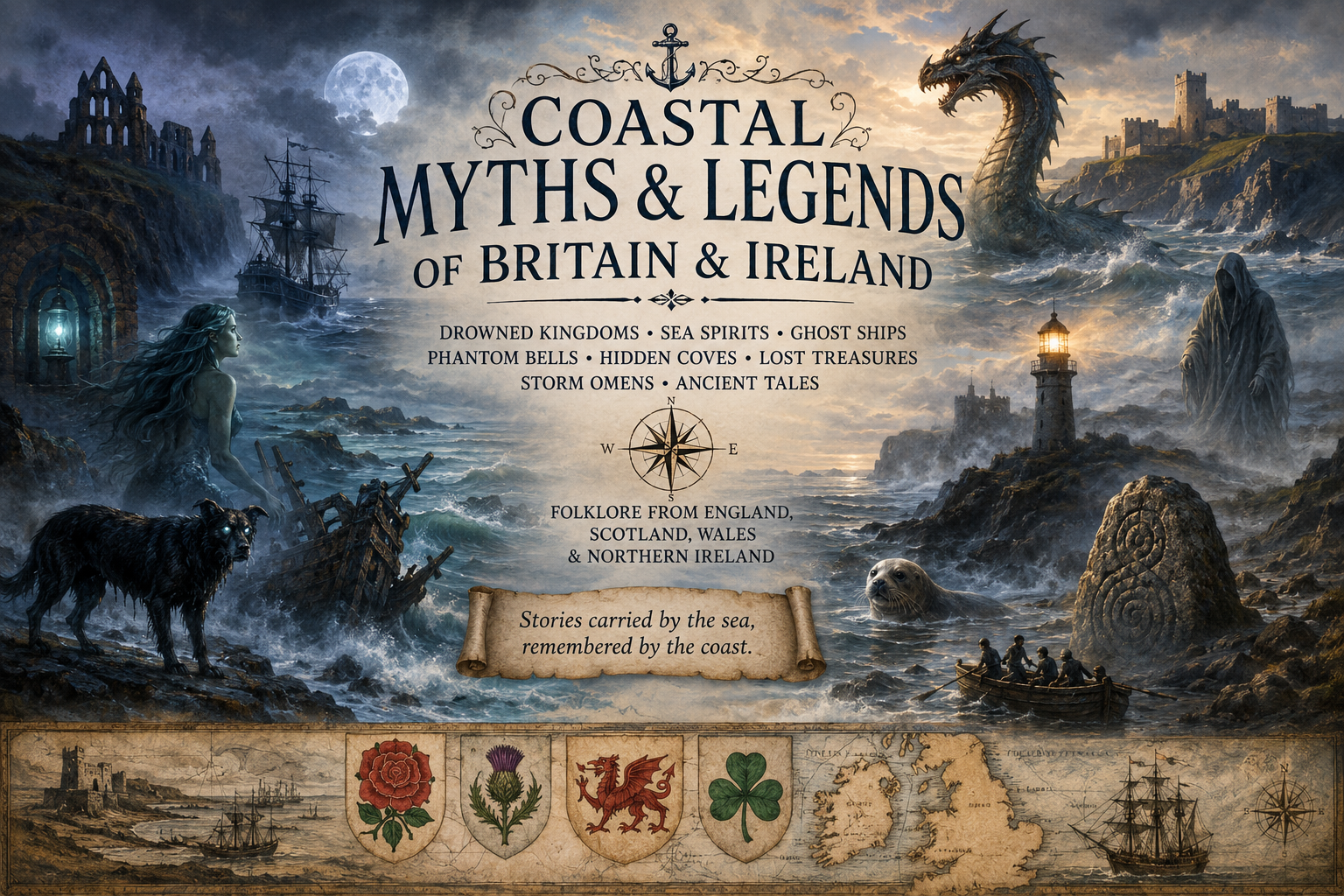



Belfast Lough has long carried a modest body of maritime folklore concerning indistinct vessels reportedly seen in fog or poor visibility, particularly in the outer reaches of the lough and along the approaches from the North Channel. Though less elaborate than the phantom ship traditions attached to parts of the Atlantic coast, the stories associated with these waters are persistent enough to have entered local seafaring conversation over successive generations. Most accounts describe silent or poorly defined craft appearing briefly in dense haze before fading from sight without trace or signal.
The association is strongest around the outer lough between Black Head and Orlock Point, where changing weather, commercial traffic and tidal movement combine to produce difficult visual conditions. Sea fog may drift rapidly into the lough from the Irish Sea, particularly during settled periods in spring and early summer, obscuring bearings and compressing sound across the water. Before modern navigation aids, such conditions were widely regarded with caution by coasting crews approaching Belfast Harbour, Carrickfergus or the anchorages off Bangor. Reports of unfamiliar vessels glimpsed through fog banks were therefore not uncommon, though many were likely attributable to distortion of distance, partial visibility or confusion caused by changing light over calm water.
Some nineteenth-century references from the Belfast waterfront mention rumours among pilots and harbour men of vessels apparently standing into the lough without making harbour, only to disappear once visibility altered. Such accounts were rarely recorded in formal fashion and often circulated orally among crews working the coastal trade between Ulster, western Scotland and the Isle of Man. The stories never developed into a single recognised legend attached to one named ship. Instead, they formed part of a broader mariner’s understanding that Belfast Lough, despite its comparatively sheltered character, could become deceptive in certain weather conditions.
The geography of the district contributes to the persistence of such traditions. The narrowing of the lough toward Belfast, combined with industrial smoke in earlier periods and frequent damp air moving off the surrounding land, historically produced variable visibility. Tidal streams around the Copeland Islands and the northern entrance could also create uncertain impressions of movement during fog. Sailors approaching under reduced canvas occasionally reported hearing surf, bells or engines without immediately locating their source, circumstances which readily encouraged speculation regarding vessels not plainly visible.
Local folklore occasionally linked these sightings with wreck losses in the North Channel, where strong tides, winter gales and heavy traffic produced numerous maritime casualties during the age of sail. However, no single disaster appears firmly connected with the phantom vessel tradition in Belfast Lough itself. Unlike the better-known tales of the Flying Dutchman found elsewhere in British and Irish waters, the Belfast accounts remained restrained and practical in tone. Mariners generally treated them less as supernatural warnings than as reminders of the uncertainty imposed by fog, tide and imperfect observation.
Among fishing crews and small commercial operators working from Groomsport, Donaghadee and Carrickfergus, it was sometimes considered prudent not to rely entirely upon apparent lights or silhouettes seen at distance during thick weather. Older navigators occasionally referred to “false ships” or “wandering lights” when discussing difficult passages through the outer lough, though such remarks were usually accompanied by practical explanations concerning refraction, mist or fatigue after long watches. The folklore therefore occupied a middle ground between cautionary seamanship and regional storytelling.
Modern harbour lighting, radar and regulated traffic schemes have reduced much of the uncertainty once associated with the entrance to Belfast Lough, yet the old reports remain part of the district’s maritime character. In periods of dense fog, when the headlands are obscured and sound carries unevenly across still water, the tradition retains a degree of credibility rooted less in superstition than in the long experience of seafarers navigating the enclosed and changeable waters of the lough.

Comments