
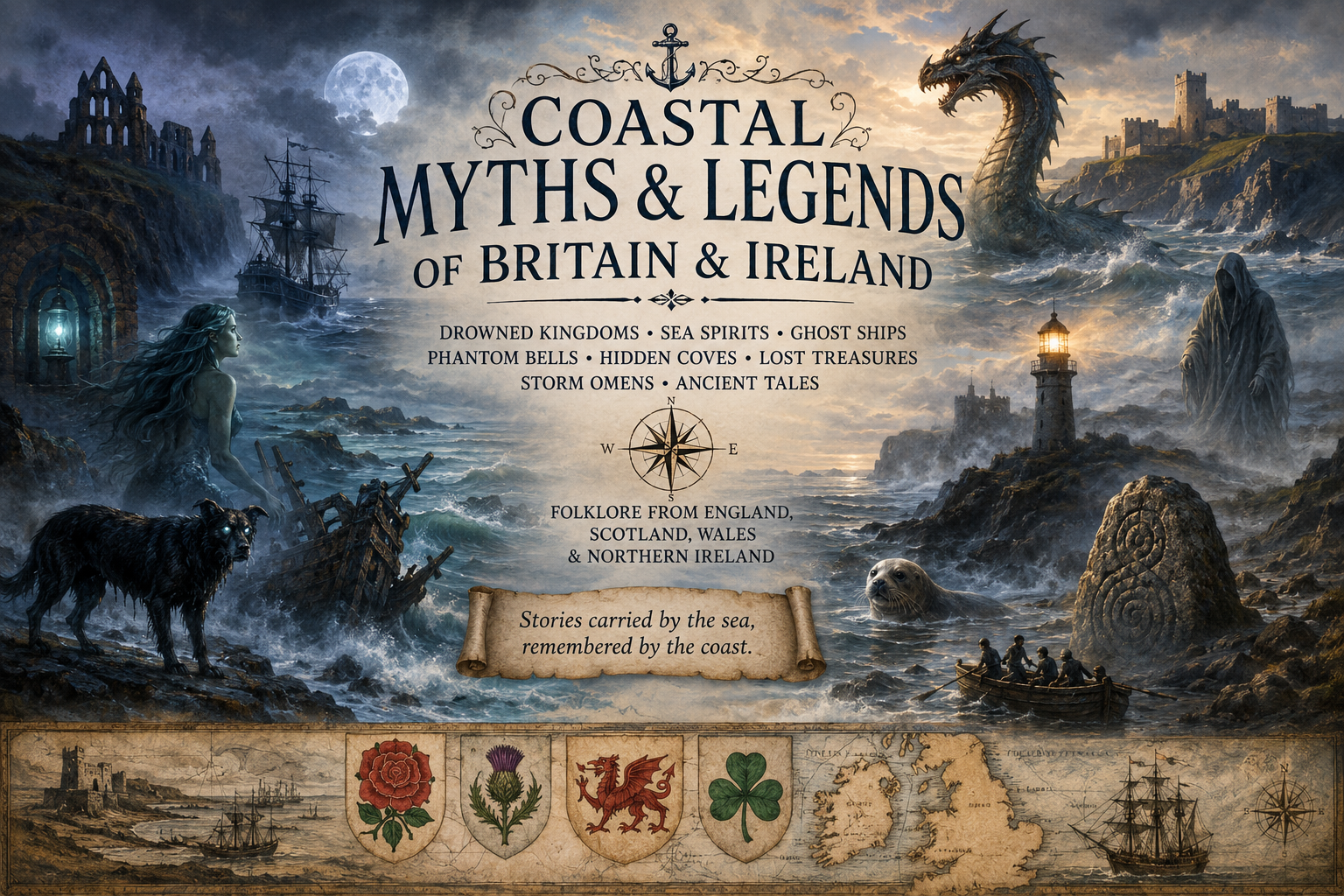

The northern reaches of the Firth of Clyde, extending from the lower estuary off Greenock toward the narrows of the Inner Clyde, carry a substantial body of maritime folklore shaped by fog, strong tidal movement and long association with coastal trade. Among the better-known local traditions is the reported apparition connected with Cloch Lighthouse, situated on Cloch Point at the entrance to the Gare Loch approaches. The account has persisted for many years in local seafaring circles, though details vary and are seldom presented with certainty.
Cloch Point occupies a practical and prominent position for vessels entering the upper firth from the south-west. The waters off the point are often unsettled in fresh westerly weather, with short steep seas developing against the ebb tide. Before modern navigational aids, the lighthouse formed an important mark for steamers, fishing craft and merchant traffic bound for Greenock, Gourock and the River Clyde. The surrounding coastline, though less hazardous than the outer western approaches, has long demanded careful pilotage in periods of rain, haze and winter darkness.
The folklore most commonly associated with the station concerns the appearance of a female figure said to have been observed within or near the lighthouse buildings during the nineteenth century. The tradition is usually linked to the family of a former keeper, although documentary evidence remains slight. Some versions refer to the death of a keeper’s daughter, while others suggest the apparition followed an accident connected with the shore below the light. No single account can be regarded as definitive, and local historians generally treat the matter as part oral tradition, part embellishment accumulated over time among seafarers and residents of the lower Clyde.
What distinguishes the Cloch story from many coastal ghost tales is its restrained and localised character. It is not associated with phantom vessels or dramatic wreck narratives, but rather with the isolated routine of lighthouse service along a heavily worked estuary. The station stood exposed to Atlantic weather entering the firth, and keepers stationed there during the nineteenth century would have endured long periods of damp, wind and limited communication, especially in winter conditions. Such environments commonly produced strong folklore traditions around lights and signal stations throughout the British coast.
Among mariners of the Clyde there existed a practical respect for places where difficult weather, narrow channels and human isolation combined. Accounts of unexplained sightings at Cloch were sometimes repeated quietly aboard coastal steamers or among fishermen sheltering in nearby harbours, including Gourock and Helensburgh. Older local boatmen occasionally regarded the tale as an ill omen in periods of thick fog near the point, though such beliefs rarely extended beyond customary maritime superstition. In most retellings the apparition was not considered threatening, but rather a lingering presence associated with the station itself.
The geography of the northern firth contributes materially to the endurance of such stories. Low cloud frequently settles along the hills surrounding the Gare Loch and Holy Loch, while shifting light conditions on the water can distort distance and movement around the shore. Before electrification and modern harbour lighting, isolated lights along this stretch of coast assumed considerable significance to those navigating after dark. It is therefore unsurprising that local tradition attached human stories to these landmarks, particularly where generations of mariners repeatedly passed the same headlands and anchorages.
Today the Cloch lighthouse remains a familiar coastal feature for vessels transiting between the lower firth and the upper Clyde estuary. Although the ghost story survives chiefly as regional folklore, it continues to reflect the working maritime character of the district: a coastline shaped as much by routine navigation, weather and memory as by more dramatic legend.

Comments