

Meet Prudence Fishwater — Marketing, Pink Gin, and Fleeting Dockyard Fame

Pru joined HamstersAHOY! in 2024 and quickly rose to become First Mate in the dockyard. Her impressive range of positions would have made anyone a millionaire by 25, but Pru prefers to command a flotilla from the poop deck with Pink Gin in hand.
A Little About Pru
♦ Marketing talent with creative flair and a dash of chaos
♦ Hands-on dockyard experience, briefly tackling boat building and welding
♦ Unerring commitment to the project’s morale and visibility
Pru’s Role in the Project
Pru brings energy, creativity, and occasional wild ideas to the conversion process. While she may not wield a welder every day, her influence is felt through branding, documenting progress, and keeping the team’s spirits high.
Next in the Series
Meet the one who prefers to remain unseen yet exerts influence behind the scenes. Next: The Invisible Partner →
Along the low and shifting shoreline of West Sussex there survives a modest body of maritime folklore connected with wrecking and the so-called “mooncussers”, a term more commonly associated with deceptive shore lights and opportunistic salvaging along hazardous coasts. In Sussex the tradition is comparatively restrained and less deeply rooted than in Cornwall or parts of Wales, though references to suspicious wrecking tales and doubtful coastal practices appear from time to time in local histories of the Channel shore. Much of the folklore is attached not to dramatic cliffs, but to the difficulties of navigation presented by shoals, tidal banks and poorly marked approaches before modern harbour works and navigational aids were established.
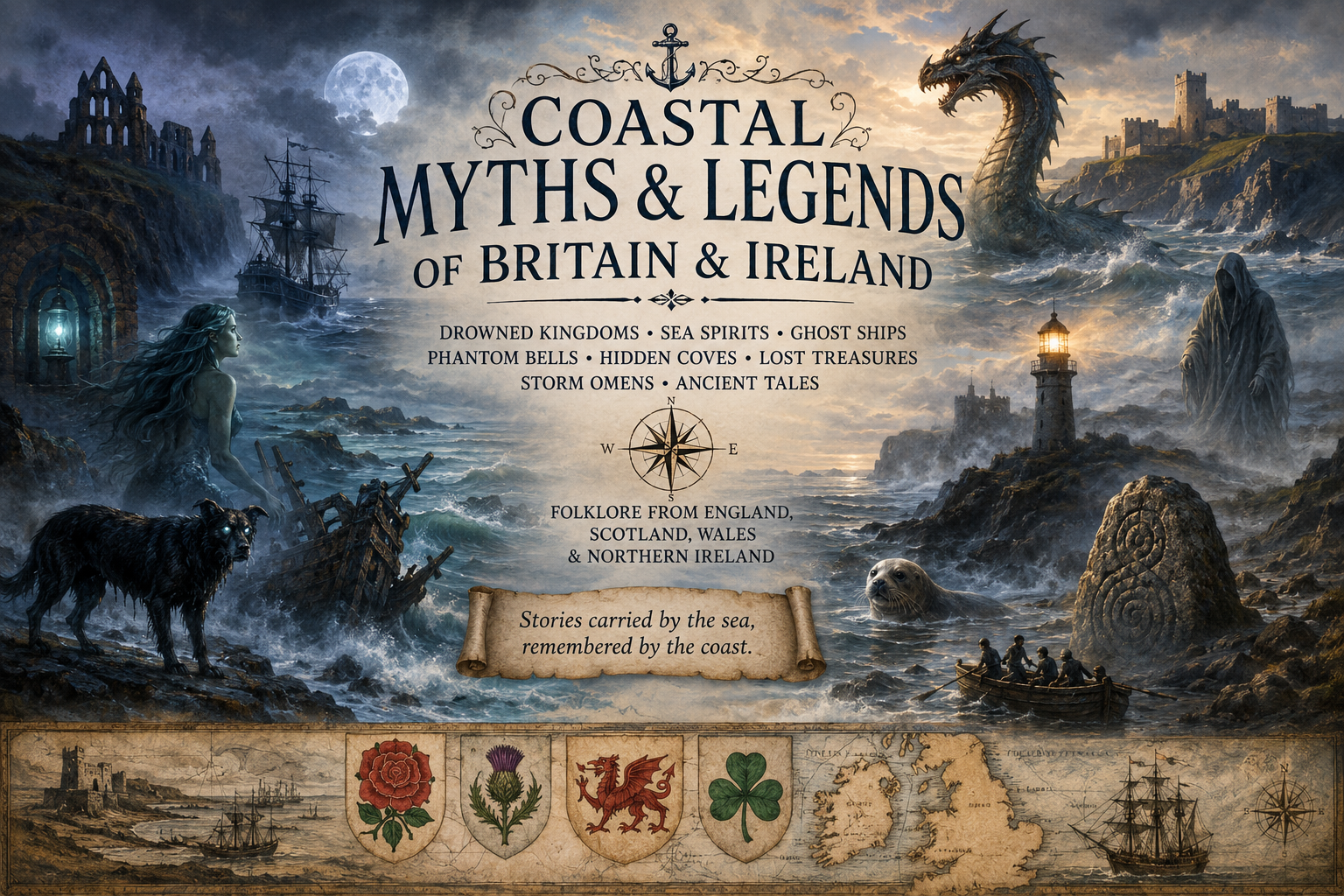
The coastal highlands of St Catherine’s Down, at the eastern extremity of the Isle of Wight, have long been associated with the figure of the so-called Ghost Hound. Local tradition, with strong roots among the communities of Sandown and Shanklin, recounts the appearance of a spectral canine on the chalk escarpments overlooking the English Channel. Sightings are reported primarily along the cliff tops, particularly during autumn evenings when mists frequently settle over the downs, though accounts vary and lack precise documentation.
Within the pilot folklore of the western Solent there are occasional references to “drowned church bells”, a motif more widely recorded along parts of the southern English coast than it is firmly anchored to any single parish or harbour. In the west Solent sector—broadly encompassing the approaches off Hurst Spit, Lymington River, Yarmouth Roads and the western Isle of Wight—such accounts are best treated as fragmentary maritime tradition rather than a clearly documented local legend. The strength of association in this area is moderate and uneven, often appearing in antiquarian notes or later compilations of coastal lore without primary corroboration.
The waters between Berry Head, Hope’s Nose and the approaches to the Teign Estuary have long carried occasional reports of unusual creatures seen offshore, particularly during calm weather or periods of heavy summer haze. Accounts of a so-called “sea serpent” in Torbay belong chiefly to the nineteenth century, when local newspapers and harbour communities around Brixham, Paignton and Teignmouth recorded scattered sightings of a long-backed animal moving at speed across otherwise settled water. Though never consistently described, the reports became part of the broader maritime folklore of South Devon.
The western coasts of Cornwall have long been associated with the tradition of Lyonesse, a supposed drowned territory said to have occupied waters between Land’s End and the Isles of Scilly. Although the story belongs chiefly to oral tradition and later medieval romance, it remains one of the strongest maritime folk associations in the far south-west approaches. Along the North Cornwall coast, particularly among older fishing communities and seafaring families, references to the lost land persisted well into the nineteenth century as part of local coastal lore rather than formal history.
The shores of the Dee Estuary have long carried a modest body of maritime folklore shaped less by dramatic legend than by the practical uncertainties of tide, fog and shifting sand. Along the England side of the estuary, from the red sandstone coast near Hoylake and West Kirby to the marshes bordering the upper Dee, local belief traditionally centred upon signs of weather, unusual lights over wet ground, and the uneasy character of the tidal flats. Such traditions were generally treated with caution rather than conviction and formed part of the ordinary seamanship lore of fishermen, pilots and marsh workers.
Along the Essex rivers and creeks that feed into the upper Thames estuary and the North Sea, there exists a modest body of local maritime tradition concerning the occasional perception of working bargemen in places and conditions where no vessel is later confirmed to have been present. These accounts are typically associated with the narrow tidal channels of the Blackwater, Crouch, Colne and Stour systems, where reed-fringed margins, winding creeks and fast-changing mudflats create difficult visual conditions at dusk or in poor visibility. In pilotage notes and oral recollections from working watermen, such sightings are generally treated with caution and are not uniformly recorded, but they recur sufficiently often to be noted as part of the riverine cultural background rather than dismissed entirely.
