
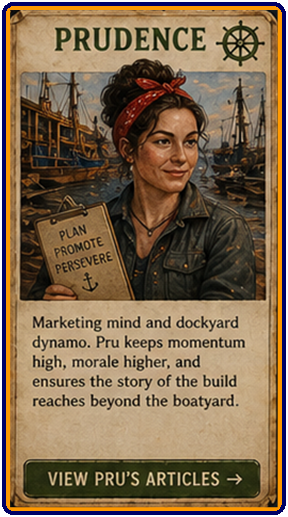

Meet Prudence Fishwater — Marketing, Pink Gin, and Fleeting Dockyard Fame

Pru joined HamstersAHOY! in 2024 and quickly rose to become First Mate in the dockyard. Her impressive range of positions would have made anyone a millionaire by 25, but Pru prefers to command a flotilla from the poop deck with Pink Gin in hand.
A Little About Pru
♦ Marketing talent with creative flair and a dash of chaos
♦ Hands-on dockyard experience, briefly tackling boat building and welding
♦ Unerring commitment to the project’s morale and visibility
Pru’s Role in the Project
Pru brings energy, creativity, and occasional wild ideas to the conversion process. While she may not wield a welder every day, her influence is felt through branding, documenting progress, and keeping the team’s spirits high.
Next in the Series
Meet the one who prefers to remain unseen yet exerts influence behind the scenes. Next: The Invisible Partner →
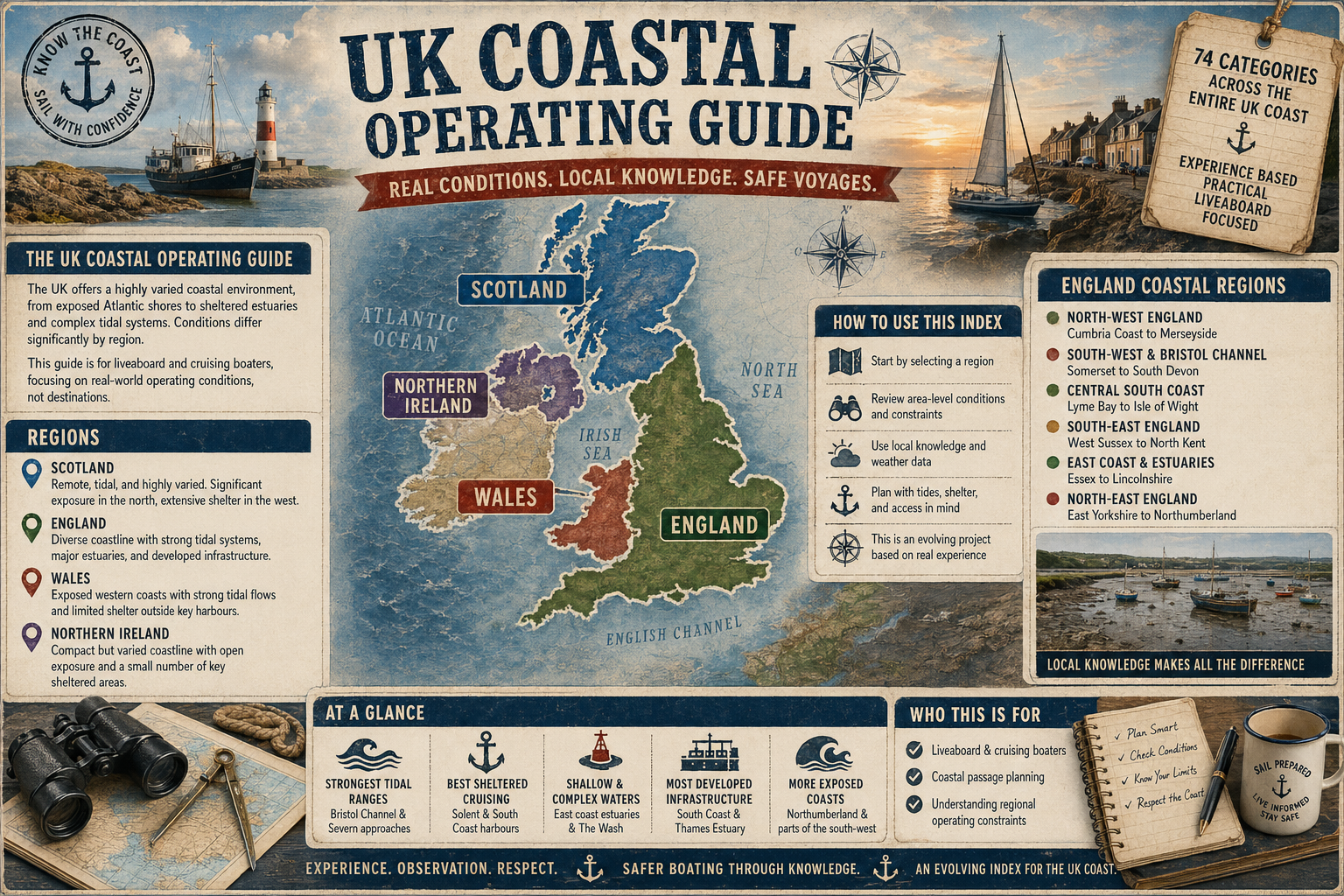
Stretching between the Wirral Peninsula in northwest England and the coastline of North Wales, the Dee Estuary is one of Britain’s most remarkable coastal environments. For boaters, it offers dramatic tidal scenery, peaceful anchorages, and constantly changing landscapes. For nature lovers, it is internationally recognised as one of the UK’s most important wetland habitats, attracting vast numbers of migratory birds throughout the year.
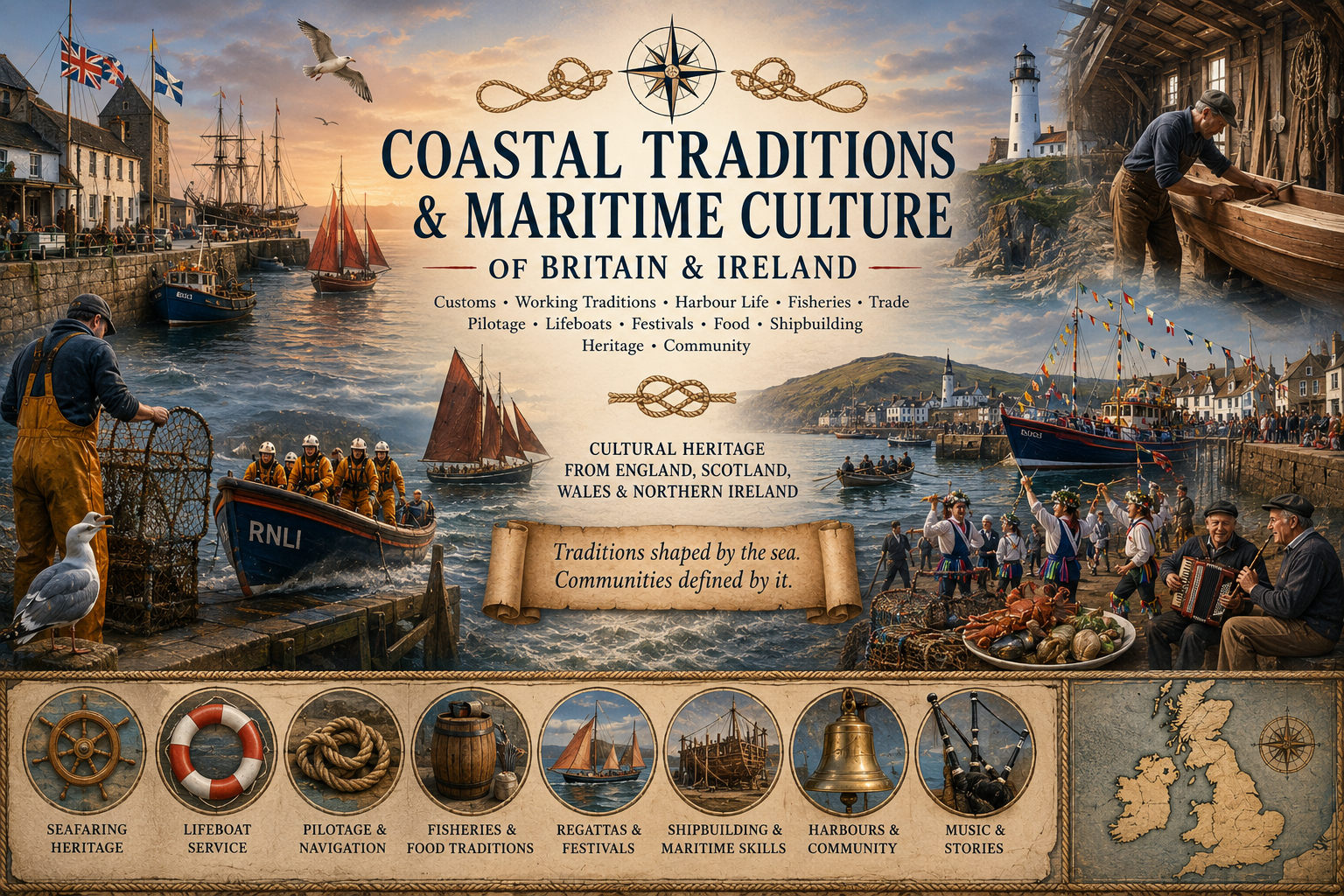
Morecambe Bay forms a wide, shallow embayment on the north-west coast of England, opening to the Irish Sea between Lancashire and Cumbria. It is characterised by extensive intertidal sands, shifting channels and fast-rising tides which together have shaped a distinctive working relationship between local communities and the sea. Maritime culture here is defined less by deep-water navigation than by the management of an unstable foreshore, where local knowledge of sands, creeks and tidal timing has long been essential to survival and safe passage.
The waters of South Pembrokeshire carry a long association with the religious foundations of Caldey Island, lying a short distance south of Tenby across a tidal sound often affected by strong streams and confused seas in fresh south-westerly weather. Among local maritime traditions, the island’s early monastic history has given rise to a body of restrained miracle lore connected less with marvels than with providential landfalls, safe crossings and the endurance of seafaring communities exposed to the outer Bristol Channel.
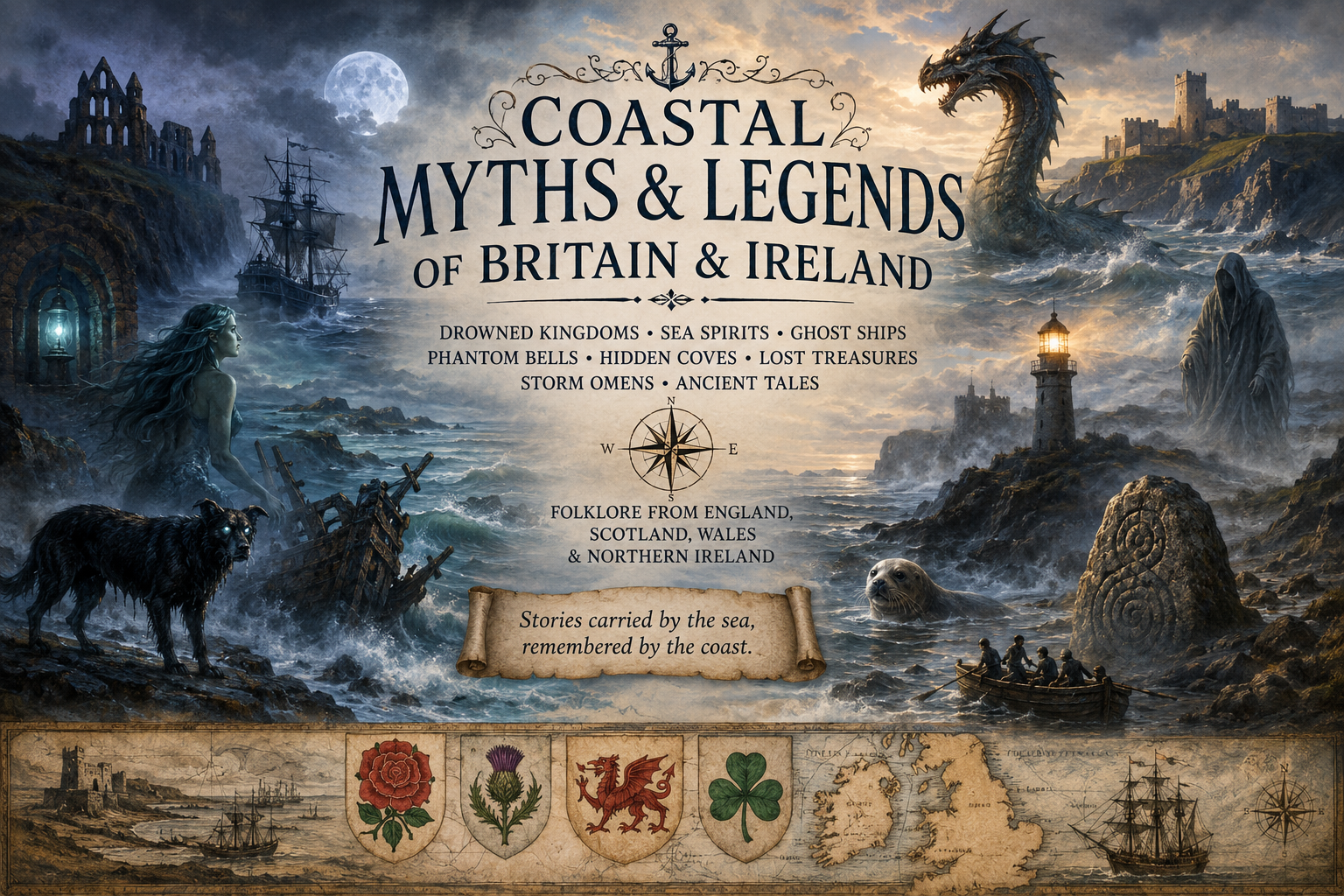
Along the North Cardigan Bay coast, between the western approaches to the Llŷn Peninsula and the broader sweep toward Ceredigion, local maritime tradition records scattered references to sea maidens and seals regarded as having other-than-ordinary qualities. These accounts are not uniform, and surviving material is fragmentary, drawn largely from oral tradition and later antiquarian collections rather than any single documented source. As with much of the Welsh western seaboard, such narratives are best treated as cultural seascape rather than formalised legend.
The isolated mass of Ailsa Craig, rising abruptly from the outer waters of the Firth of Clyde, has long attracted folklore connected with giants and the shaping of the western Scottish coast. Though principally recognised by mariners as a conspicuous landmark off the Ayrshire coast, the island also occupies a modest but persistent place in regional tradition. The stories are neither elaborate nor uniform, and survive chiefly in fragments recorded during the nineteenth century, yet they remain associated with the distinctive appearance of the rock and the exposed waters surrounding it.
Within the Outer Hebrides, stretching from Lewis in the north to Barra in the south, accounts of second sight (Gaelic: An Dà Shealladh) have long been associated with crofting and fishing communities. In maritime usage, such accounts are not treated as navigational aids, but as part of the broader cultural landscape in which seamanship is practised. The belief, where it is recorded, concerns occasional foreknowledge of loss or change, often reported retrospectively and without consistent pattern. It is generally regarded by modern observers as a cultural tradition rather than a verifiable phenomenon, though it remains part of local oral history in some districts.
The Firth of Tay has long carried a body of maritime folklore shaped by severe weather, tidal uncertainty and the exposed character of Scotland’s east coast. Among the best-known local traditions is the account of the so-called “Tay Whale”, a large whale stranded in the estuary during the nineteenth century and afterwards fixed in regional memory as both curiosity and omen. Around the lower Tay, particularly between Broughty Ferry, Dundee and the outer estuary approaches, stories persisted that unusual behaviour among whales or seabirds foretold heavy weather in the North Sea. Such beliefs were common among fishing communities, though the precise origins of individual tales are often uncertain.
