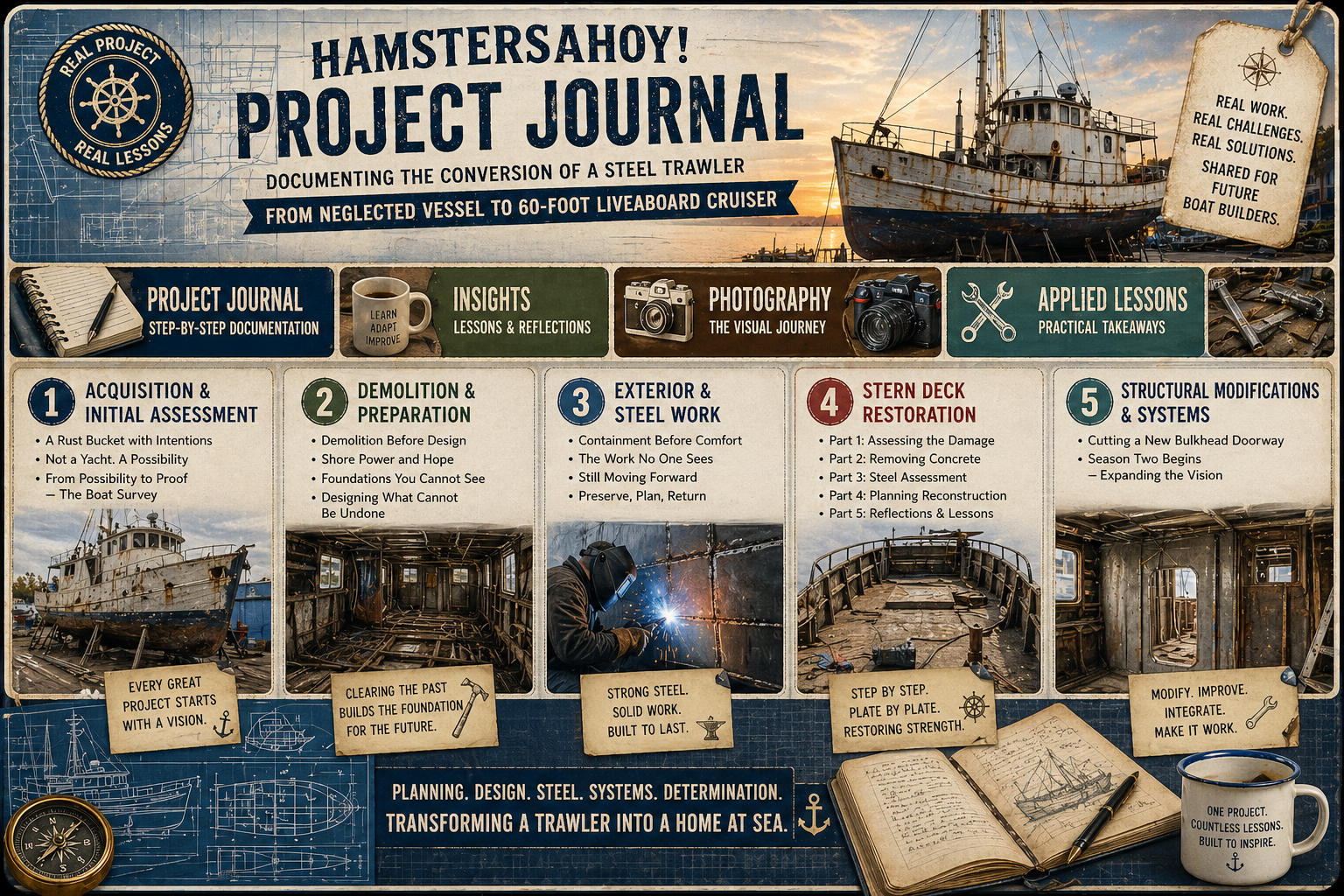

Meet Prudence Fishwater — Marketing, Pink Gin, and Fleeting Dockyard Fame

Pru joined HamstersAHOY! in 2024 and quickly rose to become First Mate in the dockyard. Her impressive range of positions would have made anyone a millionaire by 25, but Pru prefers to command a flotilla from the poop deck with Pink Gin in hand.
A Little About Pru
♦ Marketing talent with creative flair and a dash of chaos
♦ Hands-on dockyard experience, briefly tackling boat building and welding
♦ Unerring commitment to the project’s morale and visibility
Pru’s Role in the Project
Pru brings energy, creativity, and occasional wild ideas to the conversion process. While she may not wield a welder every day, her influence is felt through branding, documenting progress, and keeping the team’s spirits high.
Next in the Series
Meet the one who prefers to remain unseen yet exerts influence behind the scenes. Next: The Invisible Partner →
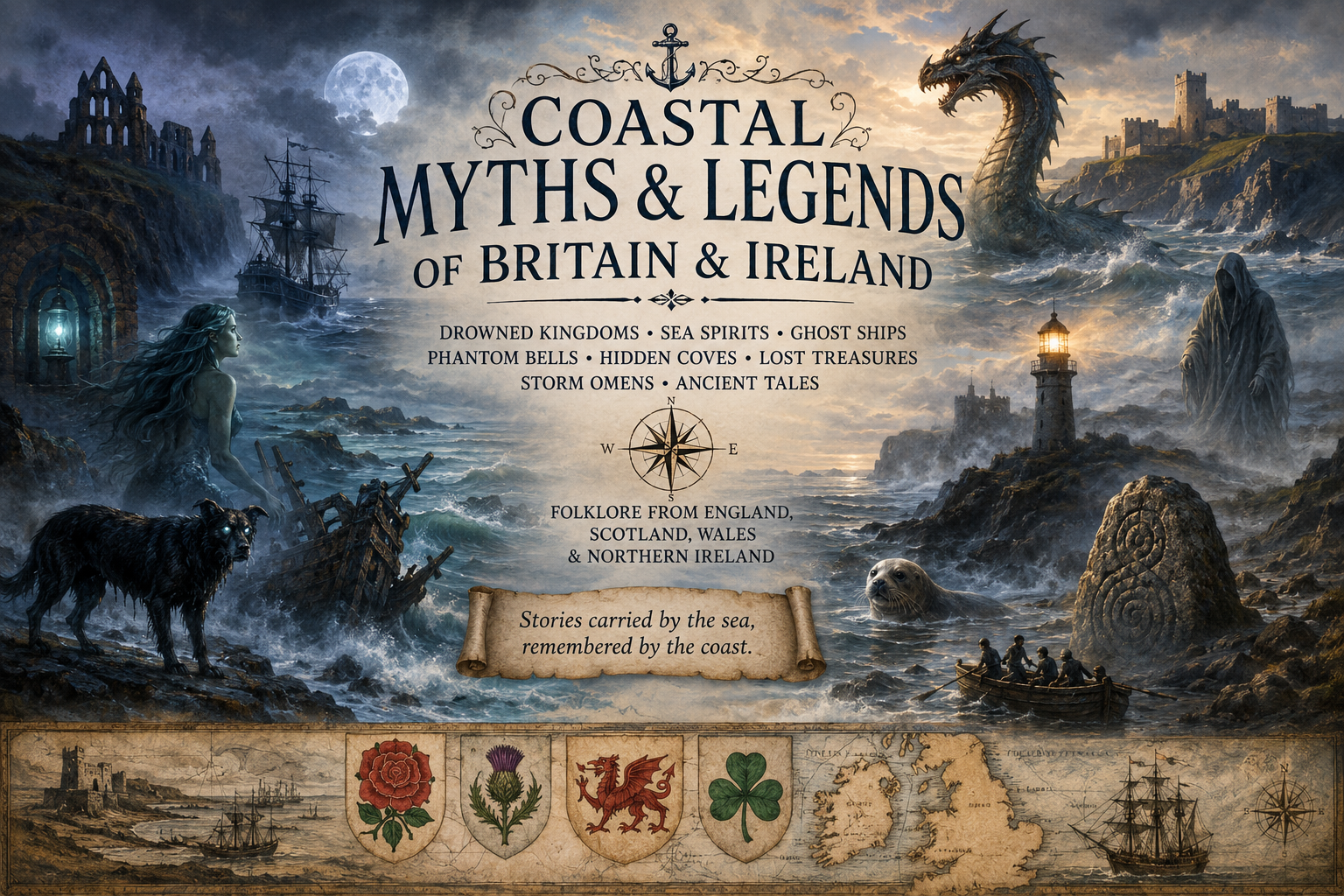
The coastline of Caithness, extending from the Moray Firth north-eastwards to Dunnet Head and eastwards towards Wick, forms one of the more exposed and heavily worked maritime margins of the Scottish mainland. In pilotage terms it is a coast of long Atlantic fetches, strong tidal set from the Pentland Firth, and frequent overfalls where offshore banks and headlands deflect the North Sea swell. Within this setting, local tradition preserves a restrained but persistent association with hostile sea spirits, often described in older accounts as “sea devils” or unnamed powers of deep water. These references are not uniform or systematised in any surviving folklore corpus, but appear as scattered survivals within wider Northern Isles and Norse-influenced maritime belief.
Among the more persistent items of maritime folklore associated with the northern Irish coast is the so-called Carlingford Sea Monster, long connected with the confined waters of Carlingford Lough and the approaches beneath the Mourne Mountains. Unlike many exaggerated sea tales of the Irish coast, the tradition here has generally remained localised and matter-of-fact, spoken of less as a supernatural warning than as an unusual inhabitant occasionally observed in poor visibility or unsettled conditions.
Along the Northumberland Coast, few traditions are more firmly attached to the sea than the long-standing association between St Cuthbert and the eider duck, locally termed the “cuddy duck”. The connection is centred chiefly upon the Farne Islands, lying off Bamburgh and Seahouses, where the saint lived for periods during the seventh century as monk, hermit and later bishop. The birds remain common in the surrounding waters and tidal channels, and their protection has long formed part of local custom and maritime identity.
The North Yorkshire Coast possesses one of the strongest and most enduring bodies of maritime folklore in England, centred chiefly upon Whitby and the ruins of the abbey standing above the harbour. The association is now widely linked with Bram Stoker’s novel Dracula, though local traditions concerning apparitions, restless figures and ill-omened sightings around the headland long pre-date the literary connection. The combined effect of steep cliffs, frequent sea mists and the exposed approaches to Whitby Harbour has contributed to a reputation that remains firmly attached to this coast.
The Norfolk Coast, facing the North Sea from Hunstanton to Winterton and enclosing the low-lying reaches of The Wash, carries a long-standing regional association with the figure known as Black Shuck. In local tradition this is described as a large black dog, sometimes recorded as appearing along lanes, churchyards and exposed coastal ground. The accounts are uneven in detail and origin, and are best regarded as part of East Anglian oral tradition rather than a single coherent legend.
Along the exposed coast of East Sussex, particularly between Seaford Head, Beachy Head and the approaches to Hastings, there persists an old association with the appearance of black dogs upon the cliff paths and downland tracks overlooking the Channel. The tradition is well established in Sussex folklore and forms part of a wider body of coastal and inland beliefs found across southern and eastern England. In East Sussex the stories are generally restrained in character, describing a silent animal encountered at dusk or in poor weather near the cliff edge, vanishing without sound or trace.
The coast between Brighton and the eastern approaches toward Newhaven and Seaford retains a modest body of maritime folklore associated with mermaids, sea curiosities and the public aquaria of the Victorian period. Unlike the older fishing superstitions of the West Country or the more isolated traditions of northern shores, the folklore here developed largely alongside Brighton’s emergence as a fashionable seaside resort during the nineteenth century. The stories are therefore less ancient in character and are often linked with exhibition culture, storm wreckage and the public fascination with marine life encouraged by the Channel coast.