
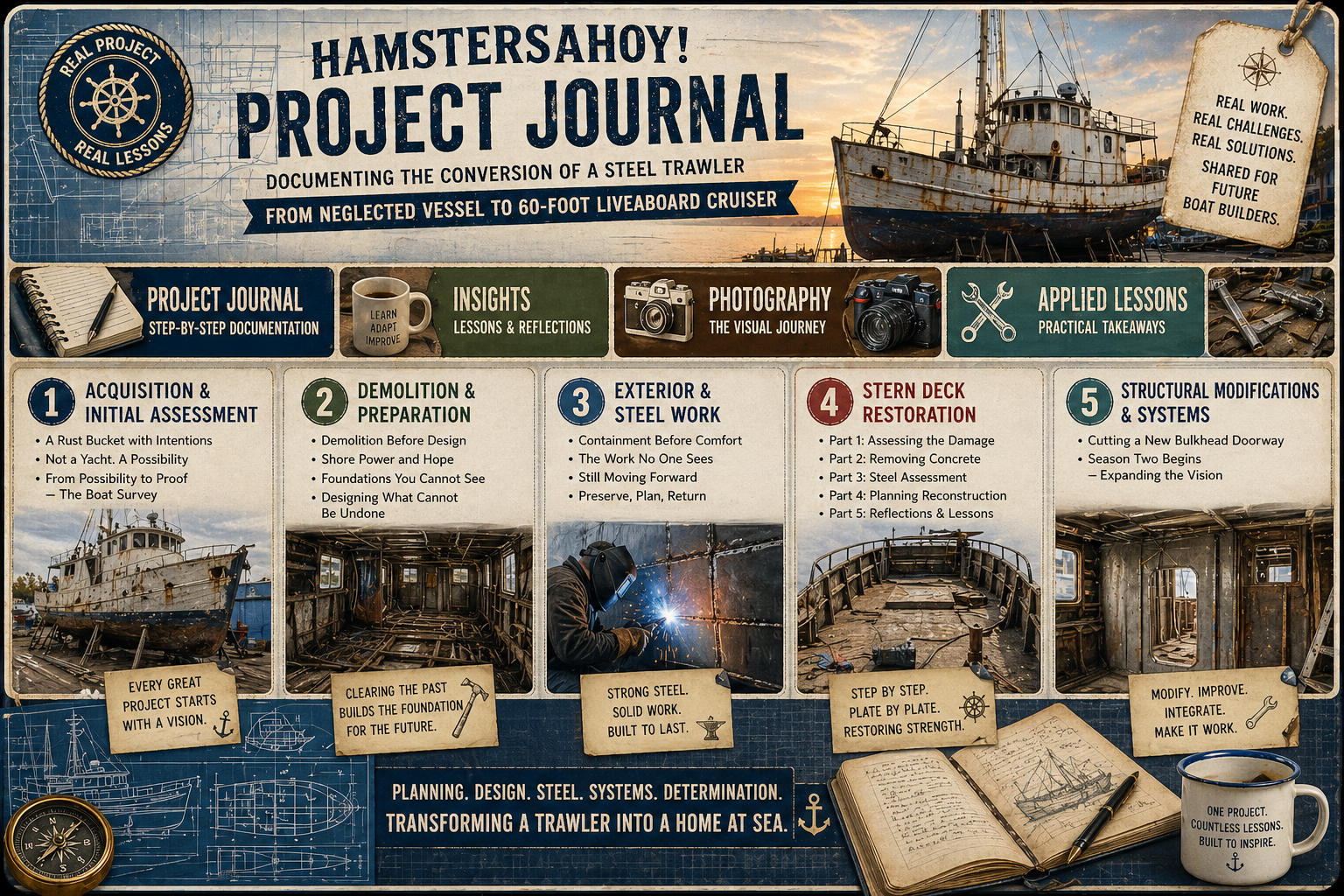

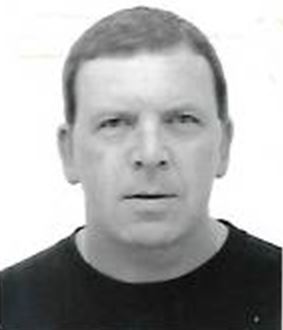
Jack Allen is the driving force behind HamstersAHOY!—the former Royal Navy seamanship rating, professional boat skipper, boat builder, and Project Manager who decided that a neglected 1980s steel trawler was the perfect candidate for a 60ft liveaboard conversion.
Every decision Jack makes is grounded in practical experience, risk awareness, and applied marine science. From hull repairs to onboard systems, he brings structure and discipline to a project that occasionally looks like chaos from the outside.
A Little About Jack
♦ Extensive experience in marine operations, project management, and construction site management
♦ Formal Natural Sciences education (Physics, Chemistry, Earth Science, Biology, Ecology, Environmental Science)
♦ RYA Day Skipper, SMSTS, Electrician, Alarms Systems Engineer, Scaffolder, Heavy Plant and Telehandler Operator
♦ Prolific writer and documenter of hands-on boating and liveaboard conversion experience
Jack and Pedro
Pedro, the slightly bewildered hamster, provides moral support and occasional perspective on the conversion project. While he cannot operate a diesel engine, Jack values the calm example Pedro sets—proof that even in a rolling anchorage, keeping perspective is critical.
Together, Jack and the team tackle the boat in stages, documenting successes, mistakes, and lessons learned. This approach ensures the project remains practical, safe, and ultimately achievable, even if the occasional absurdity creeps in.
Next in the Series
Meet the rest of the crew—some slightly more eccentric than others. Next: Esmeralda Gonzales
We arrived at the Swansea Grand Theatre on a raw March morning, the kind that makes stainless steel feel sentimental. I’d navigated worse seas than the A483 traffic, but approaching the theatre’s sandstone façade felt like coming alongside a familiar ship: respectable, weathered, and full of hidden ropes.
We arrived at Ipswich Station under a light drizzle, the town smelling faintly of coffee and wet stone. My plan was simple: catch the 56A toward Rushmere, reconnoitre the riverfront for a small repair job and be back before noon. Buses have timetables; project managers have expectations. Reality, as I’ve learned at sea, prefers to test both.
I arrive at Porthminster Beach with a caged toolbox and the sort of checklist that would make a harbourmaster sigh with pleasure. The tide is obligingly low; gulls practice their death-metal shrieks; local walkers tie dogs to short, apologetic leads. I have a plan: inspect a beached noddy dinghy, demonstrate a quick repair, and teach a neighbour the difference between a reef knot and a surgeon’s delight. Practicalities first.