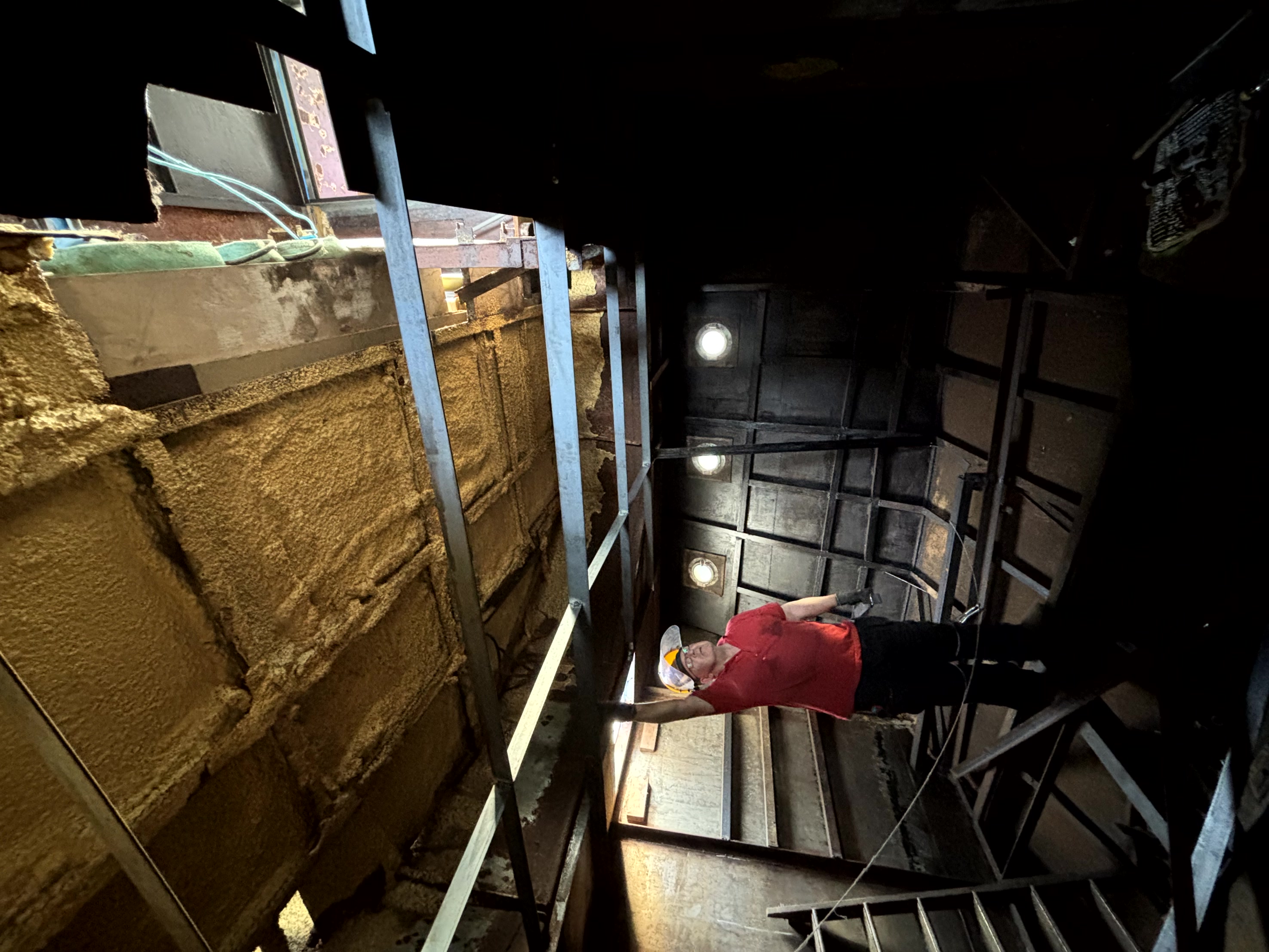
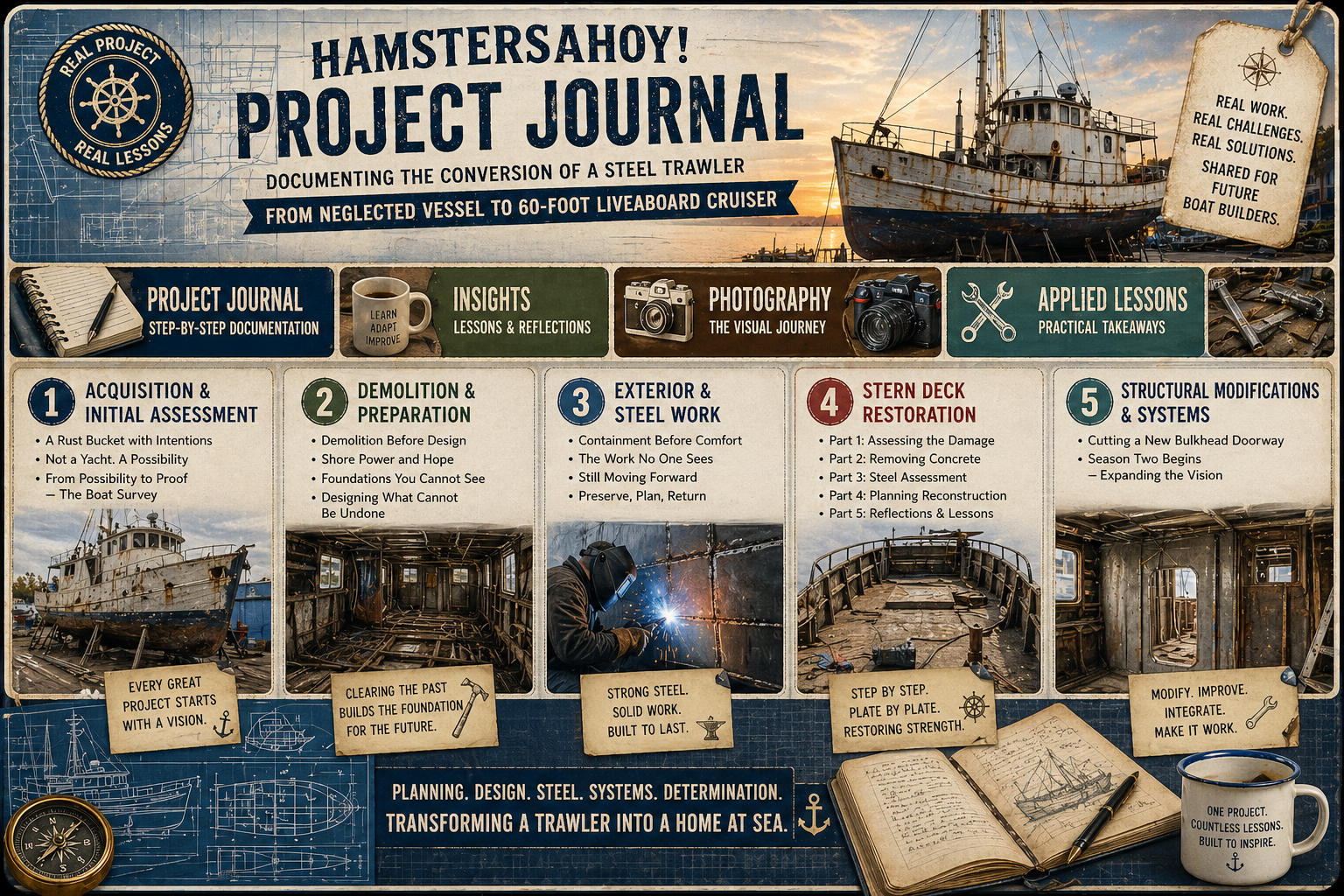

Jack Allen is the driving force behind HamstersAHOY!—the former Royal Navy seamanship rating, professional boat skipper, boat builder, and Project Manager who decided that a neglected 1980s steel trawler was the perfect candidate for a 60ft liveaboard conversion.
Every decision Jack makes is grounded in practical experience, risk awareness, and applied marine science. From hull repairs to onboard systems, he brings structure and discipline to a project that occasionally looks like chaos from the outside.
A Little About Jack
♦ Extensive experience in marine operations, project management, and construction site management
♦ Formal Natural Sciences education (Physics, Chemistry, Earth Science, Biology, Ecology, Environmental Science)
♦ RYA Day Skipper, SMSTS, Electrician, Alarms Systems Engineer, Scaffolder, Heavy Plant and Telehandler Operator
♦ Prolific writer and documenter of hands-on boating and liveaboard conversion experience
Jack and Pedro
Pedro, the slightly bewildered hamster, provides moral support and occasional perspective on the conversion project. While he cannot operate a diesel engine, Jack values the calm example Pedro sets—proof that even in a rolling anchorage, keeping perspective is critical.
Together, Jack and the team tackle the boat in stages, documenting successes, mistakes, and lessons learned. This approach ensures the project remains practical, safe, and ultimately achievable, even if the occasional absurdity creeps in.
Next in the Series
Meet the rest of the crew—some slightly more eccentric than others. Next: Esmeralda Gonzales
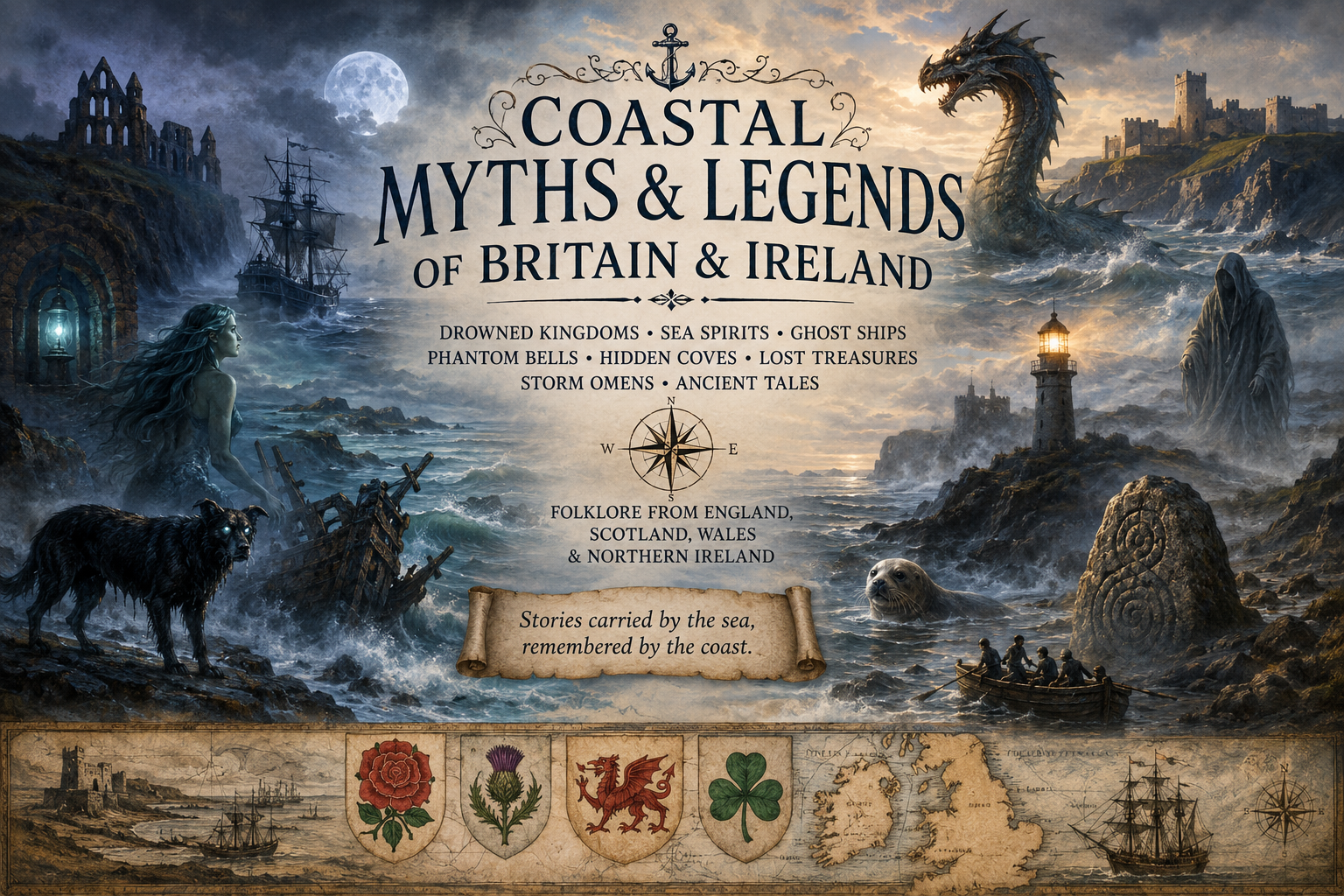
The Moray Firth, opening broadly into the North Sea between the headlands of eastern and northern Scotland, carries a modest body of maritime folklore that has long been noted in pilotage remarks and coastal recollections. Among these, references to water-horse traditions—commonly grouped under the term “kelpie” in Lowland and northern Scottish usage—appear intermittently in association with river mouths and inshore waters, though their distribution is neither uniform nor firmly documented in all localities. Such material is best regarded as part of a wider Highland and coastal belief system rather than a set of precise, site-specific legends.
Lough Foyle, forming the broad tidal inlet between the Inishowen Peninsula and the coast of County Londonderry, has long carried a modest body of folklore connected with the sea, tidal waters and the old Gaelic traditions of the north-west. Among these are scattered references to the banshee, not as a figure of open coastal superstition in the Atlantic manner, but as a more restrained estuarine presence associated with periods of mourning, sudden weather changes and deaths near the water. The tradition survives chiefly in oral recollection and local anecdote rather than in formal maritime record.
The north coast of Northern Ireland retains a longstanding association with the early Irish legend of the Children of Lir, a tradition particularly connected with the exposed waters between Rathlin Island, Fair Head and the North Channel. The tale, originating in medieval Gaelic literature, recounts the fate of the children of Lir who were transformed into swans and condemned to wander the seas of Ireland for centuries. Although literary rather than strictly maritime in origin, the story became closely attached to several northern coastal districts where difficult tidal waters, winter migration of seabirds and long Atlantic swells formed part of everyday coastal life.
Along the low and industrialised shores between the mouth of the River Tees and Hartlepool Headland, few items of coastal folklore are more firmly associated with the district than the so-called Monkey Hanger legend. The story, long repeated in northeast England, concerns the aftermath of a wreck said to have occurred off the Hartlepool coast during the Napoleonic period. According to local tradition, the sole survivor was a ship’s monkey, dressed in a small naval uniform for amusement aboard ship. The animal was reportedly mistaken by townsfolk for a French spy and hanged upon the sands. While the account is almost certainly apocryphal, the tale remains deeply attached to the maritime identity of Hartlepool and adjoining waters.
The low and shifting coast of Lincolnshire has long encouraged a practical seamanship shaped by shoal water, strong tides and uncertain weather in the outer approaches to the Wash and Humber. Along this exposed frontage, medieval references to sea dragons and great marine serpents appear intermittently in local tradition and ecclesiastical writing, though usually in restrained form and without the elaborate detail found in later romantic folklore. Such accounts were commonly treated less as literal encounters than as signs associated with dangerous waters, storms or unfamiliar marine creatures seen in poor conditions.
The low and shifting coast between Aldeburgh and Felixstowe has long carried a reputation for curious tales arising from its creeks, shingle banks and tidal reaches. Among the better-known traditions of the Suffolk Coast is that of the Wild Man of Orford, a figure associated with the waters of the River Ore and the neighbourhood of Orford Ness. Though embroidered over time by local retelling, the story has medieval origins and remains one of the more firmly rooted pieces of East Anglian coastal folklore.
The South Kent Coast has long been associated with the smuggling traditions of the Cinque Ports, whose sheltered inlets, tidal beaches and narrow river mouths provided favourable conditions for clandestine traffic across the Channel. Though often romanticised in later writing, the folklore attached to these activities is rooted in the practical realities of a hard maritime coast exposed to strong tides, uncertain weather and close proximity to the French shore. From Folkestone to Deal, and particularly around Hythe, Dungeness and the former harbour approaches of Romney Marsh, tales of concealed cargoes and nocturnal landings became a persistent part of local coastal tradition.