




Regency Seafront Culture & Fishing Quarter Traditions
The Brighton & Lewes Coast combines an urban seafront with stretches of chalk shoreline, small landing places and the working harbour at Newhaven. Maritime culture along this section of the Sussex coast has developed through a mixture of local fishing, cross-Channel trade, harbour employment and lifesaving services, while the distinctive Regency character of Brighton has long influenced the appearance of the waterfront. Unlike some larger commercial ports, the coastline has generally supported modest maritime communities whose practices have adapted to changing economic conditions. Traditions therefore vary between the beach-launched fisheries of Brighton, the harbour community at Newhaven and the smaller settlements towards Rottingdean and Seaford, but all remain closely connected with local tidal conditions and the exposed nature of the English Channel.
Before the construction of modern harbour works, much of the coastline relied upon open beaches for landing catches and small cargoes. Brighton's fishing quarter developed around beach-launched boats drawn above the shingle when weather permitted. The local fleet traditionally targeted species available in nearby Channel waters, including herring, mackerel, plaice and shellfish, with catches reflecting seasonal movements and prevailing sea conditions rather than fixed patterns. Heavy weather from the south and south-west frequently interrupted fishing, reinforcing the need for flexible working practices. Although larger commercial fishing ports elsewhere gradually assumed greater importance, Brighton retained a recognisable inshore fleet whose methods reflected the limitations of an open beach rather than a sheltered harbour.
Further east, Newhaven became the principal harbour serving this section of coast following nineteenth-century improvements to the mouth of the River Ouse. The harbour provided a more reliable refuge than the surrounding beaches and supported coastal shipping, fishing vessels, pilotage and cross-Channel services. Ferry connections with France, though altered over time in frequency and operation, have maintained an enduring maritime association with continental trade and passenger traffic. Harbour employment extended beyond seafaring itself, supporting engineering, maintenance, dredging and port services necessary to keep the entrance navigable despite the movement of shingle and tidal flows. Knowledge of local tides and the behaviour of the harbour entrance has remained an important practical consideration for mariners using Newhaven.
The coastline has also maintained longstanding links with organised lifesaving. Volunteer lifeboat crews have operated from both Brighton and Newhaven, reflecting the hazards presented by surf, rapidly changing weather and the busy shipping routes of the eastern English Channel. Although rescue equipment and operational procedures have changed considerably, public recognition of lifeboat work continues through local fundraising events and community support. These activities form part of the working maritime culture rather than ceremonial tradition and remain among the more visible expressions of coastal continuity.
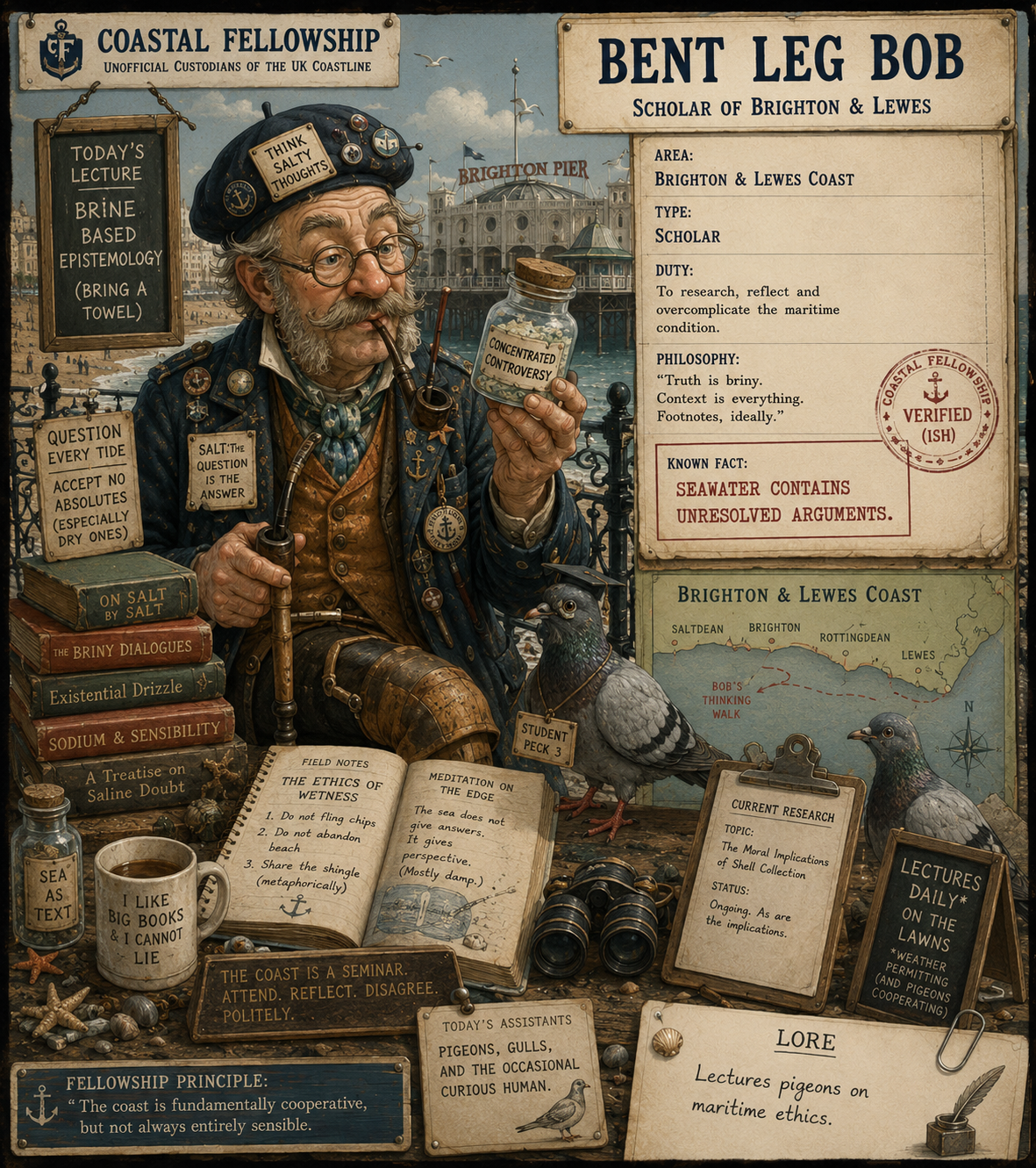
Regency development gave Brighton an unusual relationship with the sea. While its formal terraces and promenades created a distinctive waterfront, the fishing quarter continued to occupy a practical role nearby. The contrast between civic seafront architecture and working boats hauled across the shingle became a characteristic feature of the town rather than separate identities. Elements of the historic fishing quarter survive in buildings, lane names and the continued presence of small commercial fishing vessels, although the scale of the industry is much reduced. Fish landed locally still contributes to regional seafood markets, with catches depending upon quota arrangements, seasonal opportunity and weather rather than continuous year-round activity.
Maritime customs along the Brighton & Lewes Coast are generally practical rather than ceremonial. Sailing clubs organise regular racing and regattas, preserving skills associated with small craft handling in tidal Channel waters. Harbour open days and occasional maritime events at Newhaven provide opportunities to interpret local seafaring history, although traditions vary between organisations and should not be regarded as continuous historical observances. Community support for harbour activities, yacht clubs and sea cadet organisations has helped sustain knowledge of local waters despite substantial changes in commercial employment.
Modern continuity may best be observed in the persistence of small-scale fishing, recreational sailing and harbour operations rather than in unchanged historic occupations. Brighton Marina has altered patterns of leisure boating by providing sheltered berthing absent from the older beachfront, while Newhaven remains an active commercial harbour serving freight, marine services and cross-Channel links. Along the chalk coast between Brighton, Rottingdean, Peacehaven and Seaford, shore anglers, small boat users and local sailing communities continue to work within conditions shaped by tides, swell and limited natural shelter. Practical familiarity with these waters remains an important aspect of local seamanship.
Today the maritime character of the Brighton & Lewes Coast reflects adaptation rather than preservation in a fixed form. Fishing communities, harbour workers, lifeboat volunteers and sailing organisations each contribute to a coastline where historic practices survive alongside modern navigation, commercial harbour activity and recreational use. The result is a coastal culture that remains recognisably maritime while continuing to evolve with changing patterns of employment, regulation and use of the English Channel.
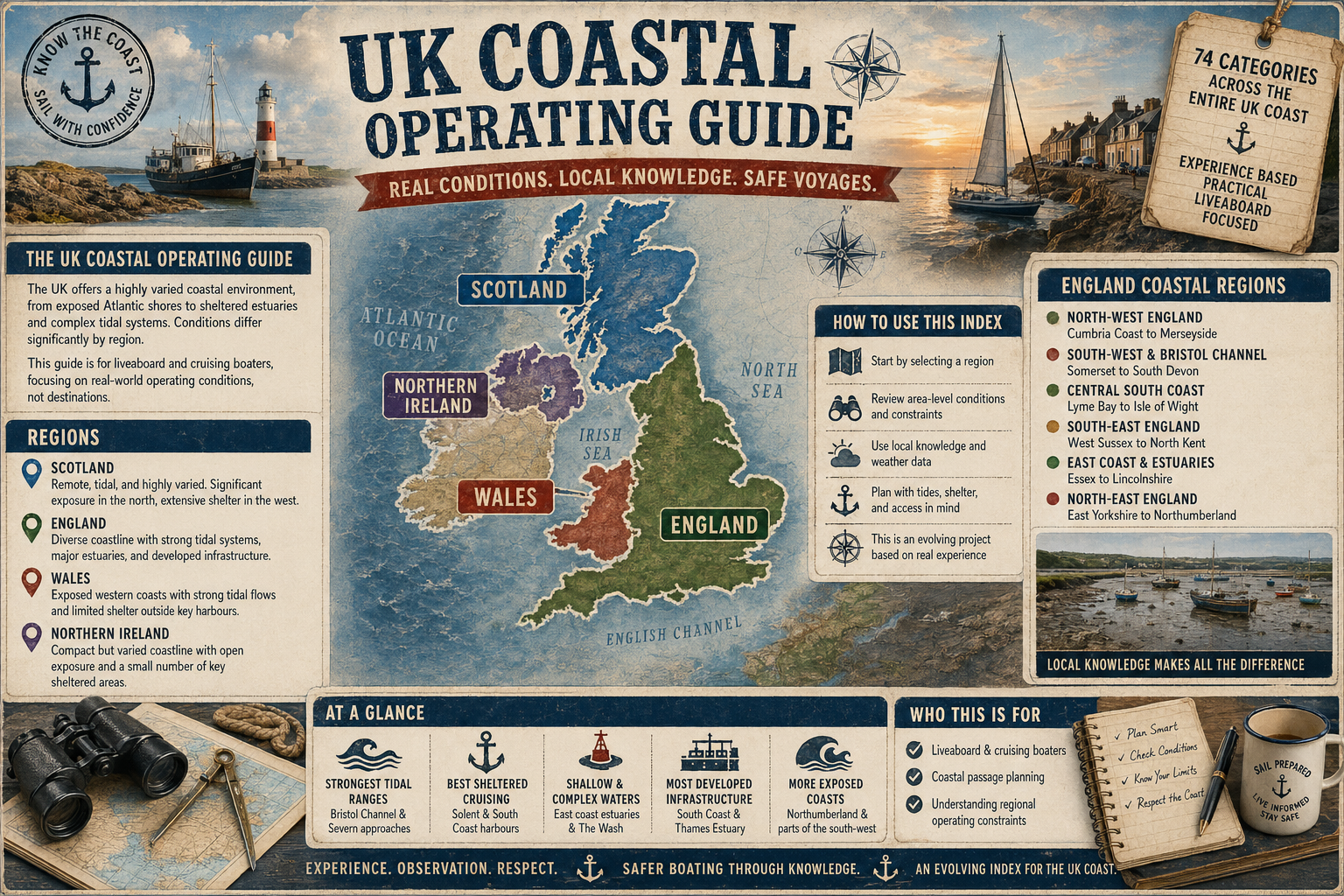
- The UK Coastal Operating Guide
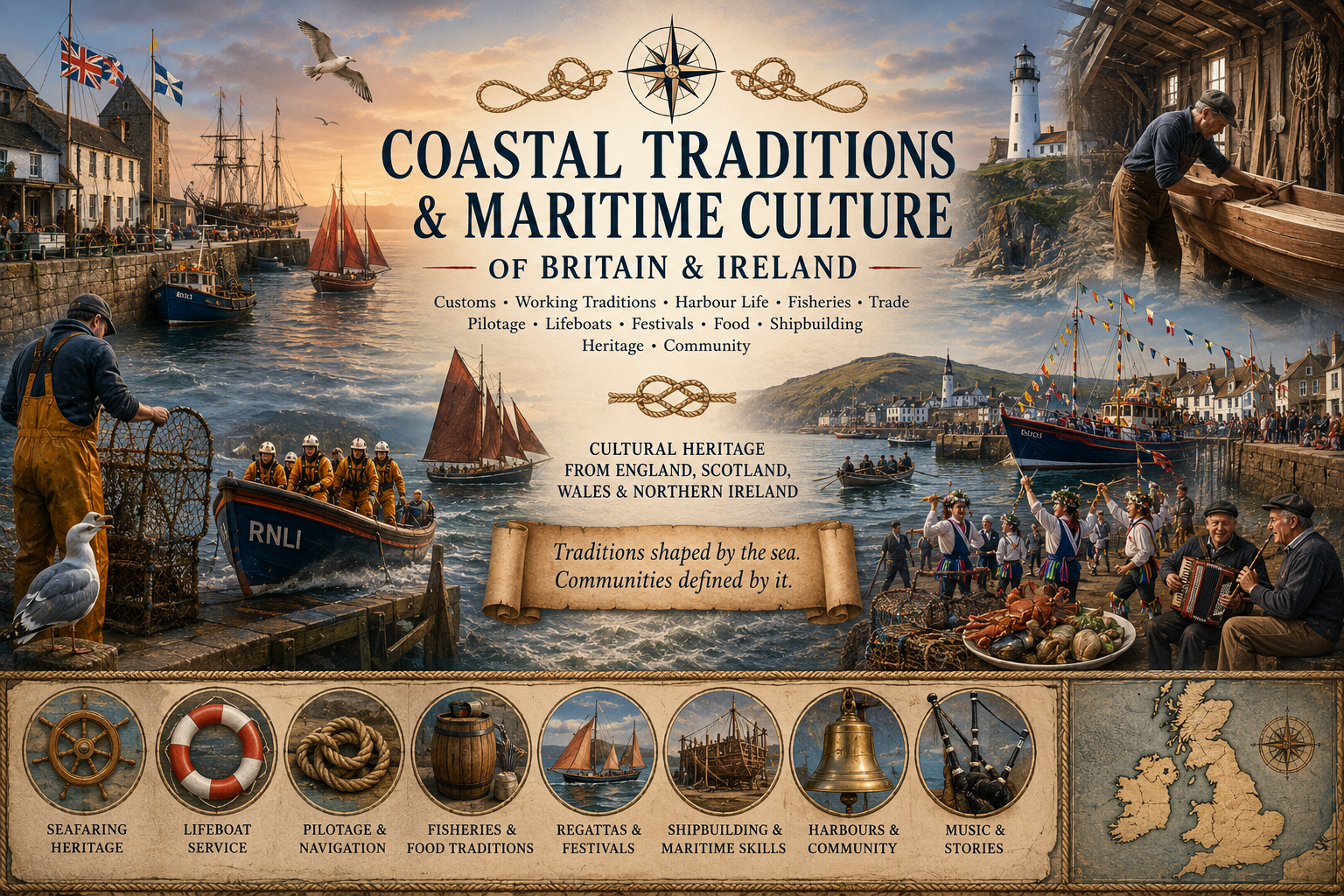
- Coastal Traditions & Maritime Culture of Britain and Northern Ireland
- Coastal Myths & Legends of Britain & Northern Ireland
Comments