




Boatbuilding, Yacht Racing and Island Ferry Culture
The Isle of Wight's maritime character is closely linked to its position within the Solent and its long association with small craft, commercial shipping and regular cross-Solent communication. Unlike many stretches of the south coast, the island's relationship with the sea is reinforced by daily dependence upon ferry services and by extensive recreational and competitive sailing activity. Maritime traditions remain visible around the principal harbours at Cowes, East Cowes, Yarmouth, Bembridge and Ryde, while the Solent itself continues to function as one of the busiest small-craft waterways in Britain.
Boatbuilding has been a significant coastal industry for much of the island's modern history. The sheltered waters of the Medina Estuary provided suitable conditions for yards engaged in the construction, repair and fitting-out of sailing vessels, yachts and commercial craft. Cowes and East Cowes became particularly associated with yacht construction, marine engineering and related trades. Although the scale of production has varied over time, specialist marine businesses remain an established part of the waterfront economy. The concentration of maritime skills around the Medina has contributed to a strong continuity of practical seafaring knowledge, extending from professional shipwrights and engineers to sailing clubs and private owners.
Yacht racing forms the most widely recognised element of the island's coastal culture. The Solent's tidal streams, narrow channels and variable conditions have long provided a testing environment for competitive sailing. Organised racing developed during the nineteenth century and remains centred on Cowes, where annual regattas continue to attract both local and visiting crews. While racing activity is particularly visible during major events, it also forms part of everyday maritime life through club racing, training programmes and the maintenance of racing fleets. The traditions associated with seamanship, boat preparation and local knowledge of tides and channels remain important practical skills among participants.
Ferry culture represents another distinctive aspect of island life. Regular passenger and vehicle services linking the Isle of Wight with Portsmouth, Southampton and Lymington have shaped daily patterns of travel, employment and trade for generations. The operation of these routes is not simply a transport function but a continuing maritime practice familiar to most island communities. Harbour approaches, ferry timetables and weather conditions remain matters of practical concern, particularly during periods of strong winds or reduced visibility in the Solent. The routine movement of ferries contributes to a coastal culture in which maritime connections remain part of ordinary life rather than solely seasonal activity.
Fishing has generally played a smaller role than on some neighbouring coasts but has nevertheless contributed to local maritime traditions. Small inshore fisheries have operated from several harbours, targeting species available within local waters and the eastern and western Solent. Practices have altered in response to changing regulations, markets and fish stocks, and activity now varies considerably between ports. The sale and consumption of locally landed seafood remains part of the working waterfront in some locations, though commercial fishing is no longer the dominant coastal industry it once was in certain communities.
Maritime rescue services also form part of the island's coastal identity. Lifeboat stations at locations including Cowes and Bembridge have long served waters characterised by dense vessel traffic, strong tidal flows and extensive recreational use. Support for lifeboat operations, whether through fundraising, volunteering or local participation, remains a recognised element of coastal community life. Knowledge of changing sea conditions and respect for the hazards of the Solent continue to underpin these traditions.
Many of these practices show notable continuity into the present day. Yacht clubs remain active, marine trades continue to operate around established waterfronts, and ferry routes maintain essential links with the mainland. Harbour communities still reflect a close awareness of tides, weather and navigation, particularly within the Medina and around the entrances to the Solent. Although commercial patterns have evolved, the practical relationship between island settlements and the sea remains evident.
Today, the Isle of Wight retains a maritime culture distinguished by boatbuilding, organised sailing and sustained ferry connections. These activities, supported by working harbours and active coastal communities, continue to shape the character of the coastline and reinforce the island's long-standing orientation towards the sea.
- The UK Coastal Operating Guide
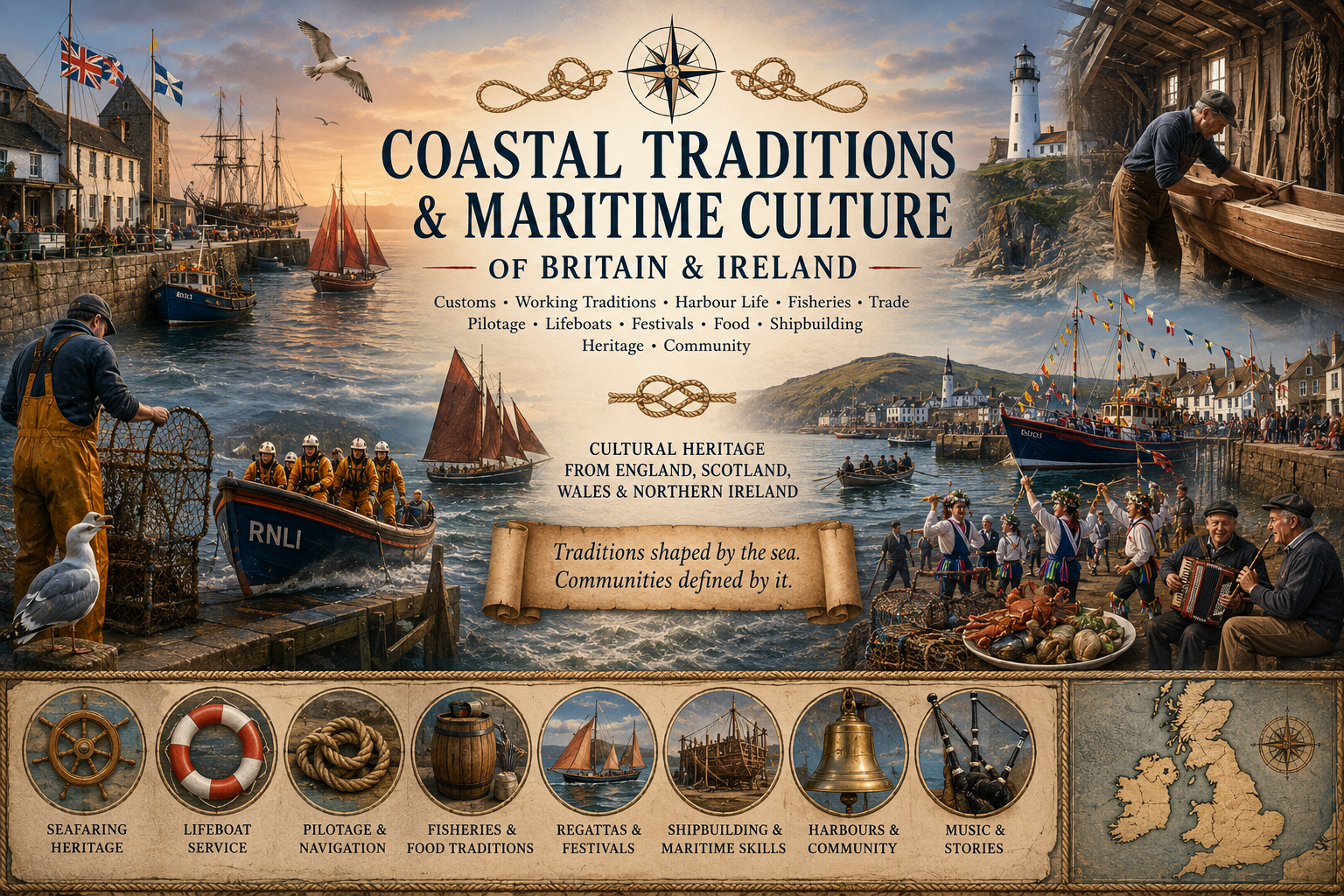
- Coastal Traditions & Maritime Culture of Britain and Northern Ireland
- Coastal Myths & Legends of Britain & Northern Ireland
Comments