



Cinque Ports Heritage and Cross-Channel Maritime Traditions
The South Kent Coast occupies a long-established position on one of the busiest sea routes in northern Europe. Extending between the White Cliffs, the shingle shores of Romney Marsh and the approaches towards Dungeness, the coast has long been defined by navigation, harbour management and regular passage across the English Channel. Maritime culture remains closely associated with the historic Cinque Ports, although its expression varies between individual harbours and settlements. Throughout the area, tidal streams, changing banks and exposure to easterly weather have influenced local seamanship and harbour practice as much as political or commercial history.
The principal historic association is with the Confederation of the Cinque Ports, whose member towns provided ships and mariners to the Crown in return for trading and legal privileges. Along the South Kent Coast this tradition was centred particularly on Dover, Hythe and the former harbour of Romney, while nearby Sandwich, although situated on the Wantsum, formed an important part of the same network. Silting, coastal change and alterations to estuaries gradually reduced the practical importance of some medieval ports, yet the institutional identity of the Cinque Ports has survived well beyond their original naval obligations. Ceremonial offices, civic processions and recognised titles continue to reflect this distinctive maritime administration.
Cross-Channel trade has remained a defining influence for centuries. Before modern ferry services, regular movement of merchants, pilgrims, fishermen and coastal traders linked Kent with ports in northern France and the Low Countries. The narrowness of the Strait encouraged frequent communication but also demanded careful judgement of weather and tide. Local pilots and experienced fishermen acquired detailed knowledge of the strong tidal streams off the South Foreland and the approaches to Dover, while generations of mariners became accustomed to working within one of the world's busiest shipping corridors. These practical traditions remain evident in the professional culture of modern harbour operations.
Fishing has continued where local conditions permit, although its scale has altered considerably. Beach-launched vessels were once common from several settlements where no substantial harbour existed, with catches reflecting seasonal movements of Channel species. Shellfish, flatfish and herring have all contributed to local fisheries at different periods, while the sheltered waters around Folkestone supported an established fishing fleet. Modern commercial fishing is more limited than formerly, but working boats remain part of the waterfront in places, and local fish markets continue to supply coastal communities where viable landings are maintained.
Harbour customs have developed according to the differing character of each port. Dover's role has long been dominated by commercial shipping, naval activity and cross-Channel passenger traffic, while Folkestone combined fishing with packet services before later redevelopment of its harbour. Smaller landing places such as Hythe retained traditions suited to shallow-draught craft and beach operations rather than large enclosed docks. Variations in tidal access and exposure have produced differing local practices, and no single pattern should be assumed across the whole coastline.
Lifeboat service forms another enduring element of the coast's maritime identity. The combination of heavy commercial traffic, strong tides and rapidly changing weather has generated a long history of rescue work. Volunteer crews have served from stations including Dover, Dungeness and Folkestone, where practical seamanship continues to be passed between successive generations. Although modern equipment differs greatly from earlier pulling and sailing lifeboats, the emphasis upon local knowledge, readiness and cooperation remains consistent with earlier practice.
Several civic ceremonies continue to acknowledge the authority and history of the Cinque Ports. Periodic gatherings of representatives, together with the installation of civic officers and formal processions, preserve traditions originating in medieval maritime obligations. These observances now serve chiefly ceremonial purposes, but they maintain a visible connection between present-day communities and the long-established governance of the coast. Local regattas, rowing events and harbour celebrations also occur, though their form and frequency vary between towns and should be regarded as local rather than coast-wide customs.
Boat maintenance, small-scale marine engineering and harbour trades continue alongside commercial shipping and leisure craft. Although traditional wooden boatbuilding has declined, repair yards and marine services remain active where fishing vessels, pilot craft and recreational boats require support. Ferry operations at Dover sustain an international maritime workforce whose routine reflects continuous Channel crossings rather than seasonal activity. Recreational sailing, yacht clubs and sea angling have likewise become established parts of waterfront life without wholly replacing older commercial uses.
The South Kent Coast therefore retains a notably strong continuity of maritime culture. While modern navigation systems, commercial ferries and changing fisheries have altered the character of daily work afloat, the influence of the Cinque Ports, cross-Channel communication and practical harbour seamanship remains readily apparent. For the navigator, these traditions are reflected less in ceremony than in the continued importance of tides, harbour discipline and the close relationship between coastal communities and the waters of the English Channel.
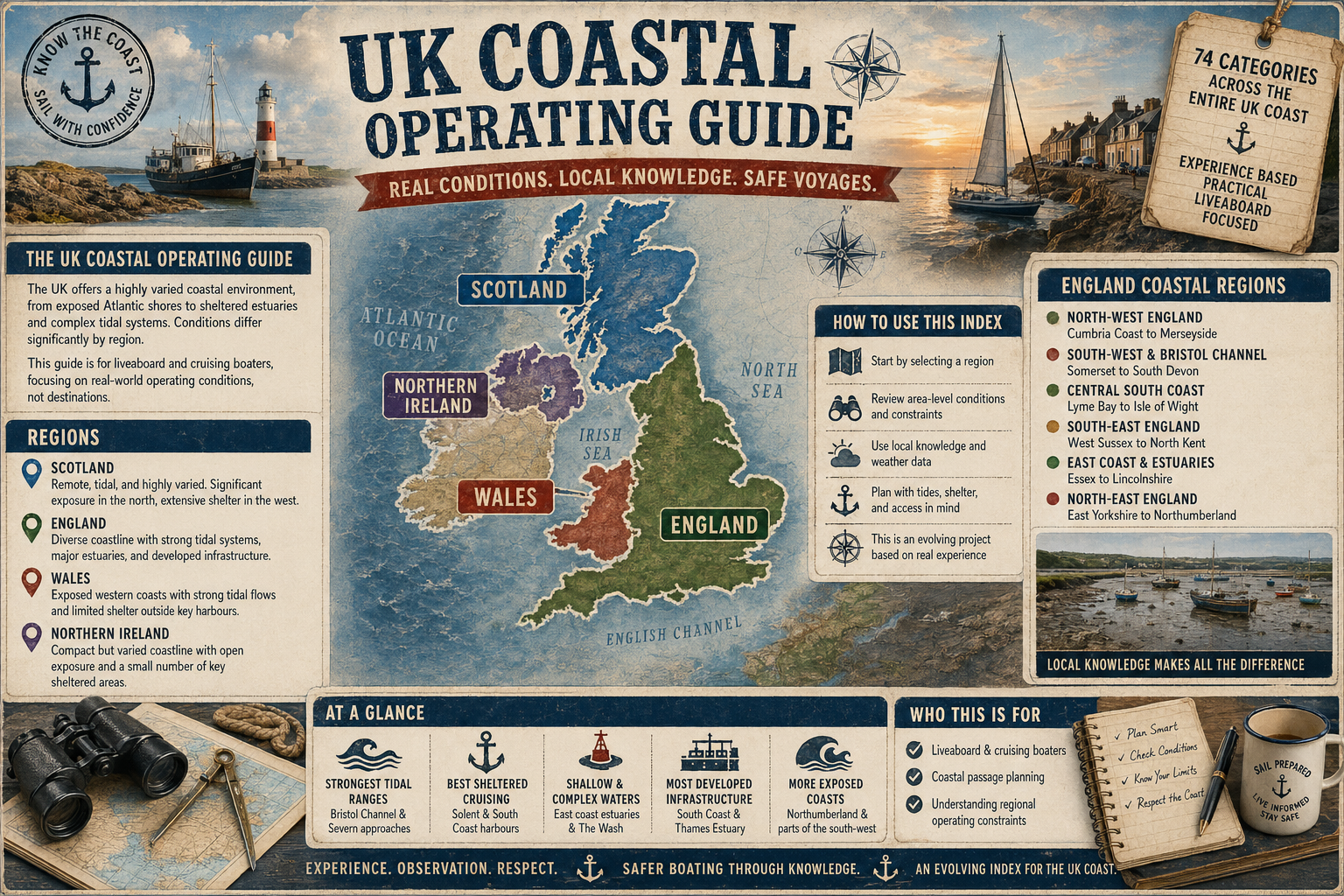
- The UK Coastal Operating Guide
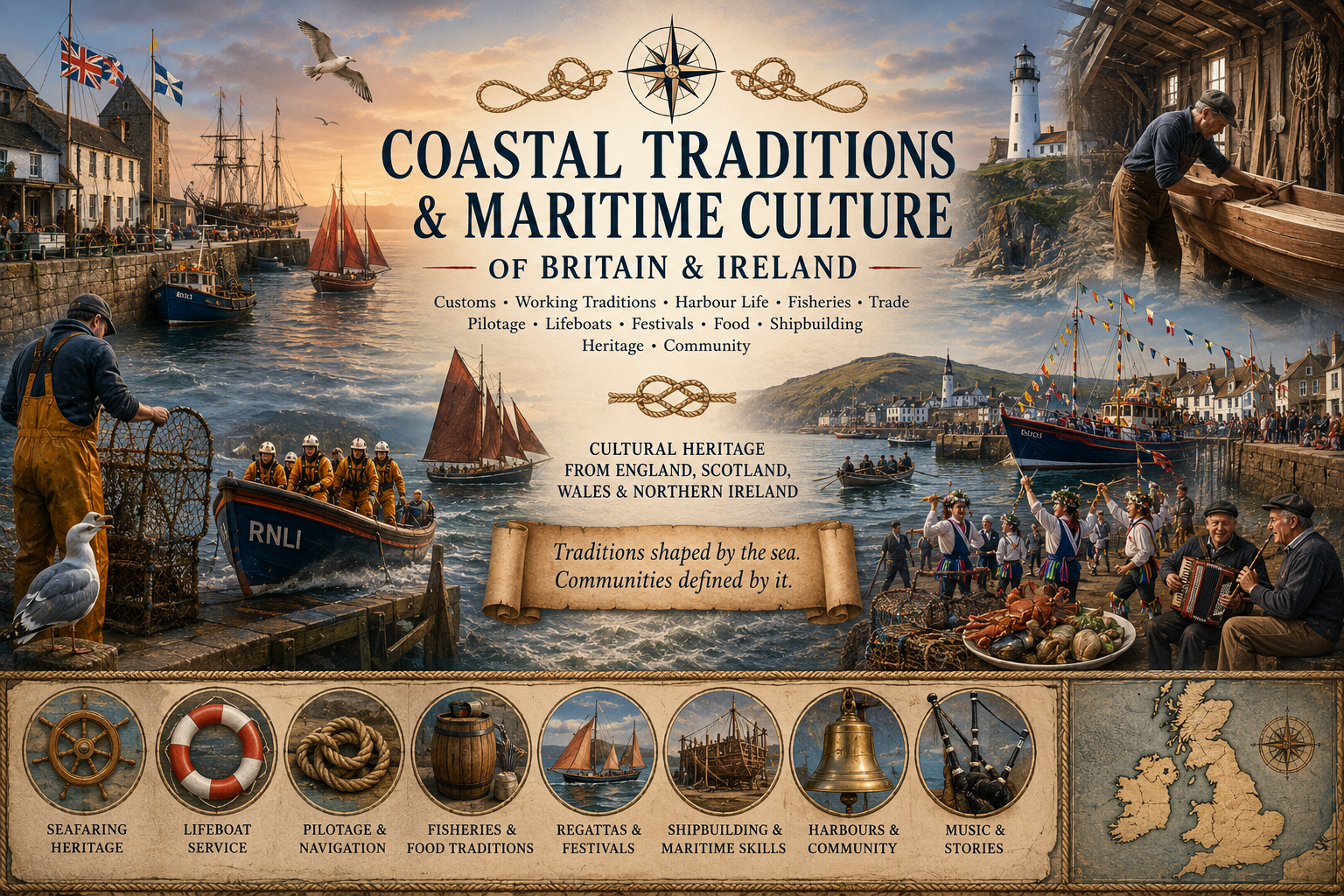
- Coastal Traditions & Maritime Culture of Britain and Northern Ireland
- Coastal Myths & Legends of Britain & Northern Ireland
Comments