





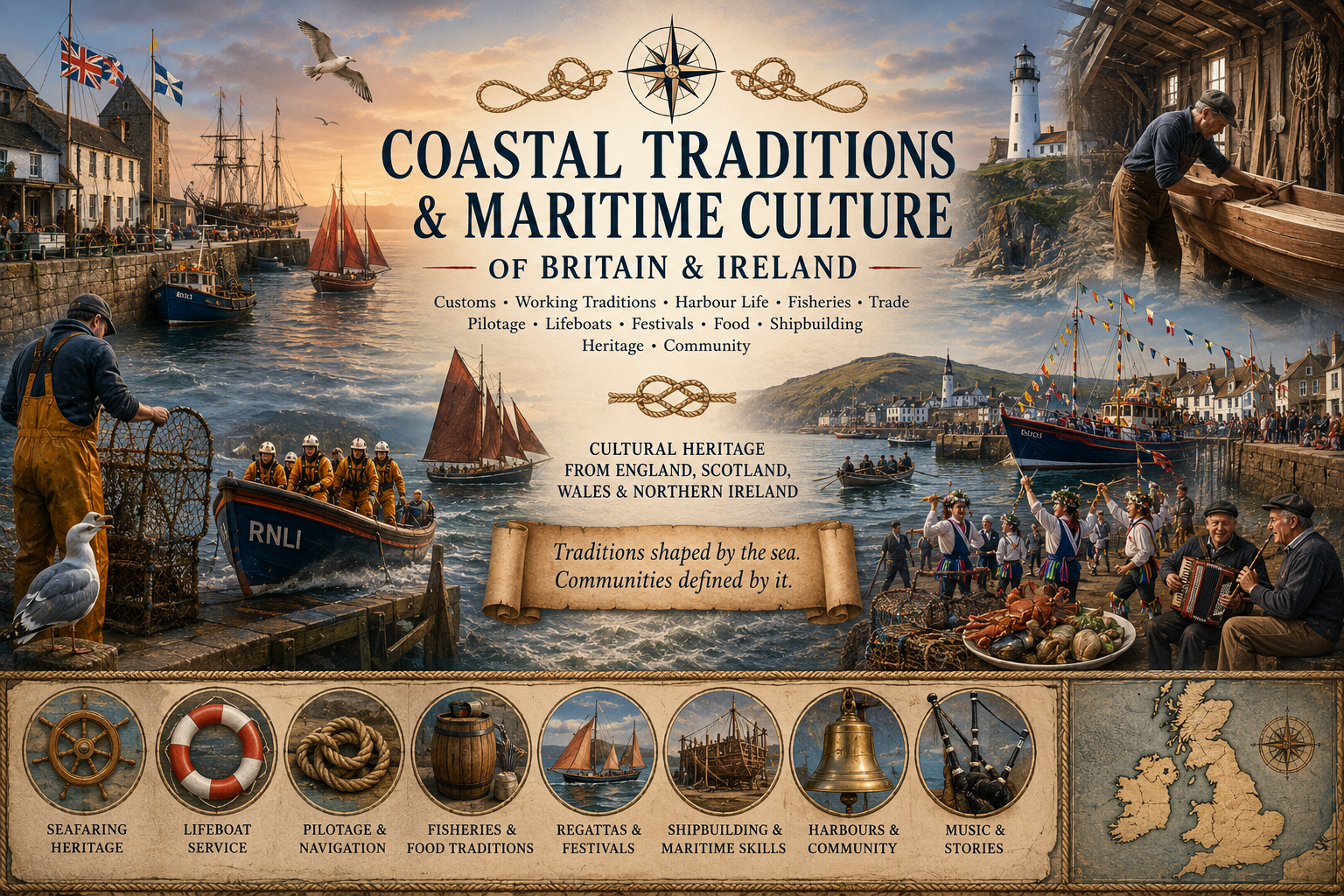
Small Fishing Ports and Coastal Trading Heritage
Lyme Bay occupies the broad sweep of coast between east Devon and west Dorset, bounded by a succession of small harbours, beaches, cliffs and river mouths rather than by a single dominant port. Maritime culture around the bay has long been shaped by inshore fishing, local coastal trade and the practical demands of operating from relatively small havens exposed to changing weather from the south and east. Traditions vary between communities, but many share a close association with working waterfronts, seasonal fisheries and the management of craft in tidal waters.
Historically, the settlements around Lyme Bay relied upon the sea for communication and employment. Before modern road connections, small vessels carried agricultural produce, timber, lime, coal and manufactured goods between neighbouring ports and to larger centres along the English Channel. Harbours such as Lyme Regis, Beer, Bridport's former port facilities at West Bay, and the Axe estuary area supported modest trading activity alongside fishing. The pattern was generally one of short coastal passages rather than long-distance commerce, with local mariners combining several occupations according to season and opportunity.
Fishing provided a more enduring maritime occupation. The bay has supported fisheries for shellfish and a variety of demersal and pelagic species, although the precise balance has altered over time with changes in regulation, markets and fish stocks. Small boats operating close to shore traditionally worked from beach landings or compact harbour facilities, and many fishing families maintained connections with the industry across several generations. Along parts of the coast, especially where harbour infrastructure was limited, the handling and launching of boats formed a distinctive feature of daily working life.
Boatbuilding and repair also formed part of the maritime economy. While Lyme Bay was not a major national centre for ship construction, local yards and craftsmen supplied fishing vessels, harbour craft and small trading boats suited to the conditions of the Channel coast. Skills associated with timber boat maintenance survived for many years through practical necessity, and traces of these traditions remain within specialist marine trades and preservation projects.
Customs associated with the sea have generally reflected the working character of the coastline. Regattas developed in several harbour communities during the nineteenth century and remain a recurring feature in some locations. These events commonly combined boat racing, seamanship competitions and community gatherings linked to the maritime calendar. Their form differs from port to port, and many have evolved considerably, yet they continue to provide a visible connection with local seafaring activity.
Lifeboat service has also become an important element of coastal identity around Lyme Bay. The combination of commercial traffic in the Channel, local fishing activity and periods of difficult weather created a continuing need for organised rescue provision. Volunteer involvement in lifeboat operations has been a notable feature of several communities and remains one of the more visible expressions of maritime continuity. Memorials, station histories and local commemorations reflect the significance attached to rescue work and loss at sea.
Maritime food traditions remain evident in varying degrees. Local catches continue to influence coastal markets, restaurants and domestic consumption, although modern supply chains have reduced the direct relationship between individual harbours and local diets. Shellfish and fresh fish nevertheless retain a recognised place within the cultural identity of many settlements bordering the bay.
Present-day maritime life is more diverse than in the past. Commercial fishing remains active in several ports, though generally on a smaller scale than during earlier periods. Recreational boating, sailing clubs, diving activity and harbour-based marine services now contribute significantly to waterfront activity. Even so, working fishing vessels, fish landings and routine harbour operations continue to provide visible links with older patterns of coastal employment.
The cultural continuity of Lyme Bay may best be described as moderate. Traditional occupations have declined in scale, and some former trading functions have disappeared entirely. Nevertheless, fishing fleets, lifeboat institutions, regattas, harbour management practices and surviving maritime trades maintain a recognisable connection with the bay's seafaring past. Across both the Devon and Dorset shores, the character of the coastline continues to reflect the practical relationship between local communities and the waters of the English Channel.
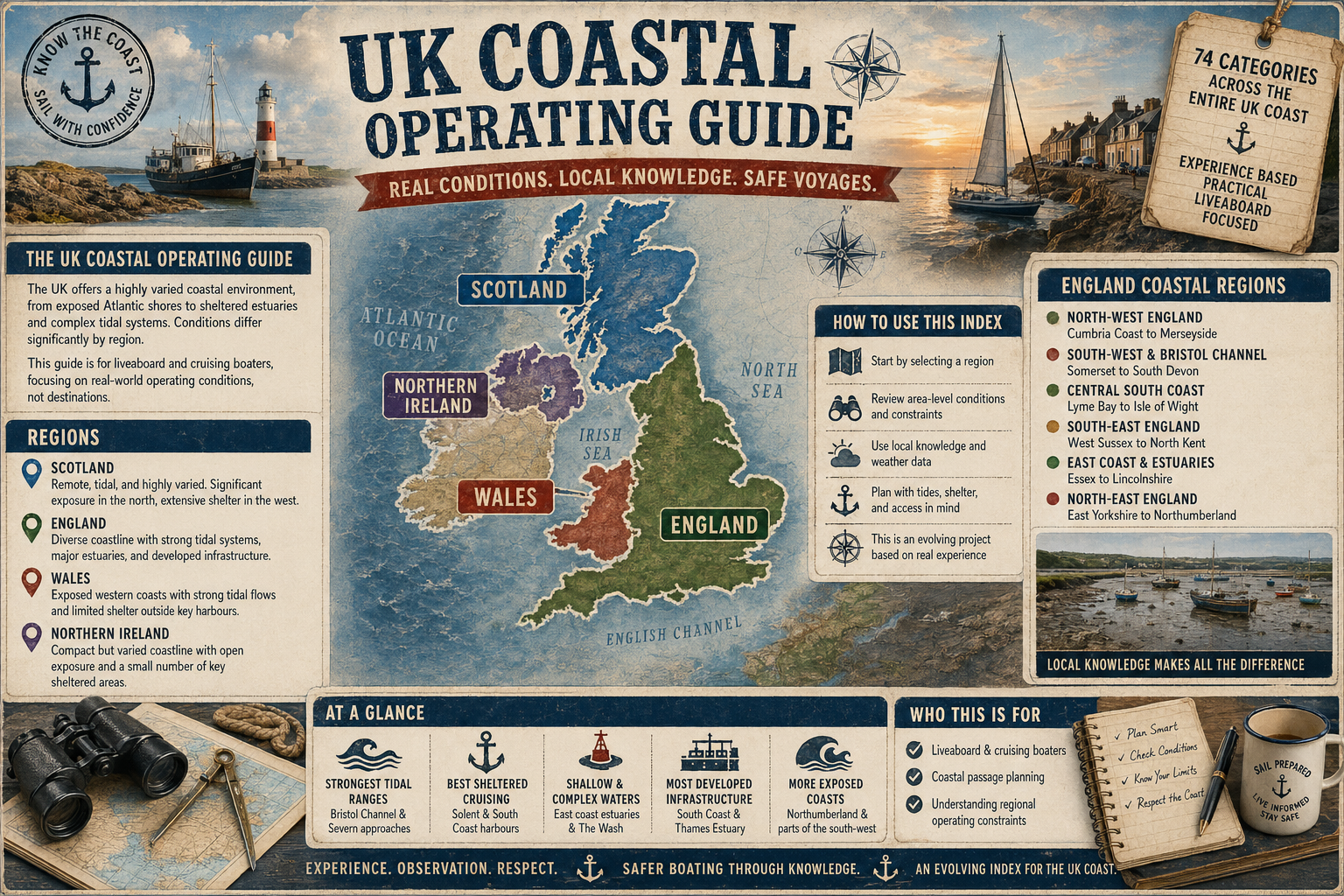
- The UK Coastal Operating Guide
- Coastal Traditions & Maritime Culture of Britain and Northern Ireland
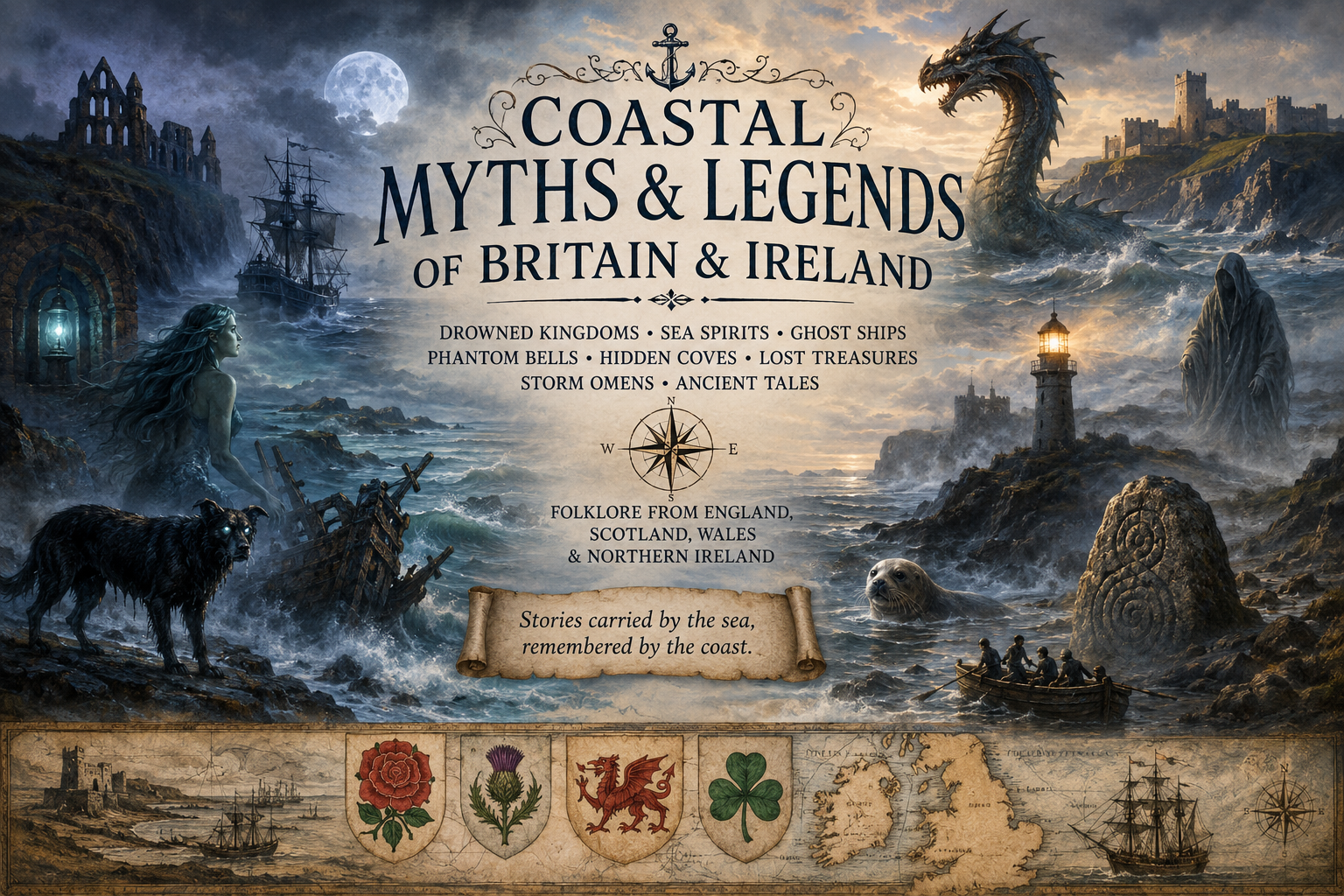
- Coastal Myths & Legends of Britain & Northern Ireland
Comments