


Crab Fisheries and Lifeboat Communities
The Norfolk Coast has long been shaped by the demands of the southern North Sea, where shallow offshore banks, shifting channels and an exposed shoreline have influenced both navigation and coastal settlement. Maritime life remains closely associated with the county's small harbours, tidal estuaries and beach-launching communities rather than with large commercial ports. Although individual local practices differ between settlements, the coast retains a strong continuity of working traditions centred upon inshore fishing, volunteer lifeboat service and practical knowledge of local waters.
Historically, the coastline supported a varied fishing economy adapted to local conditions. Cromer became particularly associated with brown crab, a fishery that continues to define the town's maritime identity. Small crab boats traditionally launched directly from the beach, an arrangement requiring careful judgement of weather, surf and tide. Elsewhere, fishing was carried on from harbours and tidal creeks including Wells-next-the-Sea, Blakeney and Brancaster, where channels through extensive salt marshes and sandbanks demanded familiarity with constantly changing conditions. Shrimping, shellfish gathering and seasonal net fisheries also formed part of the coastal economy, although their importance varied between districts and has altered over time in response to regulation, environmental change and commercial pressures.
The broad estuaries and tidal inlets of north Norfolk encouraged small-scale coastal trade as well as fishing. Agricultural produce, timber, coal and general cargo were once moved through creeks and modest ports serving nearby villages. Before improvements to inland transport, these waterways provided practical commercial links with other east coast ports. Harbour entrances frequently required pilotage based upon local knowledge, as channels shifted with winter storms and tidal movement. Even today, access to several harbours remains dependent upon favourable states of tide, reinforcing a continuing awareness of tidal planning among local mariners.
Lifeboat service occupies a particularly prominent place in the maritime culture of the Norfolk Coast. Communities at Cromer, Wells-next-the-Sea, Hunstanton and other stations have maintained a longstanding tradition of voluntary rescue in waters where changing weather, strong tides and offshore banks have contributed to frequent incidents. Beach launching was historically a distinctive feature at several stations, requiring coordinated effort by crews and shore teams. Modern equipment has altered operational methods, but the emphasis upon local commitment, seamanship and community support remains evident. Lifeboat days and associated fundraising events continue to form part of the annual calendar in many coastal towns, reflecting practical support for rescue services rather than ceremonial display.
Harbour customs continue to reflect the working character of the coast. At Wells-next-the-Sea, vessels entering or leaving the harbour remain attentive to buoyed channels across the outer sands, while local advice is valued because depths may alter between seasons. Similar dependence upon local knowledge has long characterised navigation within Blakeney Harbour and neighbouring creeks, where drying channels, marshes and shifting banks reward cautious pilotage. These practical conditions have influenced generations of fishermen, harbour staff and recreational sailors alike, preserving traditions based upon observation and experience rather than formal ceremony.
The coastal settlements have also retained maritime food traditions closely linked with local fisheries. Cromer crab remains the best-known example, supplied through an active inshore fleet and recognised as a regional product rather than simply a visitor attraction. Locally landed shellfish and fish continue to support fishmongers, markets and seasonal trade where commercial conditions permit. The character of these food traditions reflects the availability of local catches and the continuing operation of small fishing businesses rather than historical re-enactment.
Boat maintenance and repair continue on a modest scale in several harbours, although the construction of traditional wooden working craft has become far less common than in previous generations. Modern fishing vessels, harbour launches and recreational craft are maintained alongside surviving examples of locally developed designs where practical use justifies their preservation. The transfer of local knowledge often occurs through family fishing businesses, sailing clubs, harbour authorities and lifeboat organisations rather than through formal apprenticeship alone.
The present-day character of the Norfolk Coast therefore reflects a coastline where maritime customs remain closely connected with everyday working practice. Crab fishing continues to provide one of its most recognisable industries, while volunteer lifeboat crews sustain an established tradition of coastal service. Along the estuaries, tidal harbours and beach-launching settlements, practical seamanship, awareness of changing channels and familiarity with local waters continue to shape coastal life much as they have for many generations, even as the scale and methods of maritime employment have evolved.
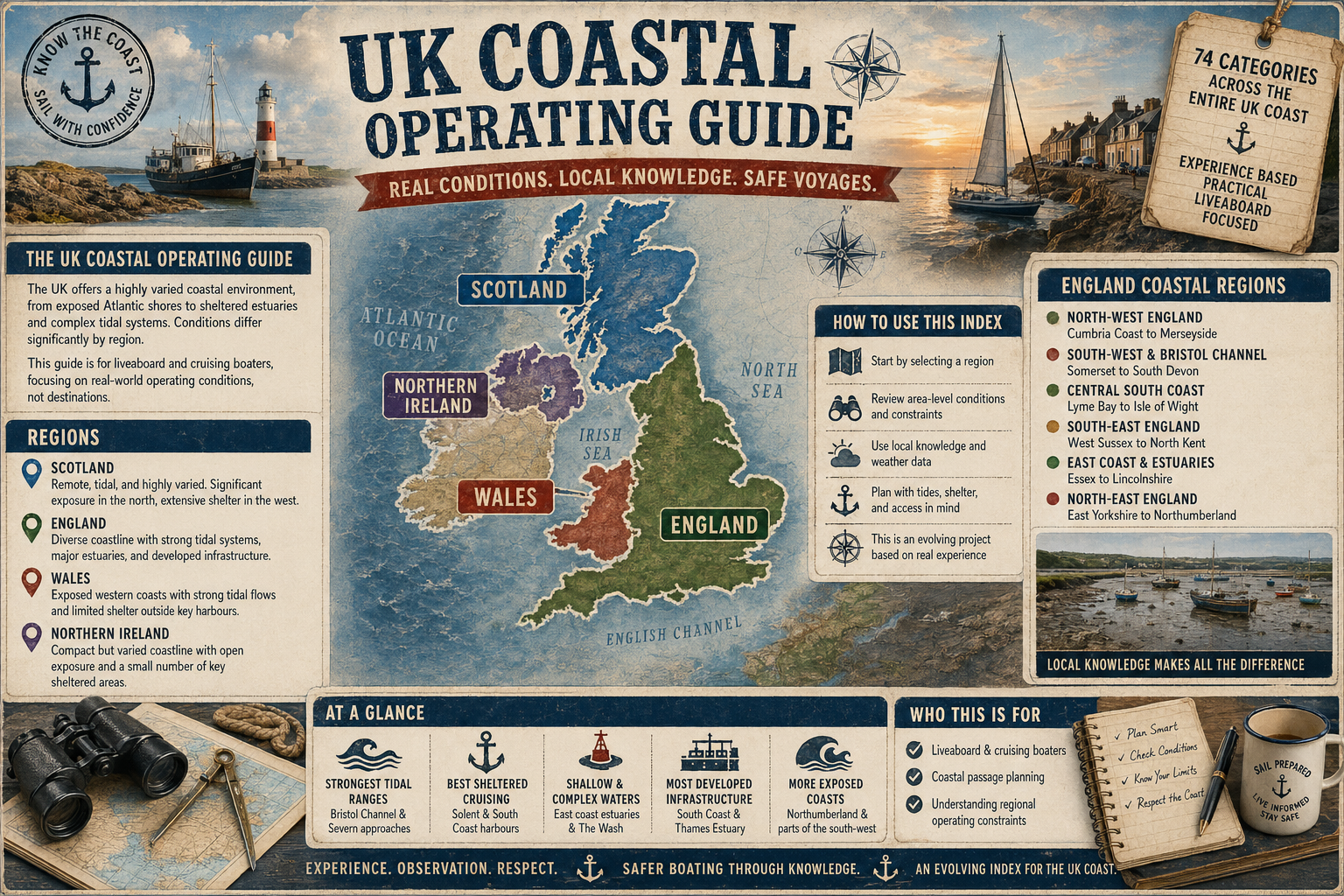
- The UK Coastal Operating Guide
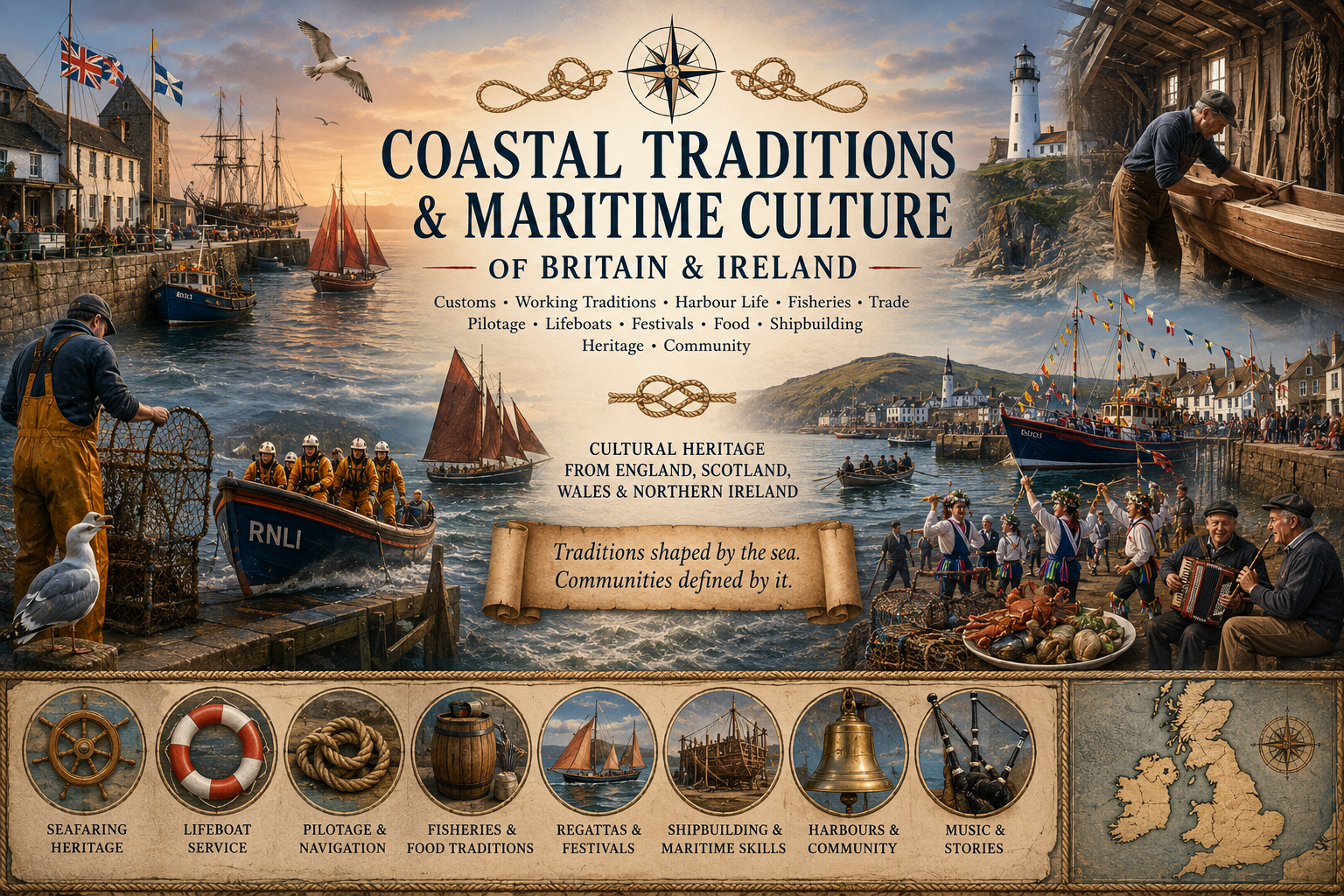
- Coastal Traditions & Maritime Culture of Britain and Northern Ireland
- Coastal Myths & Legends of Britain & Northern Ireland

Comments