




Exmoor Coastal Fishing and Tidal Harbour Communities
The North Devon coast facing the Bristol Channel retains a maritime character shaped chiefly by strong tides, small harbour settlements and the limited shelter available along the Exmoor shore. Between the Taw and Torridge estuary in the west and the steep combes eastward towards Porlock Bay, local seafaring traditions developed around short inshore passages, seasonal fisheries and the practical handling of drying harbours. Cultural continuity is moderate. While commercial traffic has diminished from its nineteenth-century extent, several working practices and community customs associated with the sea remain in altered form.
The tidal conditions of the Bristol Channel have long governed activity along this coast. Harbours such as Ilfracombe, Lynmouth and Watchet, together with smaller landing places at Porlock Weir and Combe Martin, depended upon local knowledge of tide and weather rather than extensive harbour works. Many quays dried at low water and required vessels to take the ground safely against stone walls or timber staging. Coasting craft formerly traded limestone, coal, bark, grain and agricultural produce between North Devon, South Wales and the Somerset side of the Channel. Before railway connections became reliable, small packet and cargo services linked these communities with Bristol and Swansea on a regular if weather-dependent basis.
Fishing traditions varied along the coast according to harbour size and seabed conditions. Lobster and crab fisheries were historically important from Ilfracombe eastward towards the Exmoor coast, with potting carried out close inshore from small open boats and later from motor vessels working short daily tides. Mackerel fishing by line and net formed a seasonal occupation during calmer months, while herring and sprat fisheries occurred intermittently when stocks allowed. At Clovelly, farther west on the Devon coast but connected culturally with the same Channel fisheries, the use of sledges for landing catches on the steep harbour approaches remained notable into recent decades. Oyster dredging and estuarial fishing within the Taw and Torridge system were also of local significance, though regulation and environmental change reduced much of this activity during the twentieth century.
The isolation of the Exmoor shoreline encouraged a degree of maritime self-reliance. Lifeboat traditions remain particularly strong at Lynmouth and Ilfracombe, where difficult sea conditions and exposed lee shores produced a long association with rescue work. The Lynmouth lifeboat disaster of 1899 remains part of local maritime memory and reinforced the practical seamanship expected of fishing and harbour communities along this coast. Informal systems of lookout, assistance with moorings and shared labour at fish landings survived well into the modern period, especially where crews operated from small family-owned vessels.
Boatbuilding on the North Devon coast was generally small in scale but locally important. Estuarial yards at Appledore became known for wooden coasting vessels, pilot craft and fishing boats suited to shallow bars and strong tides. Elsewhere, repairs and construction were often carried out on beaches or against harbour walls using local timber where available. Distinct local hull forms are difficult to define consistently across the region, although clinker-built boats and sturdy inshore craft adapted to beach launching were common. Maritime employment also extended to lime burning, net making and the processing of imported coal and timber through minor ports.
Certain ceremonial and communal customs associated with the sea continue in restrained form. Regattas at Ilfracombe and Appledore preserve elements of older harbour gatherings, though now oriented largely towards sailing clubs, rowing and local fundraising rather than commercial fisheries. Blessings of the fleet are not uniformly established along the coast but occasional church services connected with lifeboat stations and fishing communities remain part of the calendar in some harbours. The annual appearance of visiting yachts and motor cruisers during summer months has altered harbour usage, yet many quays continue to accommodate fishing craft alongside recreational traffic.
Modern continuity is most evident in the persistence of small-scale shell fishing, charter angling and harbour maintenance traditions. Crab and lobster landings still support limited commercial activity from Ilfracombe and neighbouring ports, while the Taw and Torridge estuary retains a working relationship with pilotage, dredging and coastal navigation. Appledore continues to identify strongly with ship and boat construction despite changes in ownership and industrial scale. Along the Exmoor coast, the handling of drying moorings, the use of tide windows for harbour entry and the cautious treatment of Channel weather remain practical aspects of everyday maritime life rather than inherited ceremony alone.
The maritime culture of North Devon is therefore less defined by large ports than by adaptation to a difficult tidal coast. Harbours remain closely tied to local conditions of weather, seabed and access, and many surviving customs derive directly from the demands of operating small craft within the Bristol Channel. Although commercial activity is reduced from earlier periods, the coastline still shows continuity between historic fishing communities and present-day harbour practice.
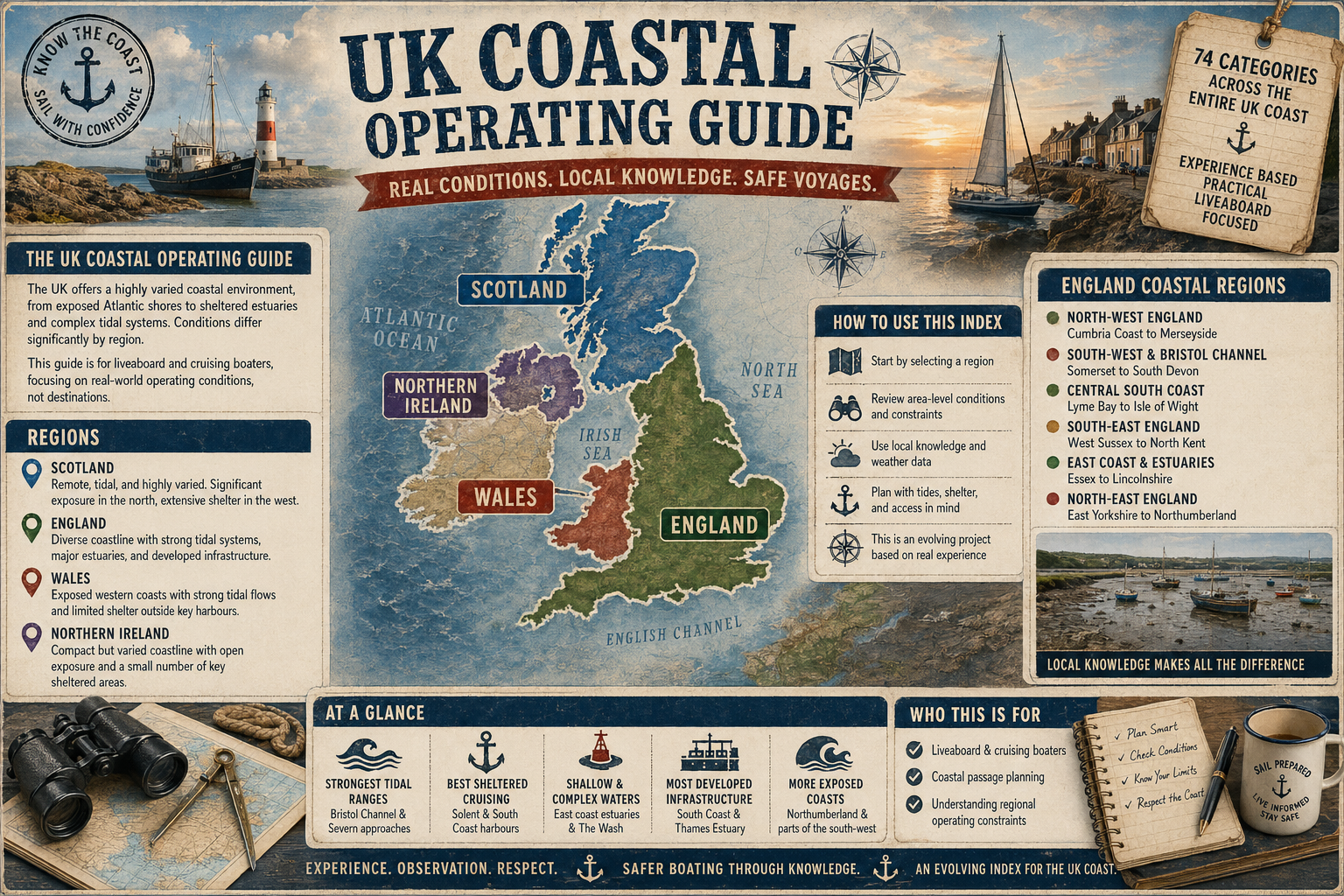
- The UK Coastal Operating Guide
- Coastal Traditions & Maritime Culture of Britain and Northern Ireland
- Coastal Myths & Legends of Britain & Northern Ireland

Comments