




Oyster Fisheries, Harbour Trading and Pilot Gig Traditions
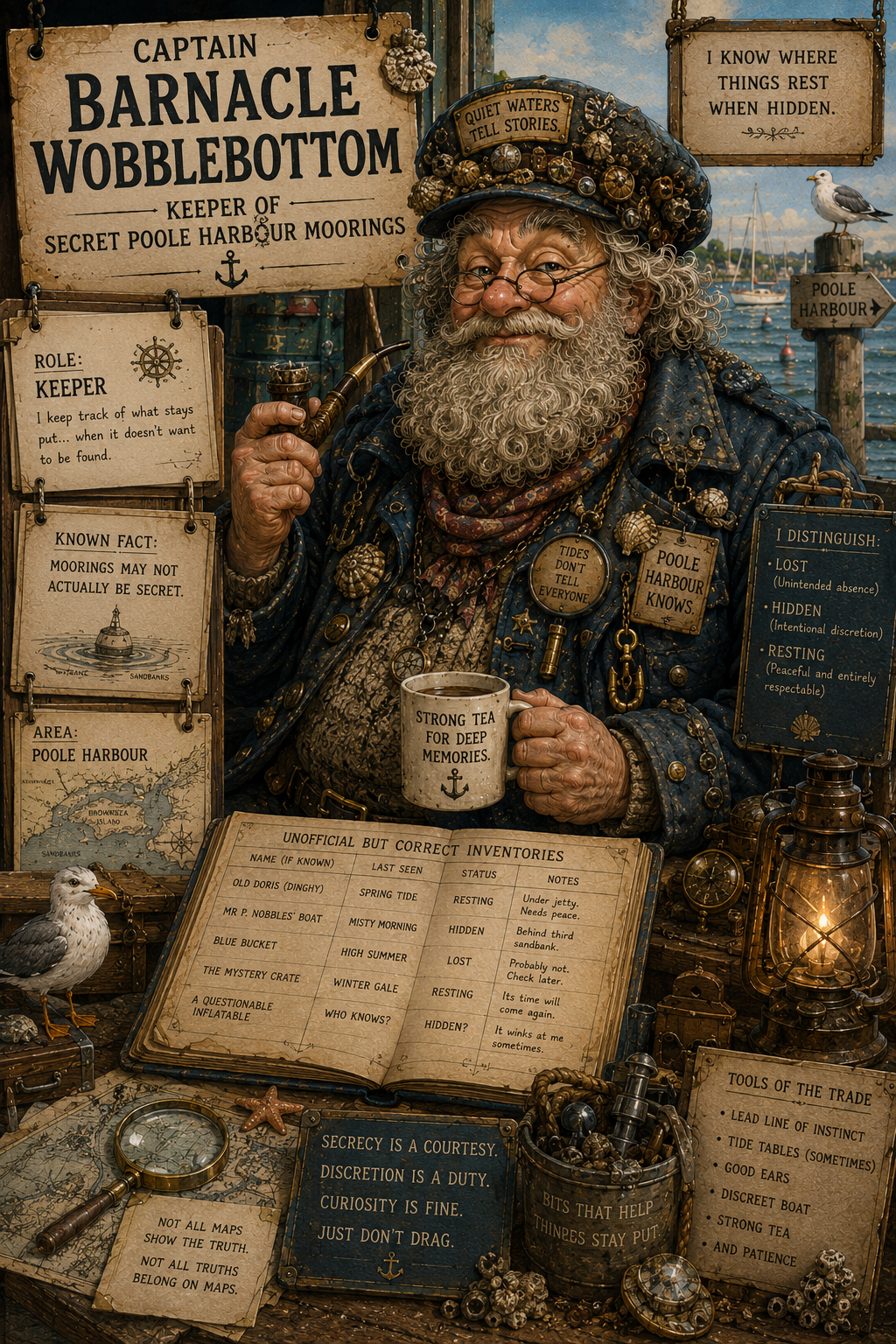
Poole Harbour forms a broad, shallow natural basin on the Dorset coast, entered through a narrow channel constrained by shifting sands and shoals, notably the Sandbanks and Haven area. Its waters are largely sheltered but demand careful attention to tides, wind against tide conditions, and rapidly changing depths outside marked channels. The harbour remains one of the larger natural harbours in Europe, with navigation closely tied to maintained fairways, buoyage, and local pilotage practice rather than open coastal passage.
Historically, the harbour developed as a working estuarine port rather than a deep-water naval anchorage. From the medieval period onwards, Poole acted as an outlet for coastal trade and cross-Channel traffic, with documented links to the Newfoundland cod fisheries from the 16th century. Merchants from the town were engaged in seasonal Atlantic voyages, returning dried fish, while exporting cloth, salt and later ball clay from the Dorset hinterland. This clay trade, particularly from the Wareham and Purbeck areas, became a sustained commercial artery feeding export through Poole Quay. Alongside this, oyster beds within the harbour supported a regulated fishery, though yields and activity have varied significantly over time due to pollution controls, siltation and changing water quality. Evidence of managed shellfish exploitation remains part of the harbour’s economic memory, even where large-scale working beds are no longer continuous.
Harbour pilotage has long been central to safe navigation in the approach channels. The narrow entrance between Sandbanks and Studland requires local knowledge of tidal set and the constantly shifting bar. Traditional pilot services have evolved into formalised harbour authority arrangements, but the practical reliance on experienced local mariners persists. Small craft traffic, fishing vessels, and commercial shipping all share constrained fairways, and vessel movements are frequently timed around tidal height rather than schedule convenience. Ferry operations to the Channel ports have historically used the deeper dredged approaches, reinforcing Poole’s role as a managed gateway rather than a free-swinging anchorage.
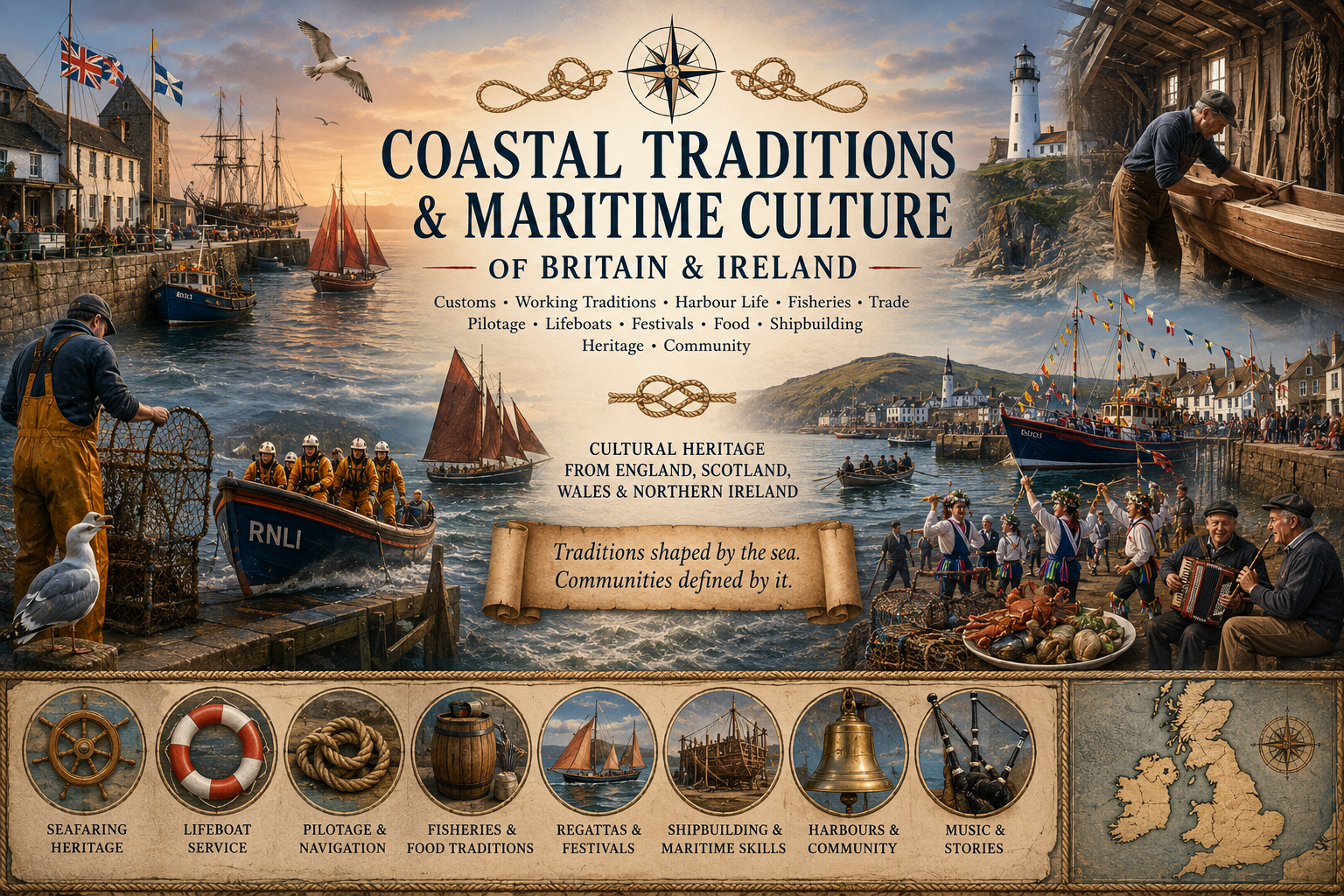
Working waterfront traditions remain most visible along Poole Quay and Hamworthy. Fishing activity, though reduced compared with earlier periods, continues on a smaller scale, particularly shellfish and inshore catch. Harbour industries have diversified into marina services, boat repair, and leisure craft maintenance, reflecting the broader transition of many south coast ports. The presence of the RNLI base at Poole underscores the continued maritime risk profile of the area, with lifeboat operations reflecting both offshore and inshore rescue requirements across Dorset and beyond. The harbour’s tidal flats and constricted channels generate frequent call-outs involving grounded vessels and rapidly deteriorating conditions in exposed reaches.
Maritime cultural expression in Poole is closely linked to regattas, yacht racing, and organised sailing rather than vernacular boat types such as pilot gigs, which are more strongly associated with Cornish waters. Local yacht clubs and harbour regattas reflect a long-standing recreational sailing culture that developed alongside commercial decline in the late 19th and 20th centuries. Brownsea Island, within the harbour, also forms part of the social maritime landscape, with its role in early scouting history adding a recognised but indirect cultural layer to the estuary rather than a seafaring tradition in itself.
In modern practice, Poole Harbour functions as a mixed-use water space where commercial operations, recreational sailing, and conservation areas overlap. Environmental regulation has become increasingly significant, particularly concerning seagrass beds, bird habitats, and water quality management, which in turn affects anchoring zones and shellfish viability. The harbour’s petroleum infrastructure at the northern margins, linked to Wytch Farm production, introduces another layer of controlled industrial maritime use, requiring exclusion zones and monitored tanker movements.
The present-day character of Poole Harbour is therefore defined less by a single maritime identity than by layered continuity. Elements of historic trade, regulated fisheries, formal pilotage, and modern recreational sailing coexist within a tightly bounded tidal system. Navigation remains governed by local knowledge and authority control, while the harbour continues to function as both working port and managed coastal environment within the wider western approaches of the English Channel.
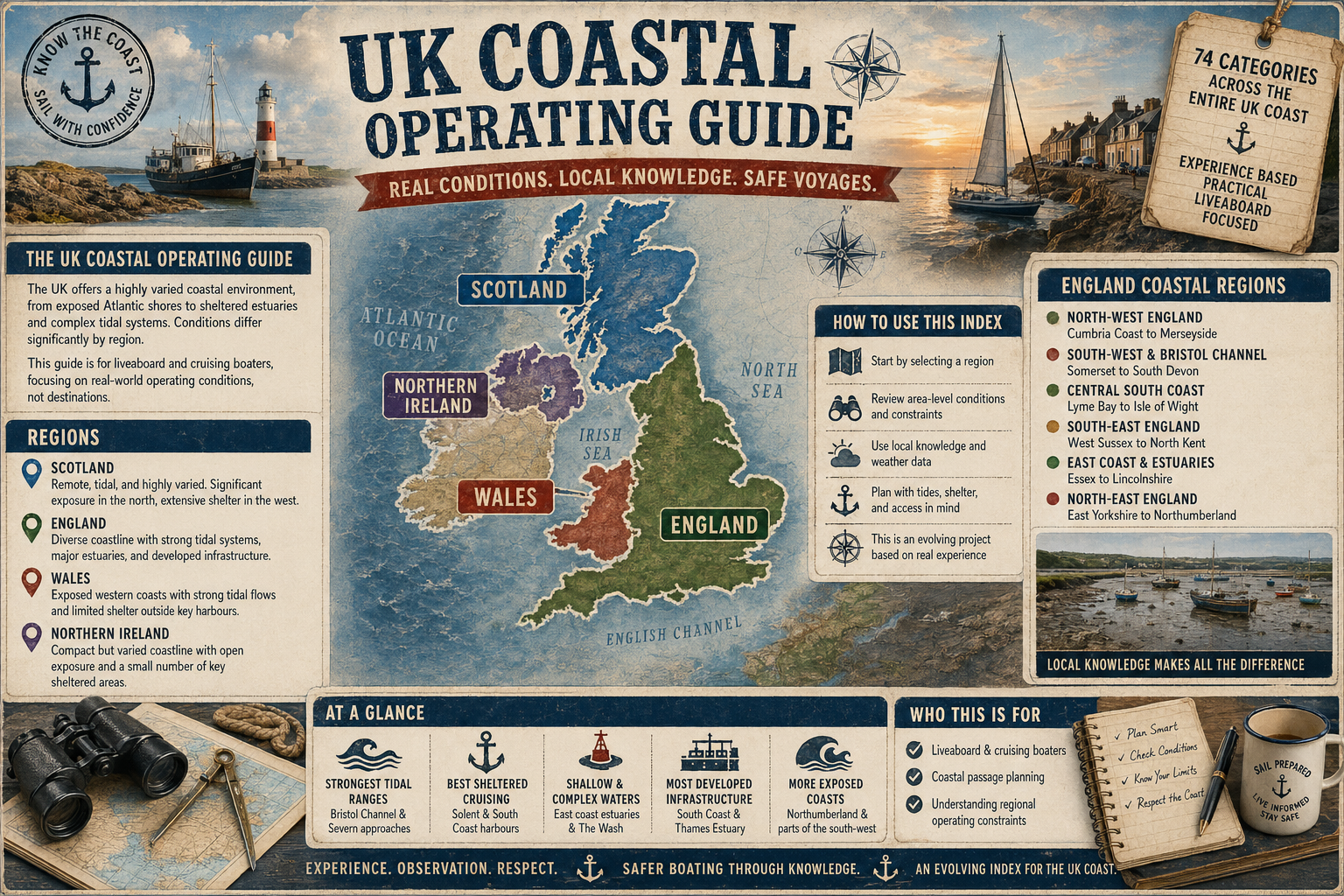
- The UK Coastal Operating Guide
- Coastal Traditions & Maritime Culture of Britain and Northern Ireland
- Coastal Myths & Legends of Britain & Northern Ireland

Comments