




Naval Heritage and Harbour Defence Communities
The East Solent possesses a maritime character shaped primarily by the long association between Portsmouth Harbour and the defence of the principal eastern entrance to the Solent. Here the traditions of naval service, dockyard employment and harbour management have exercised a stronger influence than recreational sailing alone. The combination of deep-water approaches, sheltered anchorages and naturally protected channels established the district as one of Britain's principal naval centres, and many aspects of local maritime life continue to reflect that role.
Portsmouth Harbour has served both naval and commercial purposes for many centuries, while Gosport developed as an important supporting community through shipbuilding, victualling, repair and military engineering. The sheltered waters of Spithead provided one of Britain's principal fleet anchorages, where warships assembled, received stores and awaited orders before proceeding to sea. Large naval reviews held at Spithead periodically brought together substantial fleets, although these exceptional occasions should be distinguished from the routine naval movements that characterised the harbour throughout most of its history.
The eastern approaches required careful pilotage owing to strong tidal streams, shifting shoals and the concentration of naval and merchant traffic. Harbour pilots, boatmen and later port control services developed detailed local knowledge of channels leading past Horse Sand, No Man's Land and neighbouring banks. Safe navigation depended upon strict observance of signals, buoyage and harbour regulations, traditions that remain evident in the management of modern commercial and naval traffic. Even today, leisure craft navigating the area are expected to accommodate the movements of large vessels entering and leaving Portsmouth Harbour.
Naval requirements encouraged the growth of a wide range of specialist maritime occupations. Shipwrights, engineers, riggers, sailmakers and marine artificers were employed directly within the dockyard or by supporting industries around Portsmouth and Gosport. Boatbuilding extended beyond naval work to include harbour launches, service craft, lifeboats and small commercial vessels suited to local conditions. While modern construction methods have altered the character of the industry, marine engineering and vessel maintenance continue to provide an important element of the working waterfront.
Harbour defence formed another distinctive aspect of East Solent maritime culture. Fortifications guarding the approaches, together with defensive installations on both shores and offshore forts within the Solent, reflected the continuing strategic importance of the anchorage. Communities connected with these establishments developed practical traditions centred upon transport by water, maintenance of navigational channels and support for military shipping. Although the defensive role of many installations has passed, their presence continues to influence the maritime landscape and the identity of surrounding waterfront communities.
Fishing has generally occupied a less prominent position here than in several neighbouring districts, although inshore fisheries have long operated within the eastern Solent where navigation and military activity permitted. Shellfish gathering and small-scale commercial fishing continued alongside naval operations, particularly in quieter creeks and along sections of the harbour margins. Local catches supplied nearby markets, while the demands of the naval population also supported fish merchants and waterside provisioning. As elsewhere in southern England, changing regulations and environmental conditions have altered these activities over time.
The East Solent also retains longstanding traditions of ferry operation and harbour transport. Cross-harbour passenger services between Portsmouth and Gosport have provided an essential link for centuries, maintaining daily movement between communities closely connected by maritime employment yet separated by water. Pilot boats, harbour launches and service craft continue to perform practical functions within the busy harbour, reflecting routines that have evolved rather than disappeared. Lifeboat stations, coastguard services and volunteer rescue organisations likewise contribute to an enduring culture of professional seamanship and mutual assistance.
Although modern Portsmouth Harbour accommodates naval vessels, commercial shipping, passenger ferries and recreational craft within the same waters, its defining maritime traditions remain rooted in defence, dockyard work and disciplined harbour operation. The continued presence of naval institutions, specialist marine industries and established waterfront communities ensures that the East Solent retains a distinctive identity, one shaped less by seasonal recreation than by the practical demands of one of Britain's principal historic naval harbours.
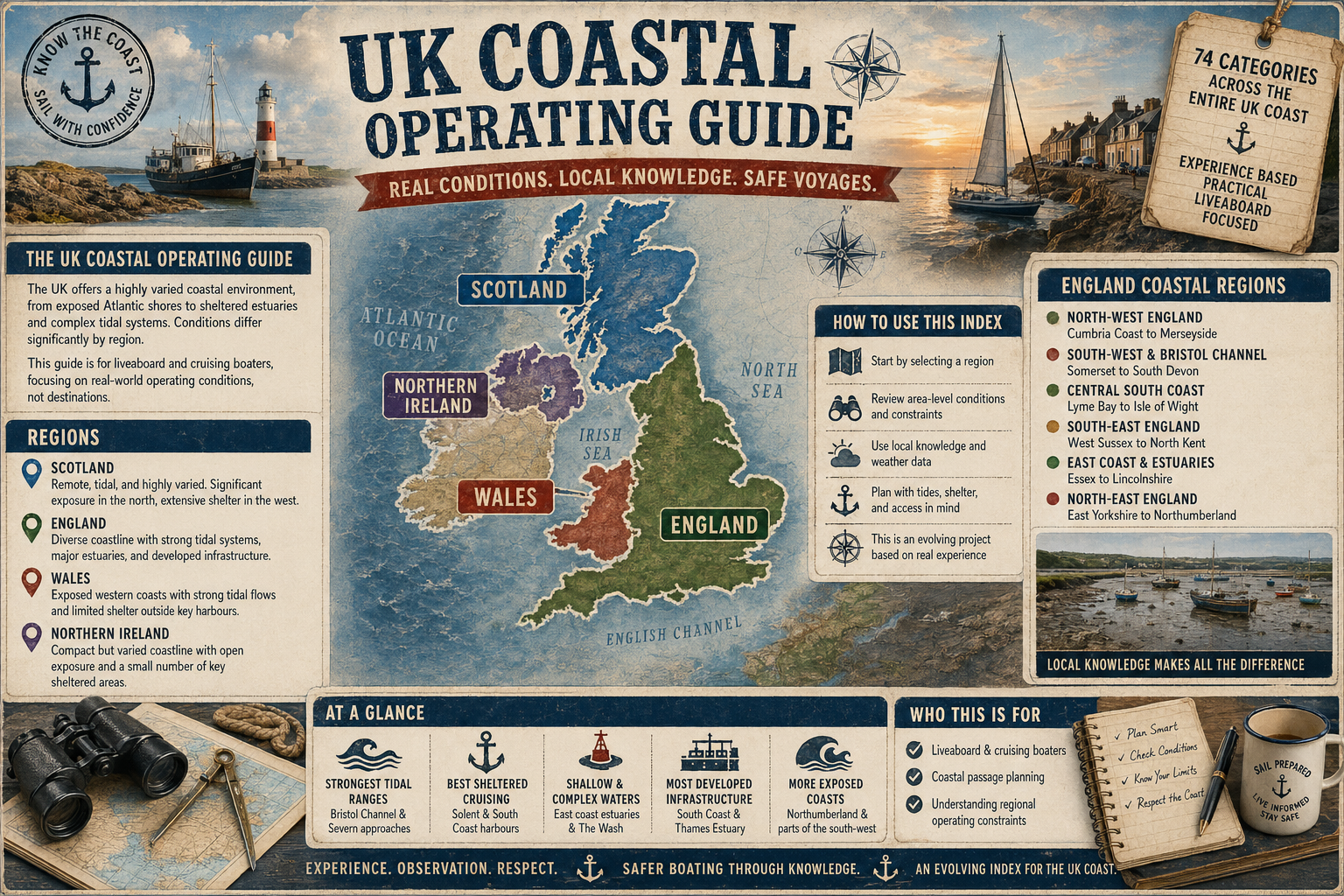
- The UK Coastal Operating Guide
- Coastal Traditions & Maritime Culture of Britain and Northern Ireland
- Coastal Myths & Legends of Britain & Northern Ireland

Comments