




Herring Fisheries, Beach Boats & Smokehouse Traditions
The Suffolk Coast has long been shaped by its shallow North Sea waters, shifting shingle banks and tidal estuaries. From the Deben and Orwell in the south to the Alde, Ore and Blyth farther north, coastal communities developed practical traditions closely adapted to changing channels, exposed beaches and modest natural harbours. Herring fisheries, beach-launched craft and the preparation of smoked fish became defining features of several settlements, while commercial shipping, pilotage and inshore fishing often existed alongside one another. Although methods and scale have altered considerably, many working practices retain a clear continuity with earlier generations.
For much of the nineteenth and early twentieth centuries the seasonal herring fishery was among the principal maritime activities of the Suffolk Coast. Lowestoft became one of Britain's leading herring ports, with fleets operating throughout the southern North Sea and fish landed in quantities that supported curing yards, smokehouses, coopers, net makers and associated trades. The annual herring season attracted crews and merchants from elsewhere around the east coast, creating periods of intense harbour activity. Smaller ports, including Southwold and Aldeburgh, also maintained active fishing fleets, though generally on a more local scale, combining herring with shellfish, white fish and other seasonal catches according to conditions.
Along stretches where permanent harbours were either absent or restricted by shifting bars, beach boats formed an essential part of coastal working life. At Aldeburgh in particular, fishing craft were traditionally hauled directly onto the shingle above the tide, a practice requiring coordinated labour and equipment suited to steep beaches and variable weather. Similar methods were employed elsewhere where open beach launching remained more reliable than attempting uncertain harbour entrances during adverse tidal conditions. These boats reflected practical local requirements rather than a single standard design, and arrangements naturally varied between neighbouring communities.
The estuaries themselves encouraged distinct maritime occupations. The rivers Deben, Orwell, Alde and Blyth provided sheltered water for trading vessels, fishing craft and later recreational boats, while maintaining longstanding connections with coastal commerce. Agricultural produce, coal, timber and other cargoes passed through quays according to local demand, and smaller sailing vessels continued to use these waterways well into the twentieth century. Pilotage demanded detailed knowledge of continually changing channels, particularly where river mouths migrated or shingle spits altered navigable approaches after storms or periods of heavy tidal movement.
Fish preservation developed naturally alongside the fisheries. Smoking and curing enabled catches to be transported inland or exported before refrigeration became commonplace. Smokehouses became a familiar feature in several Suffolk ports, especially where herring landings justified permanent curing businesses. Although industrial-scale production has largely disappeared, traditional smoking methods continue in a limited number of establishments, preserving techniques that remain closely associated with the working fishing economy rather than later commercial revival.
The coast has also maintained practical customs connected with seamanship and community life. Harbour regattas at centres such as Southwold and Aldeburgh continue established patterns of local sailing competition, though their emphasis today is principally recreational. Lifeboat institutions likewise occupy an enduring place within coastal identity, reflecting the hazards presented by offshore banks, strong tidal streams and frequent changes in weather across the southern North Sea. While ceremonies and commemorations differ between ports, recognition of volunteer rescue services remains a consistent element of maritime life.
Boatbuilding and repair have persisted where sheltered estuarine locations provide suitable facilities. Traditional wooden craft associated with fishing, pilotage and river work have increasingly been joined by vessels maintained for sailing, heritage purposes and private use. Local yards continue to preserve specialist skills in timber construction and restoration, although modern materials are also widely employed. Ferry services across several estuaries, particularly where historic crossing points remain practical, provide another example of long-established maritime functions continuing in adapted form.
Present-day fishing activity is considerably smaller than during the peak years of the herring trade, yet commercial boats continue to operate from Suffolk ports where conditions permit. Shellfish, crab and lobster now form an important part of many inshore fisheries, while smoked fish remains a recognised regional food tradition linked directly to earlier commercial practice. Along the beaches, fishing huts, capstans, winches and hauled boats survive as visible reminders of methods developed for an open and often demanding shoreline rather than enclosed harbours.
The maritime character of the Suffolk Coast therefore remains closely connected with its practical relationship to tide, estuary and sea. The scale of fishing and coastal trade has diminished, but the continuity of beach launching, smokehouse traditions, estuarine boatyards, harbour regattas and working waterfronts provides an observable link between earlier maritime industries and the modern coastline. For the visiting mariner, these surviving practices help explain the distinctive organisation of many Suffolk ports and beaches, where present-day activity continues to reflect longstanding responses to local waters and coastal conditions.
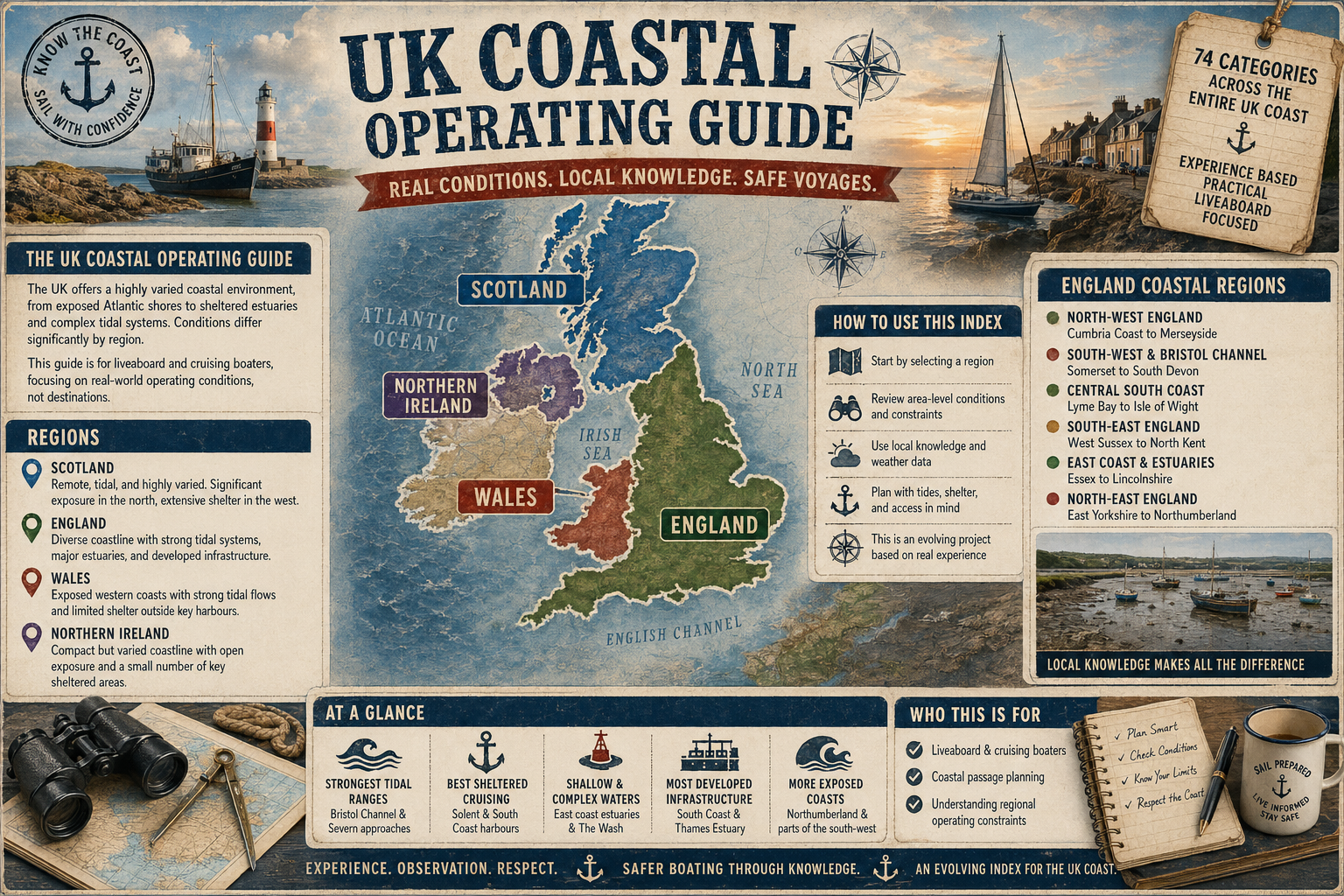
- The UK Coastal Operating Guide
- Coastal Traditions & Maritime Culture of Britain and Northern Ireland
- Coastal Myths & Legends of Britain & Northern Ireland

Comments