




River Pilotage, Shipyards & Lifeboat Stations
The Tyne & Wear coast has long been defined by the demands of navigation between the North Sea and the tidal rivers Tyne and Wear. Its maritime culture developed around commercial navigation rather than small fishing settlements alone, with local knowledge of shifting channels, tidal streams and harbour approaches forming an enduring part of coastal practice. The entrances to both rivers required careful pilotage before successive harbour improvements stabilised navigation, and the tradition of local pilots remains one of the strongest cultural associations along this stretch of coast. Although modern port operations differ greatly from those of earlier centuries, the close relationship between mariners, harbour authorities and coastal communities continues to distinguish the area.
For much of the nineteenth and twentieth centuries, the lower reaches of the Tyne and Wear supported extensive shipbuilding, marine engineering and coal export. Yards along both rivers constructed merchant vessels, naval ships, tugs and specialised craft for service throughout the world. Associated trades, including rope making, sail manufacture in earlier periods, marine fitting and engineering, became established features of waterfront communities. Coal staithes, docks and repair facilities shaped daily working life, while local ferries maintained practical links across the rivers. Although large-scale shipbuilding has contracted considerably, surviving yards, marine engineering businesses and port services preserve elements of these long-established working traditions.
Fishing formed a smaller but persistent part of the maritime economy. North Shields developed as an important fishing port, particularly for North Sea fisheries, with generations of local crews engaged in trawling and later motor fishing. The River Tyne fish quay remains associated with commercial landings and wholesale markets, although its scale has altered over time in response to changing fisheries management and fleet numbers. Along the coast, smaller harbours such as Cullercoats historically supported cobles launched through narrow harbour entrances or directly from the beach where local conditions allowed. As elsewhere on the north-east coast, methods and target species have varied according to season, regulation and changing fish stocks.
The exposed coastline between the Tyne and Wear has also fostered a strong lifeboat tradition. Heavy weather, lee shores and the concentration of shipping approaching both rivers contributed to frequent maritime casualties during earlier periods. Lifeboat stations at locations including Tynemouth and Cullercoats became closely associated with organised rescue work, supported by volunteer crews whose service remains an important part of local maritime identity. Improvements in navigation, harbour engineering and vessel construction have reduced some historic risks, yet the continuing presence of modern lifeboat stations reflects the enduring importance of search and rescue in these waters.
Harbour customs have generally centred upon the practical management of commercial traffic rather than ceremonial observance. Pilot boarding, towage and the coordinated movement of vessels through confined tidal reaches remain familiar aspects of daily operations. The tidal character of both rivers continues to influence navigation despite extensive engineering works, and local knowledge of river conditions, berth access and harbour procedures retains practical value. Working relationships between pilots, tug crews, harbour authorities and commercial shipping represent a continuity extending from the era of sail into the present day, albeit with modern navigational technology replacing many earlier methods.
Public maritime events occur periodically along the rivers and waterfronts, including gatherings of historic vessels, rowing competitions and occasional tall ship visits when facilities permit. Such occasions reflect public interest in the region's maritime associations without replacing the area's fundamentally commercial character. Traditional regattas have been held at various times by local sailing and rowing clubs, though their form and frequency have varied between communities and across different periods. These activities are best regarded as local expressions of working waterfront culture rather than distinctive regional customs unique to the Tyne & Wear coast.
Modern continuity remains particularly evident in the operation of the ports of Tyne and Sunderland, marine engineering, offshore support services and professional pilotage. Commercial navigation continues to shape daily activity along both estuaries, while fishing, although reduced from former levels, remains visible through the operation of North Shields Fish Quay. Volunteer lifeboat crews continue regular training and operational service, maintaining a direct link with earlier generations of coastal rescue. Small craft sailing, rowing and recreational boating now share waters once dominated almost exclusively by industrial traffic, yet the underlying pattern of navigation continues to reflect the geography of tidal rivers entering an often demanding North Sea.
For the visiting mariner, the cultural character of the Tyne & Wear coast is therefore encountered less through formal tradition than through the continued operation of ports, pilotage, rescue services and working waterfronts. The combination of navigational expertise, industrial seafaring and enduring lifeboat service provides a strong sense of continuity, linking present-day practice with maritime occupations that have shaped these estuaries for many generations.
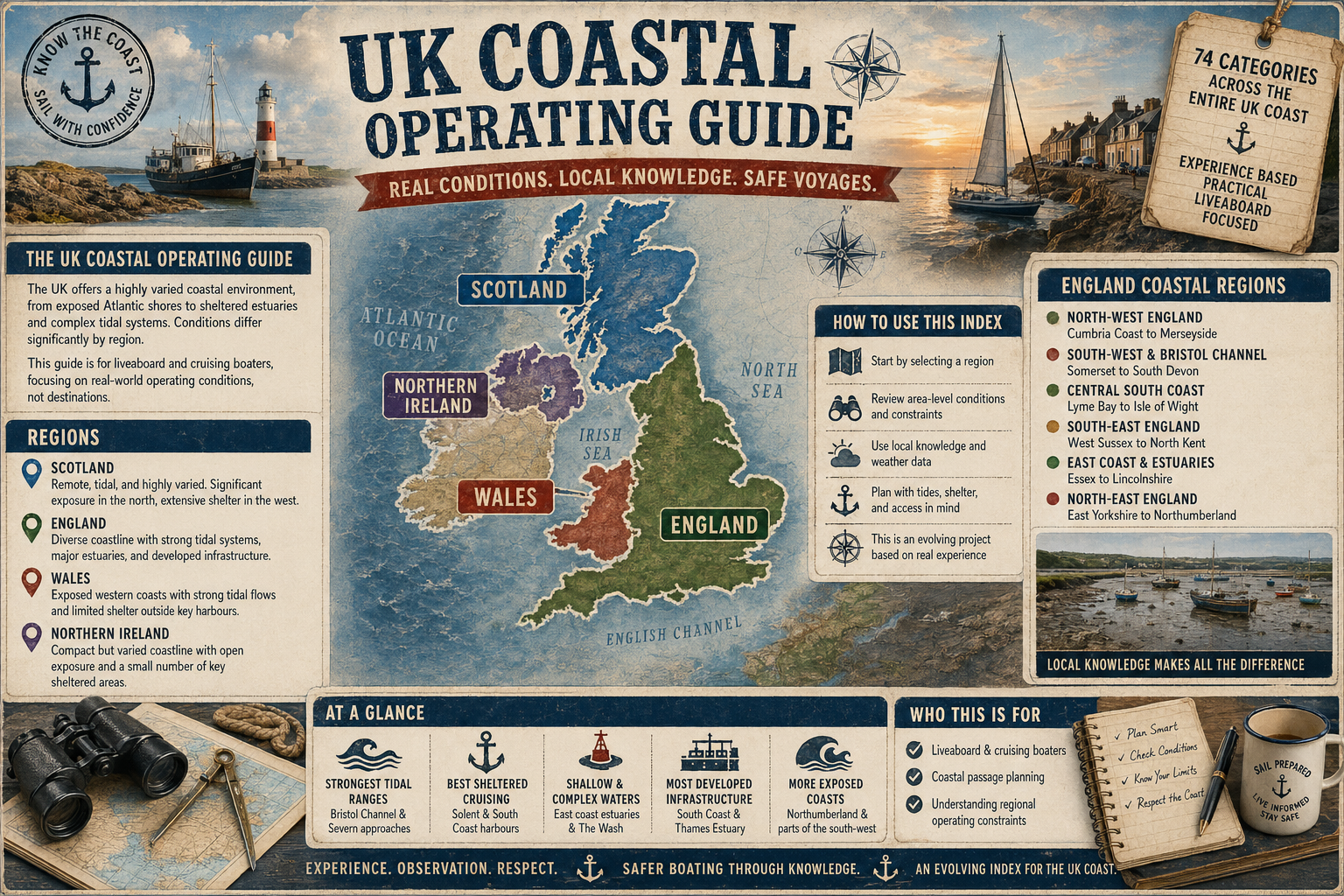
- The UK Coastal Operating Guide
- Coastal Traditions & Maritime Culture of Britain and Northern Ireland
- Coastal Myths & Legends of Britain & Northern Ireland

Comments