




Beach-Launched Fishing Boats and Lifeboat Traditions
The West Sussex coast has long been shaped by the practical demands of an open Channel shoreline interrupted by sheltered harbours and tidal inlets. Much of its maritime character developed around beach-launched fishing boats, small commercial harbours and the need to provide assistance to vessels navigating changing banks and tidal approaches. While patterns vary between communities from Chichester Harbour to Shoreham, the working relationship between settlements and the sea has remained evident, although many traditional occupations now survive on a reduced scale.
Before the widespread construction of modern harbour works, numerous fishing craft operated directly from open beaches where local conditions allowed. The shelving foreshore required boats to be hauled clear of the tide after each landing, and launching depended upon favourable weather, local knowledge and coordinated effort. Along sections of the coast, clinker-built fishing boats worked close inshore for species including bass, flatfish, mullet and shellfish according to season and conditions. Shoreham Harbour gradually became the principal commercial port of the district, while the more sheltered waters of Chichester Harbour supported smaller fishing vessels together with oyster gathering, cockling and other estuarine fisheries where regulations permitted. Fish markets were generally modest in scale and served nearby towns rather than distant export trade.
The tidal character of Chichester Harbour, together with its creeks, mudflats and channels, encouraged a distinctive pattern of seamanship based upon local pilotage rather than deep-water navigation. Elsewhere the Arun, although lying largely beyond the central West Sussex frontage, influenced coastal trading through its estuary, while Shoreham developed as an important harbour for coasting vessels carrying timber, aggregates, agricultural produce and manufactured goods. Small ship repair yards, chandlers and marine engineering businesses became established alongside commercial wharves, reflecting the varied requirements of working craft rather than solely recreational boating.
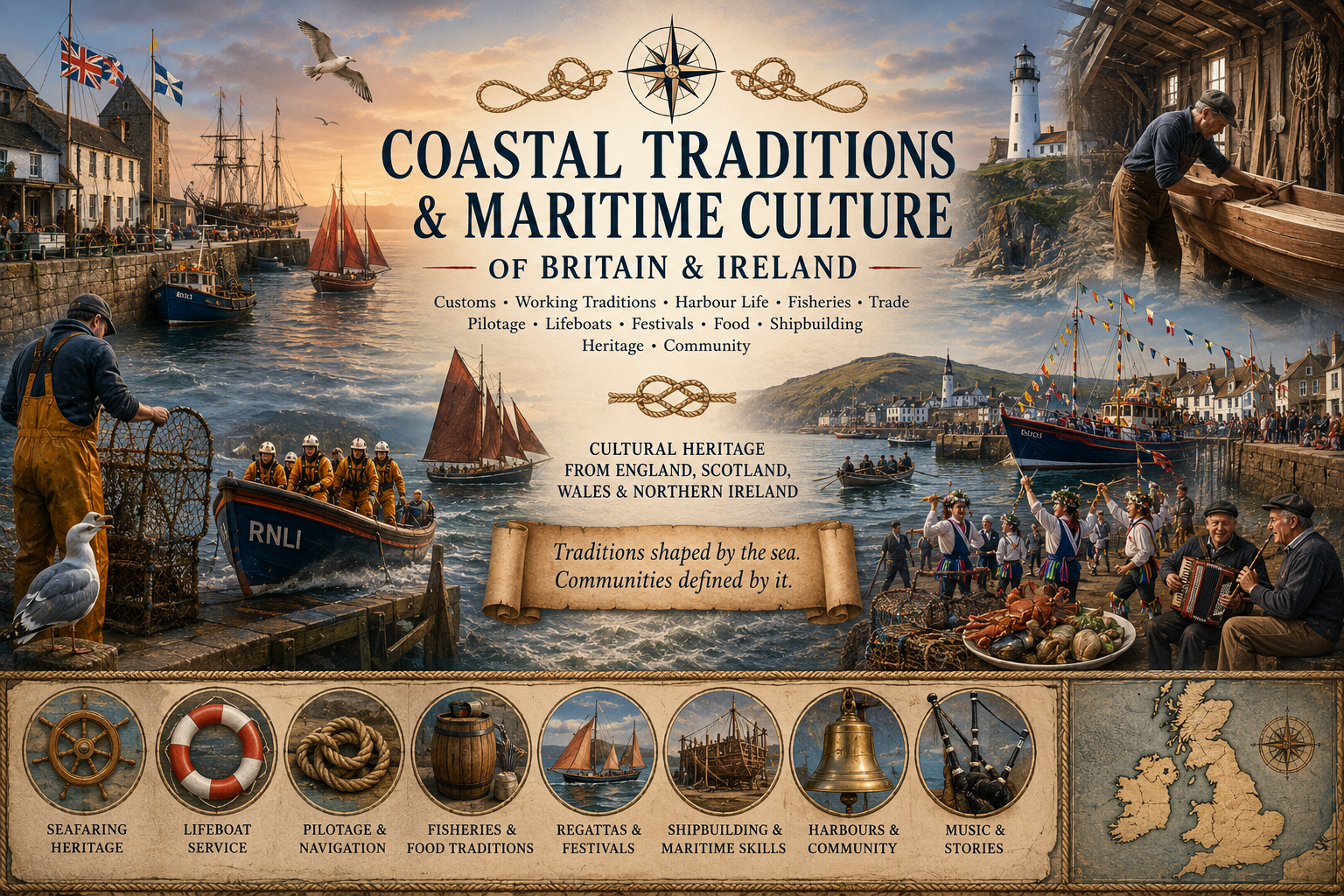
Lifeboat service has formed a significant part of the coast's maritime culture. The exposed beaches and shifting offshore banks have presented hazards to fishing vessels, coasters and pleasure craft alike, particularly during strong south-westerly weather and periods of poor visibility. Volunteer lifeboat crews became an accepted feature of several coastal communities, supported by local fundraising and practical knowledge of the shoreline. Although modern navigation and improved harbour facilities have altered the nature of many incidents, the tradition of voluntary rescue continues to hold a recognised place within local maritime life.
Working customs associated with the sea were generally practical rather than ceremonial. Fishing activity was governed by tides, weather and seasonal movements of fish stocks, with launching often taking place at first light when conditions allowed. Boat maintenance, net mending and gear preparation occupied periods ashore, particularly during unsettled weather. Harbour communities also observed routines connected with dredging, navigation marks and the maintenance of channels essential to safe access. Such practices differed between open beaches and enclosed harbours, reflecting local geography rather than a single county-wide tradition.
Regattas and sailing events remain established features of several harbours, particularly within Chichester Harbour, where yacht clubs continue long-standing racing programmes. These gatherings are primarily sporting rather than ceremonial but reflect the area's enduring connection with practical boat handling and seamanship. Harbour open days, lifeboat demonstrations and occasional blessing-of-the-fleet services are found in some communities, although their observance is neither universal nor uniform along the entire coastline.
Modern continuity is moderate. Commercial fishing survives in smaller numbers than in previous generations, with individual operators continuing to work from harbour facilities or suitable beaches where local circumstances permit. Recreational sailing, rowing, sea angling and harbour maintenance now account for much everyday maritime activity, while working ports continue to support cargo movements alongside leisure navigation. Volunteer organisations, including lifeboat stations and coastal rescue services, maintain a visible operational presence and reinforce practical links between coastal communities and the sea.
Today the West Sussex coast presents a mixture of active ports, managed harbours and former fishing beaches whose character still reflects earlier patterns of coastal employment. Although many traditional industries have contracted, the continued use of local waters for fishing, pilotage, harbour operations and rescue services provides a clear thread of continuity between the historic working coast and its present-day maritime identity.
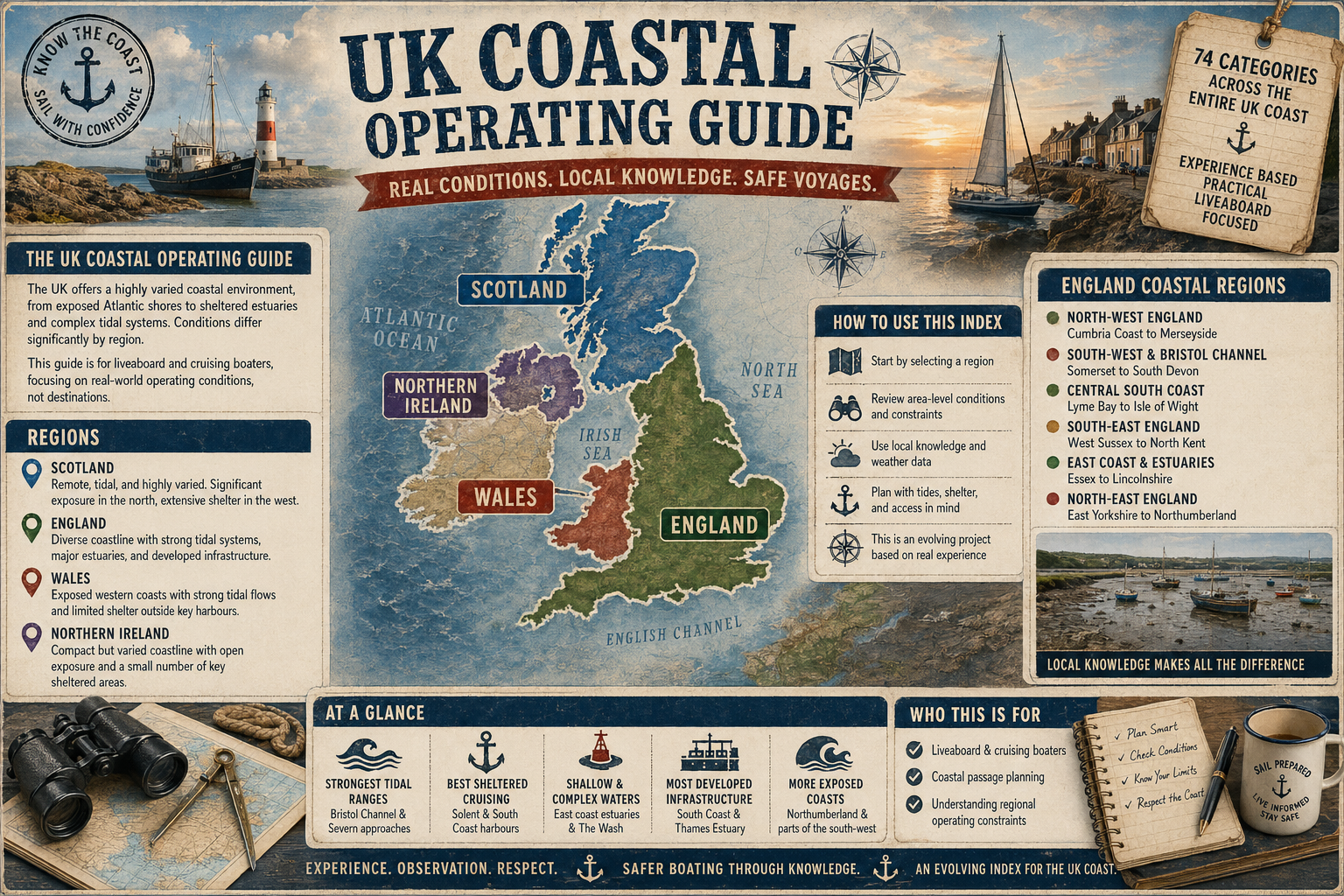
- The UK Coastal Operating Guide
- Coastal Traditions & Maritime Culture of Britain and Northern Ireland
- Coastal Myths & Legends of Britain & Northern Ireland
Comments