




Estuary Fisheries & Traditional River Navigation
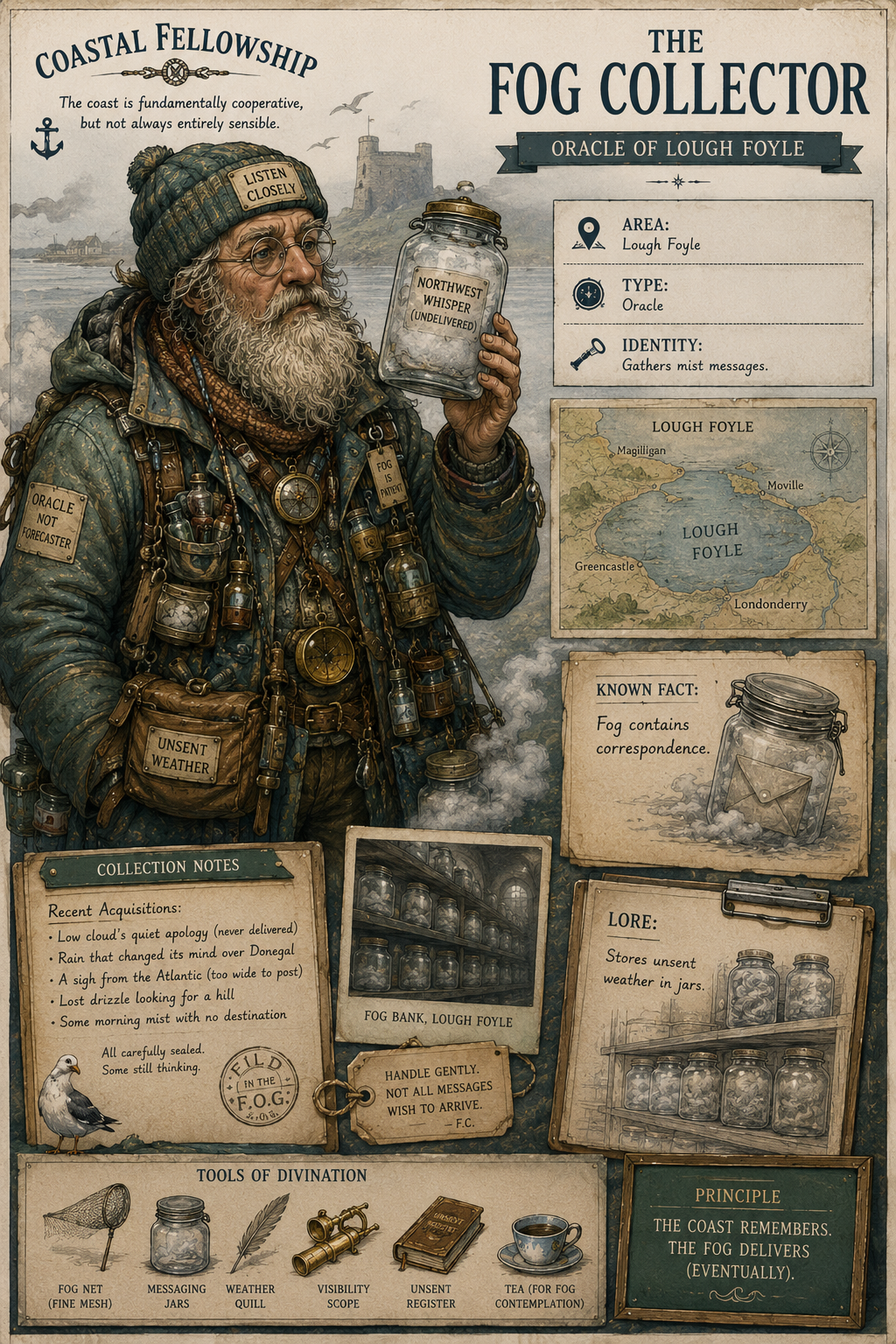
Lough Foyle forms a broad tidal estuary between Counties Donegal and Londonderry, where maritime practice has long been shaped by extensive mudflats, shifting channels and the meeting of fresh and salt water. The cultural character of the lough has therefore centred less on deep-sea voyaging than on estuary fisheries, local trading and the careful navigation required by changing tides and banks. Although practices have varied between the eastern and western shores, and between the lower estuary and the River Foyle itself, working knowledge of tides, marks and channels has remained a consistent feature of local maritime life. Moderate continuity is evident, with several traditional activities surviving in adapted form alongside modern commercial and harbour operations.
Historically the estuary supported a range of fisheries, with salmon and eel occupying an important place for many riverside communities. Seasonal fisheries depended upon the migration of fish through the tidal waters, while shellfish also contributed to local livelihoods where conditions permitted. Oyster fishing was once of greater economic importance than today, although stocks and methods have altered over time in response to changing regulation and environmental conditions. The tidal flats also provided opportunities for gathering shellfish on a smaller scale, though such activities have always depended upon local knowledge of safe ground and the rapid advance of the tide. Fishing families commonly combined several occupations, moving between seasonal fisheries, small-scale agriculture and harbour employment according to opportunity.
Navigation within Lough Foyle has always demanded attention to buoyage and tidal conditions. The entrance from the open coast is comparatively wide, yet the navigable channels have altered naturally through sediment movement and require regular maintenance. Before modern aids to navigation became established, local pilots and experienced mariners possessed detailed knowledge of leading marks, depths and tidal streams. This practical understanding was particularly important for vessels trading to the ports on the River Foyle, where safe passage depended upon both the state of tide and familiarity with the estuary. The river itself became an important commercial route serving Londonderry, carrying agricultural produce, coal, timber and manufactured goods through different periods of its history.
Harbours around the estuary developed according to local needs rather than uniform pattern. Greencastle retained its association with fishing and pilotage, while Culmore occupied a strategic position near the narrowing of the estuary and has long been recognised by mariners entering the river. Londonderry developed as the principal commercial port, and although cargo handling methods have changed substantially, the working relationship between harbour, river and estuary continues to influence maritime activity throughout the district. Smaller landing places around the shoreline often served mixed purposes, supporting fishing craft, local transport and maintenance of coastal communications rather than extensive overseas trade.
Boat handling traditions reflected the conditions of sheltered yet strongly tidal waters. Local fishing craft were generally suited to estuarine work, allowing crews to operate efficiently over shallow ground while remaining capable of working beyond the entrance when conditions permitted. Construction methods evolved with available materials and changing technology, and traditional wooden craft gradually gave way to modern vessels. Even so, practical seamanship within the estuary continues to rely upon observation of tides, weather and channel conditions in much the same manner as earlier generations.
Maritime customs associated with Lough Foyle have generally remained connected to working life rather than elaborate ceremonial practice. Harbour communities have maintained seasonal rhythms associated with fisheries, while local regattas and sailing events have provided opportunities for small craft to gather during favourable weather. Such events vary between communities and have altered considerably over time, but they continue to reflect the estuary's role as a shared working water rather than simply a navigational route. Lifeboat service has also formed part of the maritime identity of the district, recognising that the entrance to the lough and the neighbouring coast have periodically presented difficult conditions despite the relative shelter of the estuary itself.
Seafood remains an identifiable element of local food traditions. Salmon, where legally available, has long been associated with the River Foyle, while shellfish continue to feature within local fisheries under modern management arrangements. Contemporary regulation has significantly altered the character of commercial fishing, and some historical methods have disappeared or survive only in recorded memory. Nevertheless, fishing knowledge continues to be passed through active communities where estuarine work remains part of local employment.
Present-day activity around Lough Foyle combines commercial shipping, fishing, aquaculture, leisure sailing and harbour services within waters that remain subject to strong tidal influence. Modern navigation benefits from improved hydrographic survey, buoyage and electronic aids, yet local experience continues to be valued where channels and conditions change over time. The maritime culture of the estuary therefore retains a practical continuity, grounded in fisheries, river navigation and the demands of operating safely within one of the principal tidal waters of the north-west coast.
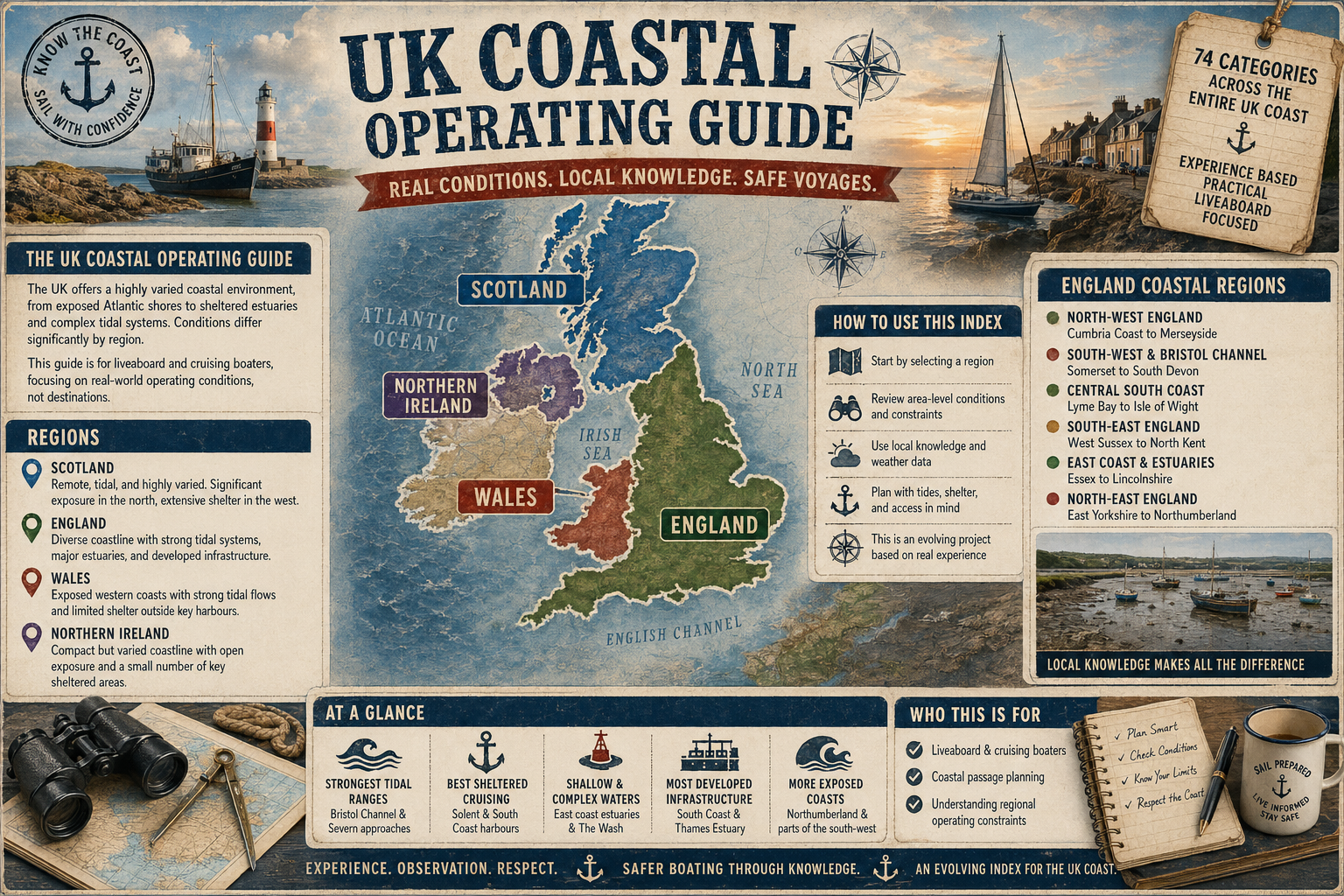
- The UK Coastal Operating Guide
- Coastal Traditions & Maritime Culture of Britain and Northern Ireland
- Coastal Myths & Legends of Britain & Northern Ireland
Jack
Comments