




Arbroath Fishing Culture and Smokie Traditions
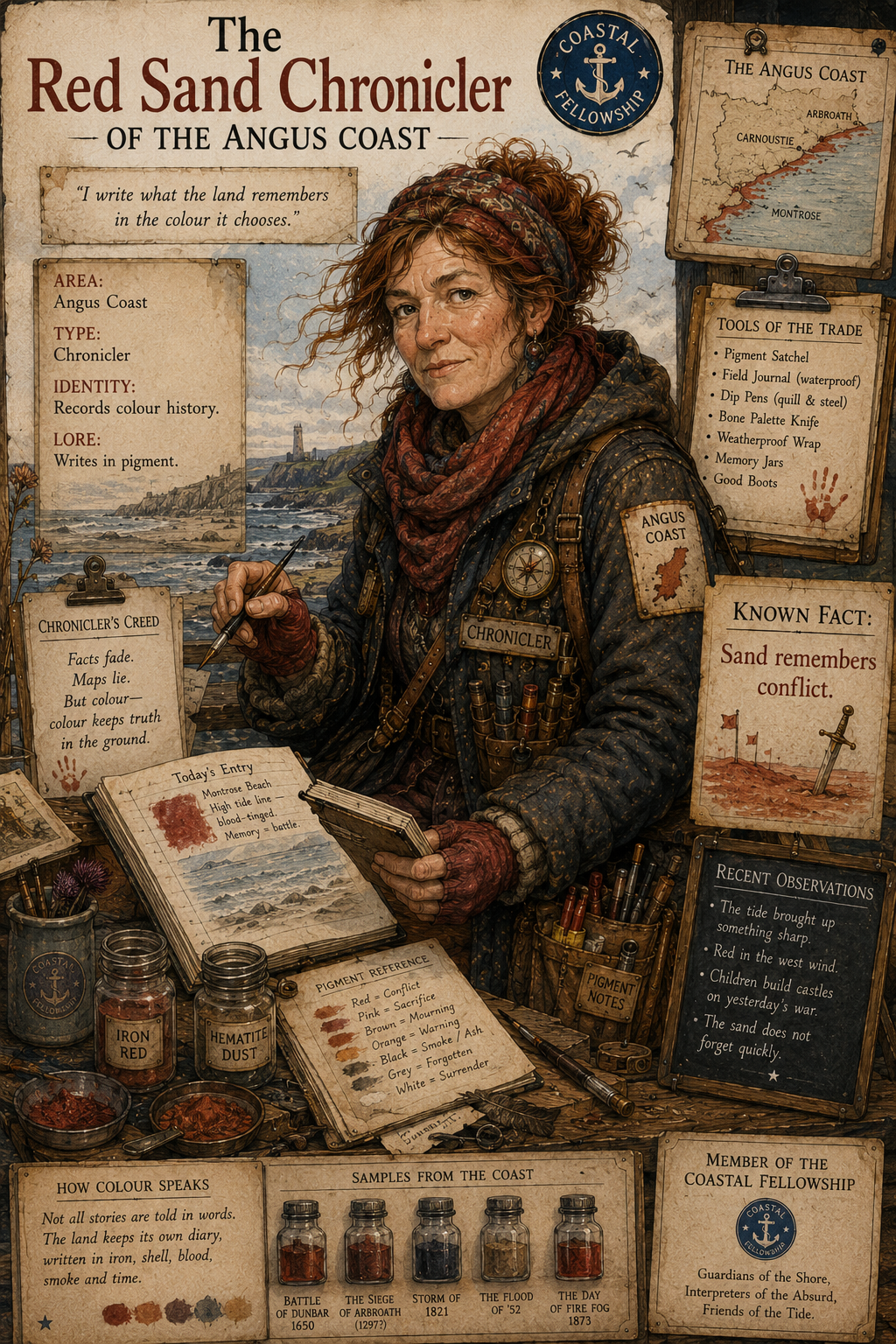
The Angus Coast faces the central North Sea between the estuary of the River North Esk and the boundary with eastern Fife, with Arbroath forming its principal historic fishing port. Smaller harbours, including Auchmithie and Montrose at the entrance to the South Esk, have long supported local seafaring, although their roles have varied with changing fisheries and harbour conditions. The coastline is characterised by rocky shores interrupted by harbour entrances and the tidal approaches to the Montrose Basin. Throughout the area, maritime life has traditionally been shaped by exposure to North Sea weather, limited natural shelter and the practical demands of launching, landing and maintaining fishing vessels.
Fishing has provided the principal cultural identity of much of the Angus Coast for centuries. Whitefish, herring and shellfish fisheries have all contributed at different periods, with patterns of employment reflecting wider changes in Scottish fishing. Arbroath developed as an important harbour serving both local and more distant grounds, while nearby Auchmithie retained a smaller community of inshore fishermen working close to the coast. Harbour improvements over successive generations altered methods of landing catches, but the rhythm of departures, market landings and maintenance work remained a defining feature of waterfront life. As elsewhere on Scotland's east coast, fishing fortunes rose and declined with changing stocks, regulation and vessel technology, and not every harbour experienced these changes in the same way.
The cultural practice most closely associated with the district is the preparation of the Arbroath Smokie. Although the exact development of the method has been the subject of local tradition, the technique is generally linked with fishing families of Auchmithie before becoming firmly established in Arbroath. Fresh haddock are salted, tied in pairs and traditionally hot-smoked over hardwood within enclosed barrels or similar smoking chambers. The process developed as a practical means of preparing part of the catch but became recognised as a distinctive regional food closely identified with the local fishing community. Production continues on a commercial scale using established methods, and the smokie remains one of the most enduring expressions of the area's working maritime culture rather than simply a culinary speciality.
Harbour customs have generally reflected the practical requirements of commercial fishing rather than elaborate ceremony. The movement of vessels has always been governed by weather, tides and harbour depth, particularly before modern dredging and engineering works. On this coast, local knowledge of sea conditions, swell at harbour entrances and the effect of easterly winds has traditionally been passed between generations of fishermen and harbour workers. Boat maintenance, net repair and the preparation of gear formed familiar activities around quaysides, with associated trades supplying rope, timber, engineering services and fish handling. Although mechanisation has reduced some of these occupations, elements remain visible where commercial fishing continues.
The Angus Coast also has a long association with lifesaving services. The exposed nature of the North Sea shoreline, together with busy fishing activity and commercial navigation, led to the establishment of lifeboat stations serving vulnerable stretches of coast. Volunteer crews have remained an important part of local maritime life, responding to incidents involving fishing vessels, merchant shipping and recreational craft. Their work forms a continuing tradition of practical seamanship closely connected with the needs of the working coast rather than with ceremonial observance.
Modern maritime activity combines commercial fishing with leisure boating, harbour management and marine services. Arbroath continues to function as an active harbour, while Montrose supports commercial shipping alongside recreational use associated with the sheltered waters of the basin and river approaches. Local seafood businesses maintain direct links with the fishing industry, and traditional fish smoking remains an active occupation rather than a purely historical demonstration. Community events occasionally acknowledge the area's fishing identity, although they differ between ports and should not be regarded as uniform across the coastline.
Along much of the Angus Coast, maritime continuity remains notably strong because established practices continue to exist beside contemporary harbour operations. Working quays, fish landings, smoking houses and volunteer maritime services all preserve visible connections with earlier generations of North Sea communities. While vessel types, regulations and harbour facilities have changed considerably, the relationship between local settlements and the sea continues to be defined by fishing, coastal navigation and the practical management of exposed eastern waters.
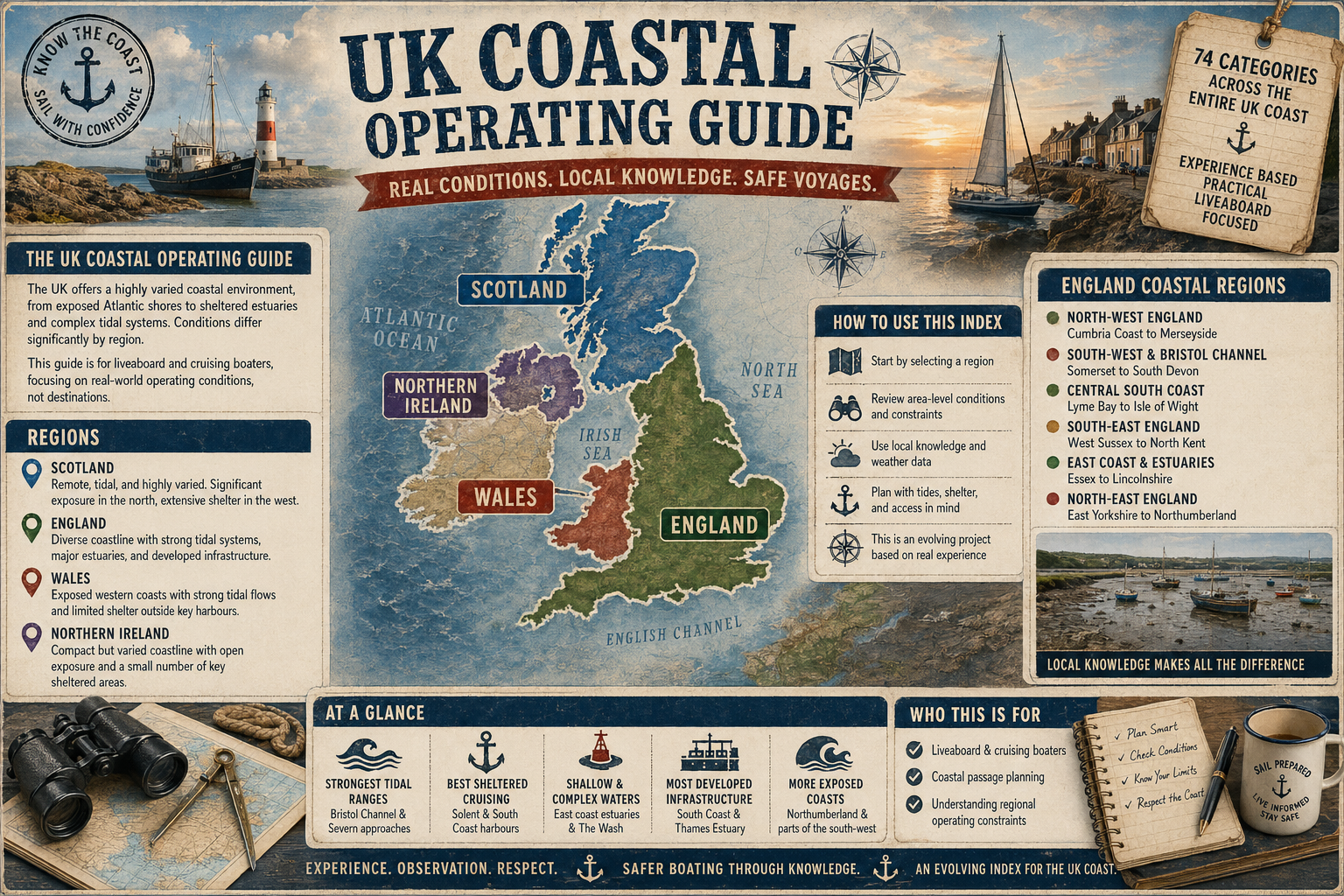
- The UK Coastal Operating Guide
- Coastal Traditions & Maritime Culture of Britain and Northern Ireland
- Coastal Myths & Legends of Britain & Northern Ireland
Comments