





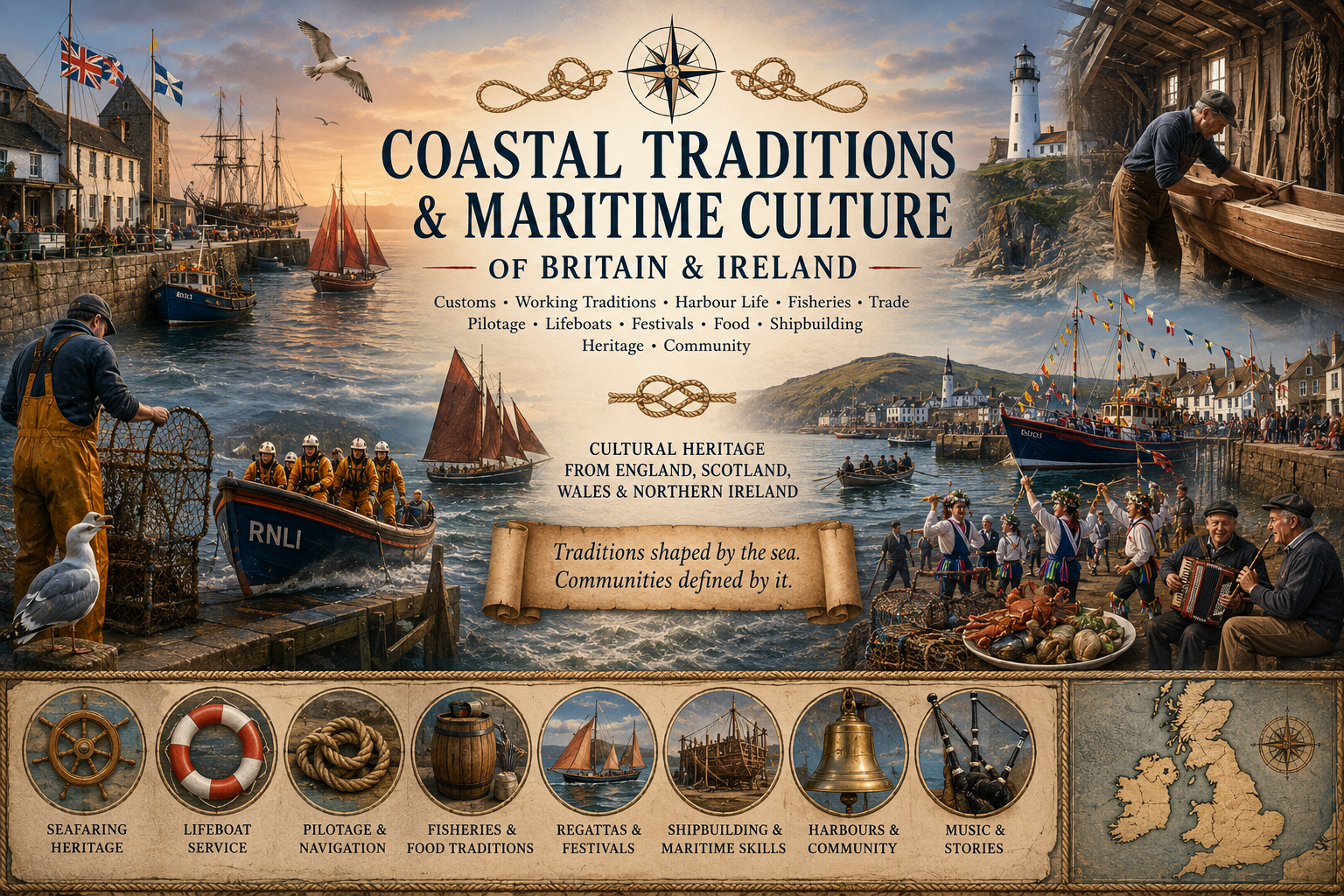
Herring Fleets & Harbour Curing Culture
The maritime character of Caithness, particularly at Wick on the east coast, was shaped by the North Sea herring fishery and by the harbours, curing yards and ancillary trades that developed around it. Wick stands at the mouth of the River Wick, with Wick Bay exposed to easterly weather and the coast extending north towards Noss Head, Sinclair Bay and the approaches to the Pentland Firth. Smaller fishing settlements and landing places, including Staxigoe, Sarclet and Whaligoe, formed part of the same coastal economy, although their scale and fortunes varied.
Commercial herring fishing from Caithness expanded from the later eighteenth century. Two sloops from Staxigoe began a recorded local venture in 1767, and fishing subsequently increased along the coast. The lack of a secure harbour at Wick became an increasing limitation as fleets grew. The British Fisheries Society established Pulteneytown on the south side of the River Wick, with harbour works and a planned fishing settlement. Thomas Telford was associated with the harbour development, which was subsequently enlarged as the fishery expanded. By the nineteenth century Wick had become one of the principal herring ports of northern Europe, with very large seasonal concentrations of boats and workers.
The trade depended upon more than the vessels themselves. Harbour Quay and the streets of Pulteneytown contained stores, curing houses and yards, while coopers supplied the barrels required for salted herring. Fish gutters, curers, carters, rope and net makers, boatbuilders and other waterfront trades all formed part of the working port. Historic mapping records numerous curing yards behind the harbour-front buildings, and surviving structures provide tangible evidence of this arrangement. The Herring Mart, opened in 1892 for fish salesmen, belongs to the later period of the industry and reflects the organised commercial character of the port.
Smaller Caithness harbours also participated in the herring economy. Whaligoe, for example, retains evidence of a former curing yard and landing place, while Sarclet developed as a herring port in the early nineteenth century. Such places were closely dependent upon local boats and suitable weather and tidal conditions, and their fortunes declined as fishing vessels became larger and mechanised. Wick remained the principal centre, but the wider coastal fishery was never confined to the main harbour.
Working practices surrounding the herring fishery have left a particularly persistent local record. The handling, gutting, salting and packing of fish employed large numbers of seasonal workers, including the women commonly known as the fisher lassies. Coopering was another substantial waterfront occupation; Wick's barrel production was closely tied to the export of cured fish. These trades declined with the collapse of the herring market during the twentieth century. The main fishery suffered heavily from the First World War, the loss of important continental markets, changing consumption and the increasing use of larger mechanised vessels. By the early 1950s the great herring industry had effectively ended.
Lifeboat work forms a separate but closely connected strand of the coastal working tradition. Wick had a lifeboat service from 1848 following severe losses among the fishing fleet, and the RNLI assumed responsibility in 1895. The station has long drawn on local maritime knowledge, with fishermen forming an important part of successive crews. The surrounding waters remain demanding: easterly winds can produce heavy seas in Wick Bay, while the headlands and tidal streams around Noss Head, Duncansby Head and the Pentland Firth require careful local knowledge. The present Wick lifeboat station continues this practical seafaring role.
Continuity today is principally expressed through the working harbour, commercial and small-boat activity, lifeboat service and the preservation of boats, photographs, oral testimony and fishing equipment. Historic craft such as the Fifie Isabella Fortuna and the Stroma yawl Diligent are maintained by local custodians and can still be seen afloat. The former herring warehouses, curing yards and harbour structures remain important markers of how the waterfront once operated. The traditions are therefore less a matter of formal ceremony than of continuing knowledge of boats, tides, weather, harbour work and the sea.
For the mariner, Wick and the Caithness coast retain a recognisable working-port character. The present waterfront is quieter than during the herring era, but the pattern established by fishing, curing, boat work and lifesaving remains evident in the harbour and surrounding coastal settlements. The relationship between the River Wick, Wick Bay, the North Sea and the Pentland Firth continues to define the area's maritime identity.
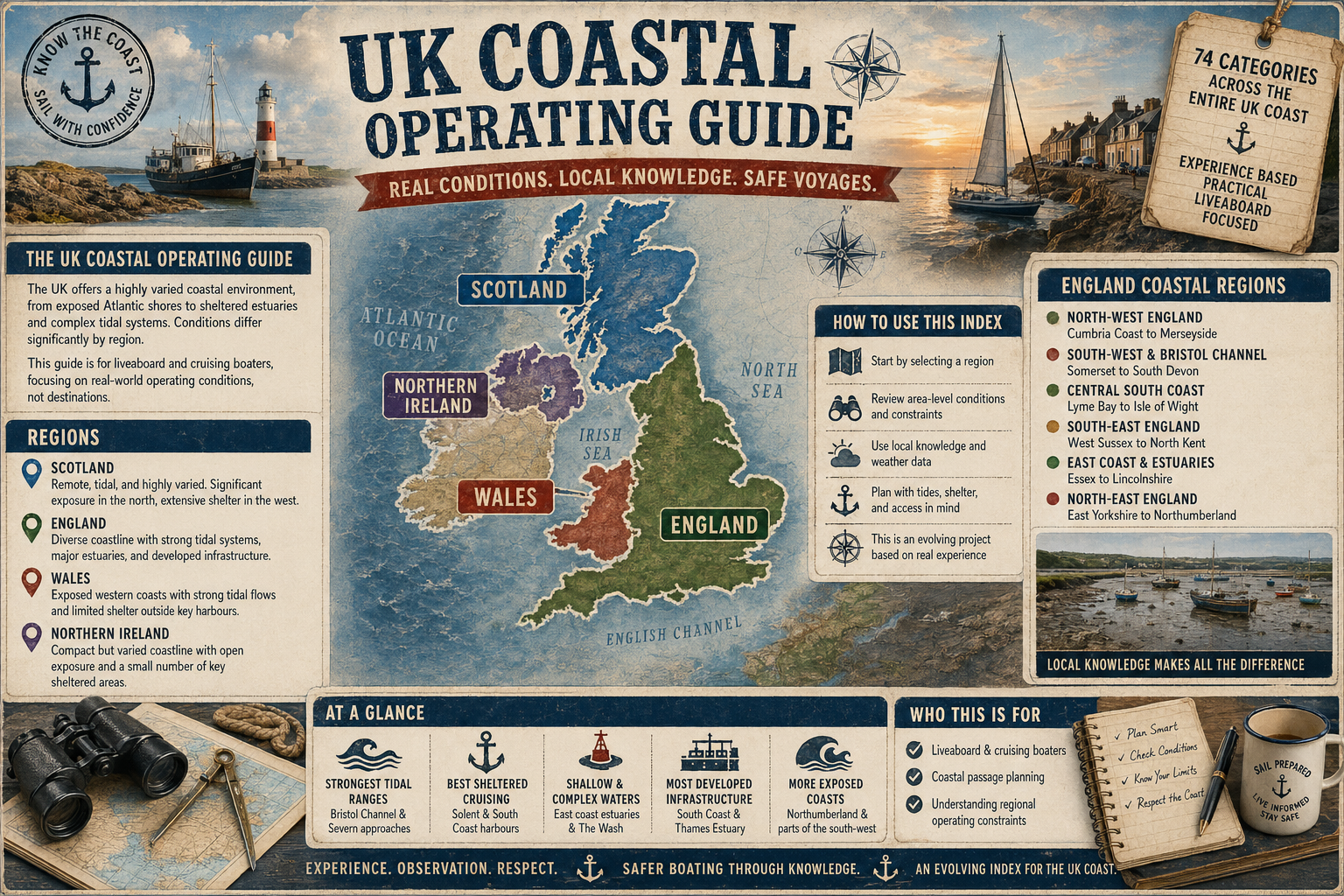
- The UK Coastal Operating Guide
- Coastal Traditions & Maritime Culture of Britain and Northern Ireland
- Coastal Myths & Legends of Britain & Northern Ireland

Comments