




River Pilotage & Trading Port Heritage
The maritime character of the Firth of Tay is defined by its broad tidal estuary, the commercial port of Dundee and the smaller waterfronts of Broughty Ferry and Tayport. The outer estuary contains extensive sands and shoals, including the Abertay Sands and Tay Bar, while tidal streams and changing depths have historically made local knowledge important to vessels approaching Dundee. River pilotage consequently became an established part of the port's working arrangements, with pilots familiar with the channels, banks and approaches.
Dundee's development as a trading port supported a range of maritime occupations, including pilotage, harbour work, cargo handling, lighterage and the movement of coastal and overseas vessels. Pilot boats and licensed pilots formed part of the established port system, while the river itself carried traffic between Dundee and the smaller settlements around the estuary. Broughty Ferry and Tayport were particularly associated with the Tay crossing. Broughty Ferry's harbour was constructed in the mid-nineteenth century in connection with the railway ferry to Tayport, and the ferry remained an important link until the opening of the Tay Rail Bridge in 1887. The harbour was also used by the local fishing fleet.
Fishing was an important local occupation, particularly at Broughty Ferry. The settlement developed from a fishing and ferry community, with fishermen operating small boats from the Tay and, at times, farther into the North Sea. Herring was especially significant. By the later nineteenth century Broughty Ferry supported a substantial fleet of lug-sailed fishing boats, while seasonal herring fishing also brought vessels from other east-coast communities into the Tay. The local commercial fishery declined during the early twentieth century, and Broughty Ferry ceased to be a commercial fishing port on its former scale. Some fishing in the estuary continued for several decades, but the historic industry should not be taken as representative of present-day activity.
Ferrying remained another practical feature of life on the estuary. Tayport, formerly Ferry-Port-on-Craig, was an established crossing point to Broughty Ferry, and its harbour and waterfront were closely connected with the movement of passengers, goods and railway traffic. The ferry route formed part of a wider transport system linking Fife with Dundee before the development of fixed crossings. Although the ferry itself has disappeared, the harbour at Tayport and the former railway harbour at Broughty Ferry retain clear evidence of this period of river transport.
Lifesaving has a particularly strong continuity on the Tay. A lifeboat was stationed at Buddon Ness in 1830 by the River Tay Lifeboat Society, supported by a charge on vessels entering the river. A station was established at Broughty Ferry in 1859, and both stations were taken over by the Institution in 1861. Buddon Ness closed in 1894, while Broughty Ferry continued. Historical launches included rescues and assistance to vessels in difficulties around the entrance to the Tay and its banks, where heavy seas, wind and tidal conditions could make navigation hazardous. Broughty Ferry remains an operational RNLI lifeboat station, providing a direct modern continuation of the area's lifesaving tradition.
Other forms of organised maritime recreation developed alongside the working waterfront. Sailing clubs have been established on the Tay since the nineteenth century, including the Tay Corinthian Sailing Club, founded in Dundee in 1885 and subsequently known as the Royal Tay Yacht Club. Such activity represents a different strand of local maritime culture from commercial fishing and pilotage, but reflects the continuing use of the estuary for sailing and small-boat handling.
The present character of the Firth of Tay therefore combines an active commercial port with smaller harbours, recreational sailing and a continuing lifeboat service. The former ferry and fishing economies have largely disappeared, but pilotage, navigation, harbour work and lifesaving preserve practical connections with the older working life of the estuary. For the cruising mariner, the principal continuity lies in the enduring importance of the Tay's tidal waters, navigational channels and harbour approaches.
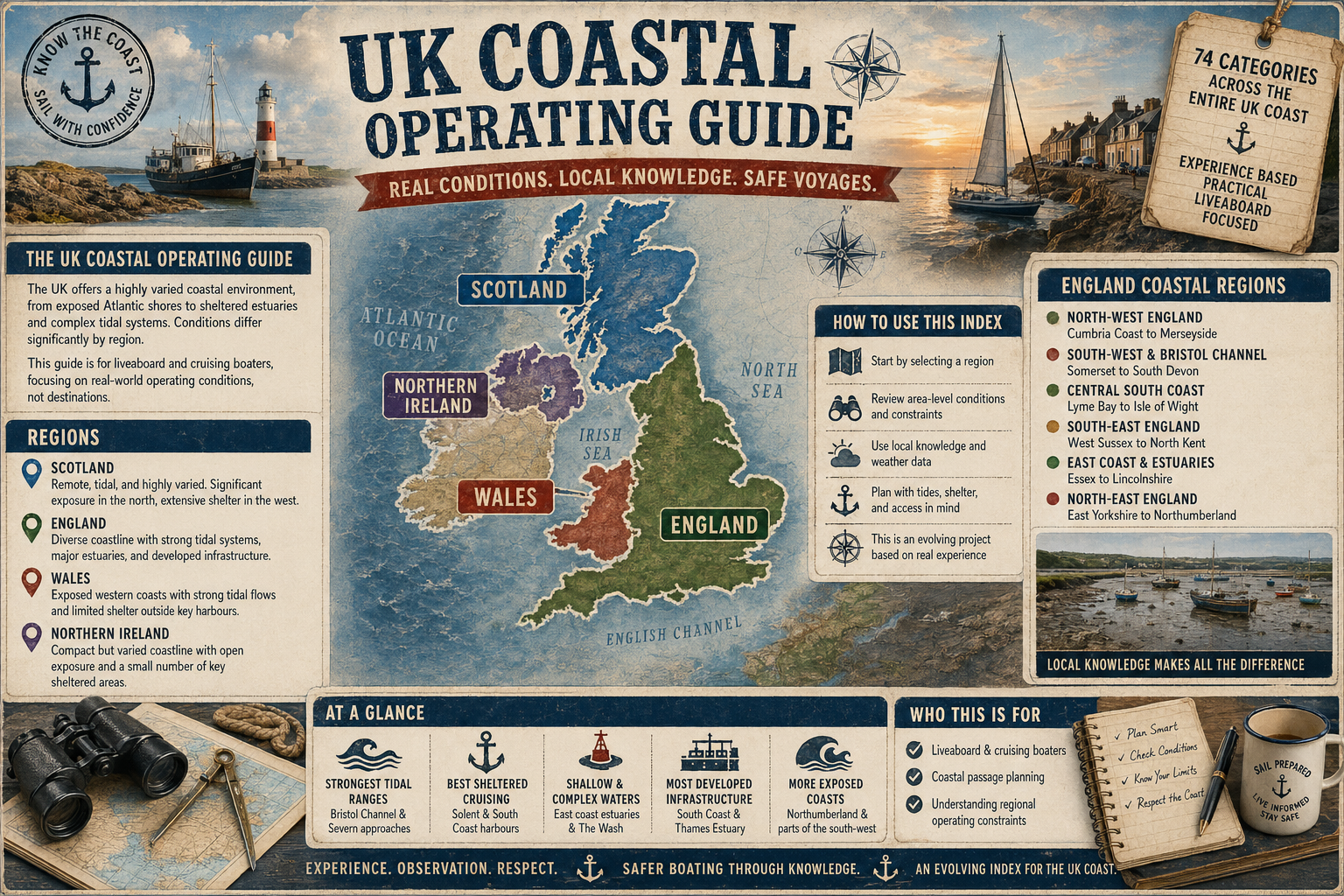
- The UK Coastal Operating Guide
- Coastal Traditions & Maritime Culture of Britain and Northern Ireland
- Coastal Myths & Legends of Britain & Northern Ireland

Comments