




Haaf-net Fishing & Tidal Estuary Communities
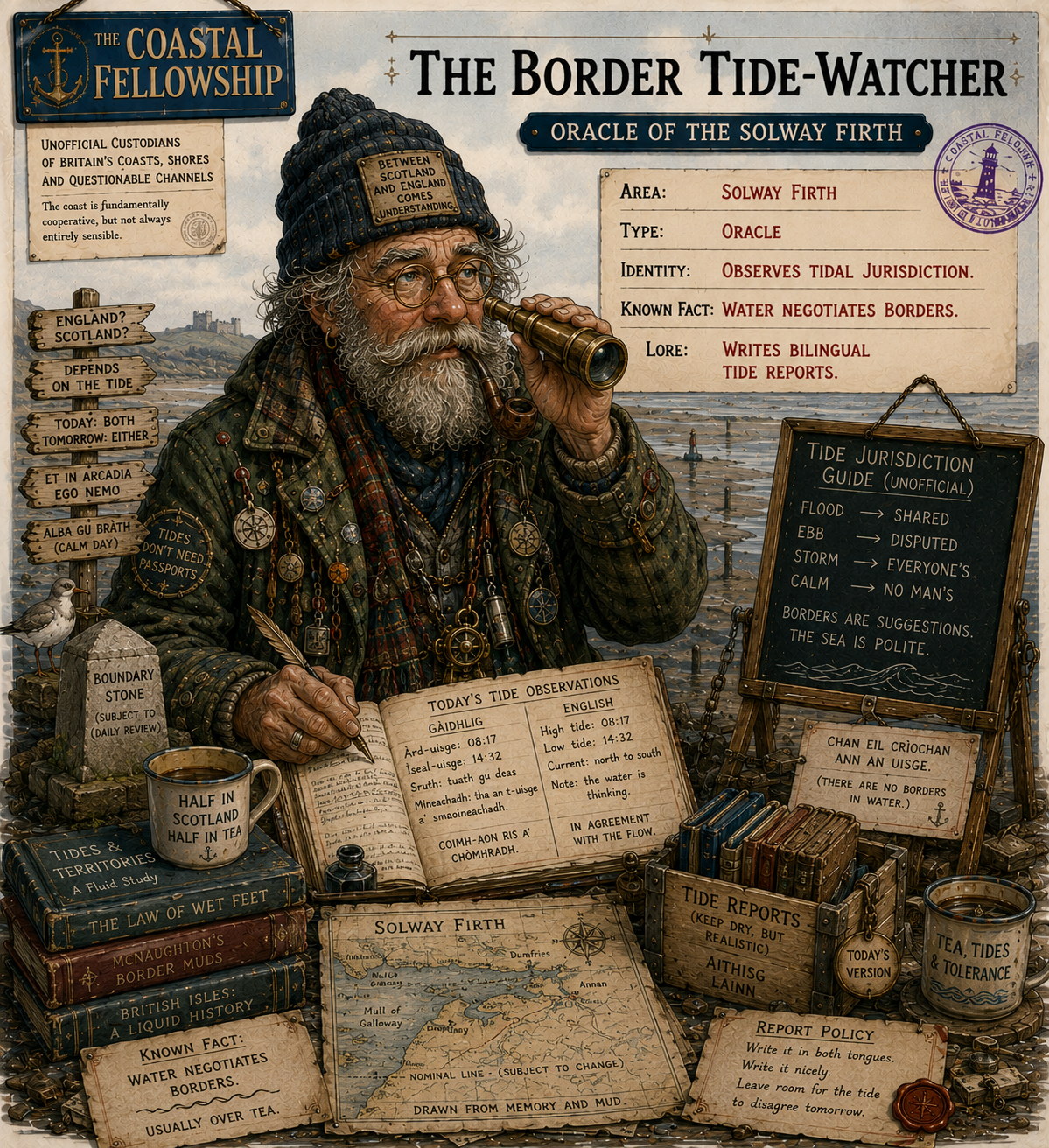
The maritime character of the Scottish Solway is closely associated with its broad tidal estuaries and the traditional haaf-net fisheries of the Rivers Annan and Nith. The wide sands, shifting channels and strong tidal streams have required fishermen to develop detailed local knowledge of water levels, currents, fishing grounds and weather. Haaf netting is now practised on a much smaller scale than formerly, but remains an identifiable working tradition of the Solway. It is found on both sides of the Firth and is therefore part of a shared Solway culture rather than a practice confined to one shore.
Haaf-net fishing is a traditional method for salmon and sea trout in shallow estuarine water. The net is carried on a rectangular frame and worked across either the ebb or flood tide as fish move through the channel. The method requires the fisherman to wade in tidal water and to judge the movement of the tide and the nature of the ground. On the Nith, a recorded local custom was to draw straws to determine positions in the line of fishermen. The name “haaf” is generally associated with a Norse word for channel or sea, although precise claims about the origins and age of the method are less certain than the long-established nature of the fishery itself.
Historically, net fisheries were operated at a number of Solway estuaries, but most have since ceased. On the Scottish side, haaf-net fishing survives principally on the Nith and Annan. Present arrangements are closely regulated. At Annan, licences are issued for defined waters between the mouth of the River Annan and the Solway boundary, with separate periods for sea trout and salmon. Salmon caught under the current Scottish arrangements must be released. The Scottish Government's statistics for the 2025 season recorded 20 salmon retained and 277 released by the Solway haaf-net fishery, illustrating both the continuing activity and the conservation controls now applying to it.
The wider Solway fishery has also changed considerably. Commercial fishing has included herring and demersal species, while more recent inshore activity has been dominated by shellfish, including scallops and queen scallops, with smaller-scale creel fisheries for species such as lobster and crab. Kirkcudbright remains the principal Scottish landing port for the Solway fleet. Along the estuaries, however, the older fisheries are particularly significant as examples of small-scale practices adapted to local tidal conditions.
Other maritime activity was associated with the movement of goods through the estuaries. Carsethorn, on the Nith, served as an out-port for Dumfries, whose access for larger vessels was constrained by the river. The port handled coastal trade and formed part of wider maritime connections across the Solway and Irish Sea. Such activity has left a coastal landscape of former quays, landing places and small waterfront settlements rather than a continuous chain of major commercial harbours.
There is limited evidence for a surviving calendar of large maritime festivals or regattas specific to the Scottish Solway. Cultural continuity is more evident in working practices and local organisations. Haaf-net equipment, fishing terminology, knowledge of the tides and the practical dangers of the estuary remain part of the tradition, while community and heritage bodies continue to document the fishery. Modern haaf netting is no longer the substantial commercial activity it once represented, and its continuation is increasingly connected with regulated fishing, heritage and conservation.
For the mariner, the significance of these traditions lies in their direct relationship with the Solway's tidal geography. The Annan and Nith remain working estuarine waters where channels, sands, tides and fisheries continue to shape coastal activity. Haaf-net fishing provides the clearest surviving link with the older fishing communities, while the former trading role of places such as Carsethorn records the wider commercial use of the Firth. Together these practices give the Scottish Solway a maritime culture grounded in practical knowledge of a difficult and highly changeable tidal environment.

Comments