




Coastal Trade & Welsh Fishing Communities
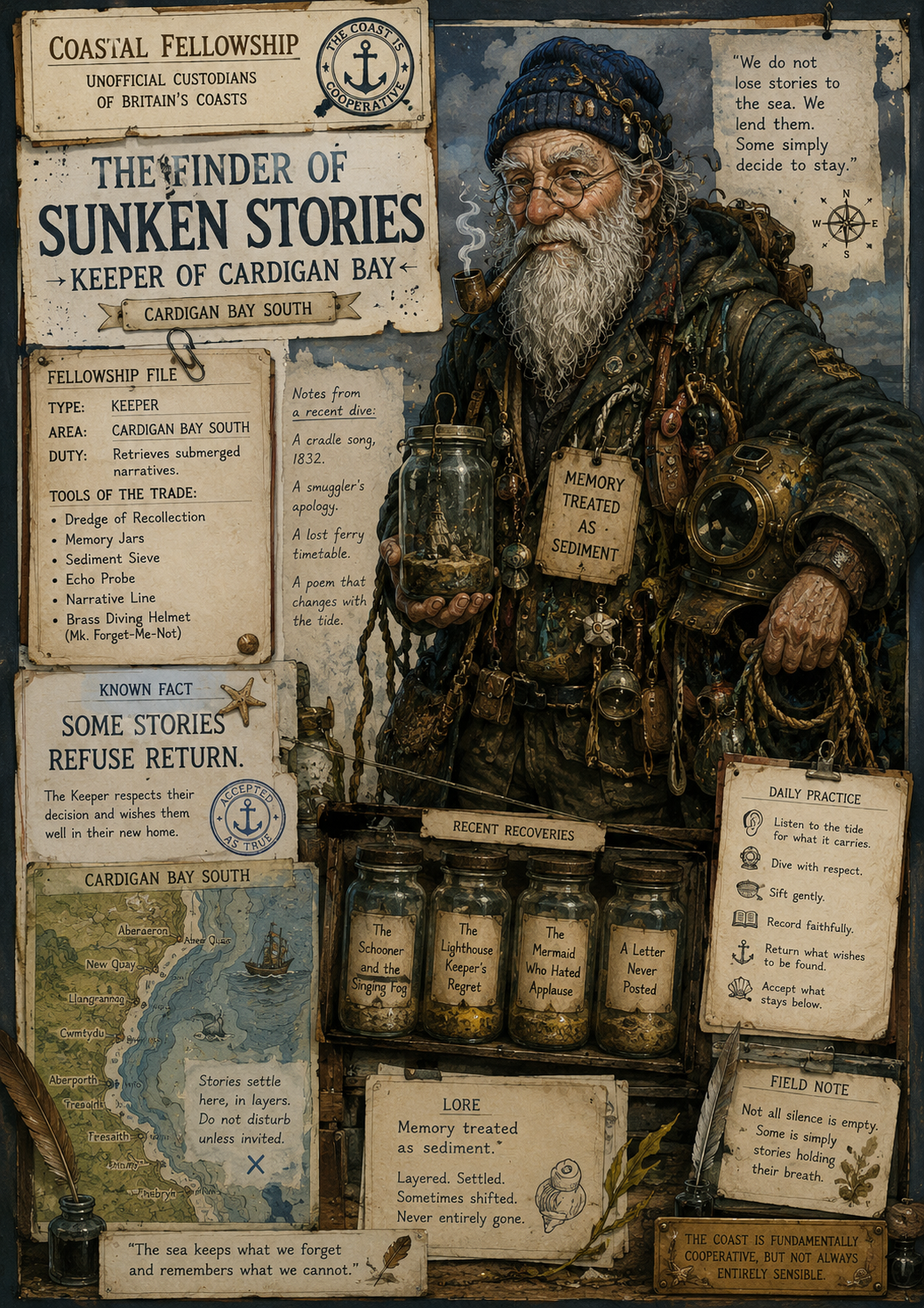
The maritime character of South Cardigan Bay is associated chiefly with small-scale fishing, coastal trade and the working communities of its Welsh ports. The principal harbour settlements are Aberystwyth, New Quay and Aberaeron, with the Teifi estuary forming the southern limit of the area. Local seamanship has long been influenced by Atlantic weather, surf conditions, harbour bars and the rise and fall of the tide. Commercial activity is much reduced from earlier periods, but fishing, harbour use and voluntary lifesaving remain part of the present coastal culture.
Aberystwyth was formerly an important fishing and trading port. Herring were particularly significant during the autumn season, with cod, whiting and mackerel also recorded. Salted herring was exported to Ireland and other markets. By the eighteenth century, numerous small sloops operated from the port, combining fishing with coastal trading and carriage work. Later, improved harbour facilities allowed smacks and schooners to participate more readily in the coastal trade, carrying such commodities as timber, coal, grain and manufactured goods. Shipbuilding, sailmaking and rope-making were also established locally. The arrival of the railway in the nineteenth century reduced the importance of coastal cargo traffic, while the herring fishery subsequently declined. Crab and lobster fishing became more important in the twentieth century. These changes are documented in the historical record of Aberystwyth harbour and its lifeboats.
South of Aberystwyth, New Quay developed as a fishing and trading harbour, with its own long-established lifeboat station. Aberaeron also served as a small commercial port and shipbuilding centre. The scale and character of these activities varied between individual ports, and there is no single set of customs that can properly be applied to the whole of South Cardigan Bay.
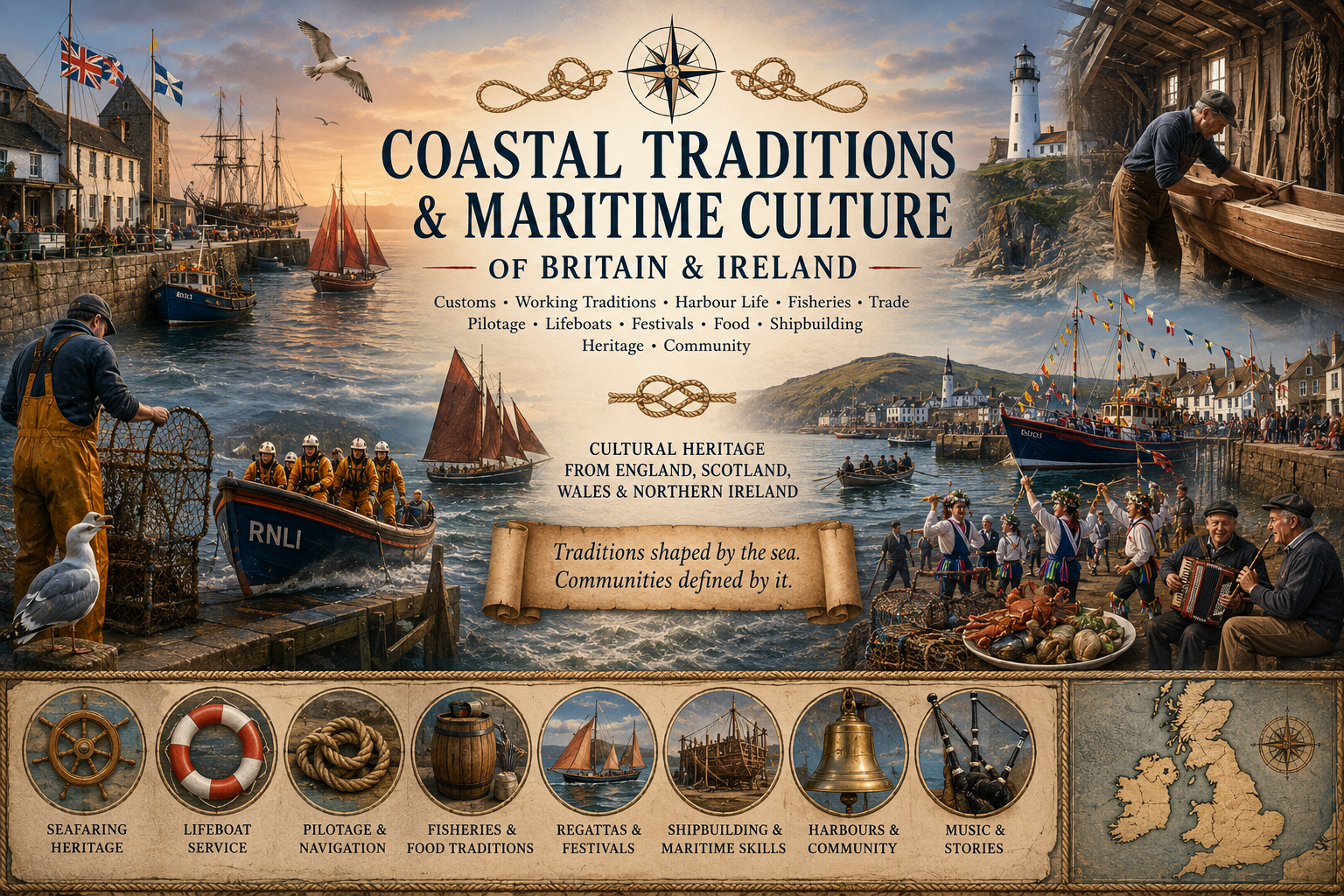
Lifeboat service is one of the clearest surviving maritime traditions. Aberystwyth acquired a locally funded lifeboat in 1843 and an RNLI station in 1861; New Quay's RNLI station was established in 1864. Earlier lifeboats were rowing and sailing craft, often launched into surf and worked in difficult conditions near harbour entrances and bars. The hazards of Cardigan Bay and the importance of local knowledge are reflected in numerous recorded services. At New Quay, the William Cantrell Ashley, withdrawn in 1948, was the last sailing lifeboat to serve in the RNLI fleet.
The tradition is still represented by active volunteer crews and by cooperation between neighbouring stations. Modern incidents continue to involve fishing vessels, harbour entrances, shallow water and changing tidal conditions. Recent RNLI services have included assistance to fishing vessels aground near Aberystwyth and south of Aberaeron, demonstrating that the practical requirements of local seamanship remain much the same even though the vessels and equipment have changed.
Present-day maritime culture is therefore principally expressed through working fishing boats, harbour activity, recreational and small commercial craft, and the continuing operation of the lifeboat stations. Historical fishing and coastal trading have largely diminished, but their influence survives in the organisation of the harbours and in the knowledge required to work safely in Cardigan Bay. For the cruising mariner, the coast retains a recognisable working relationship with its waters, particularly around Aberystwyth, New Quay, Aberaeron and the approaches to the Teifi.
Comments