




Estuary Ferries & Cockling Traditions
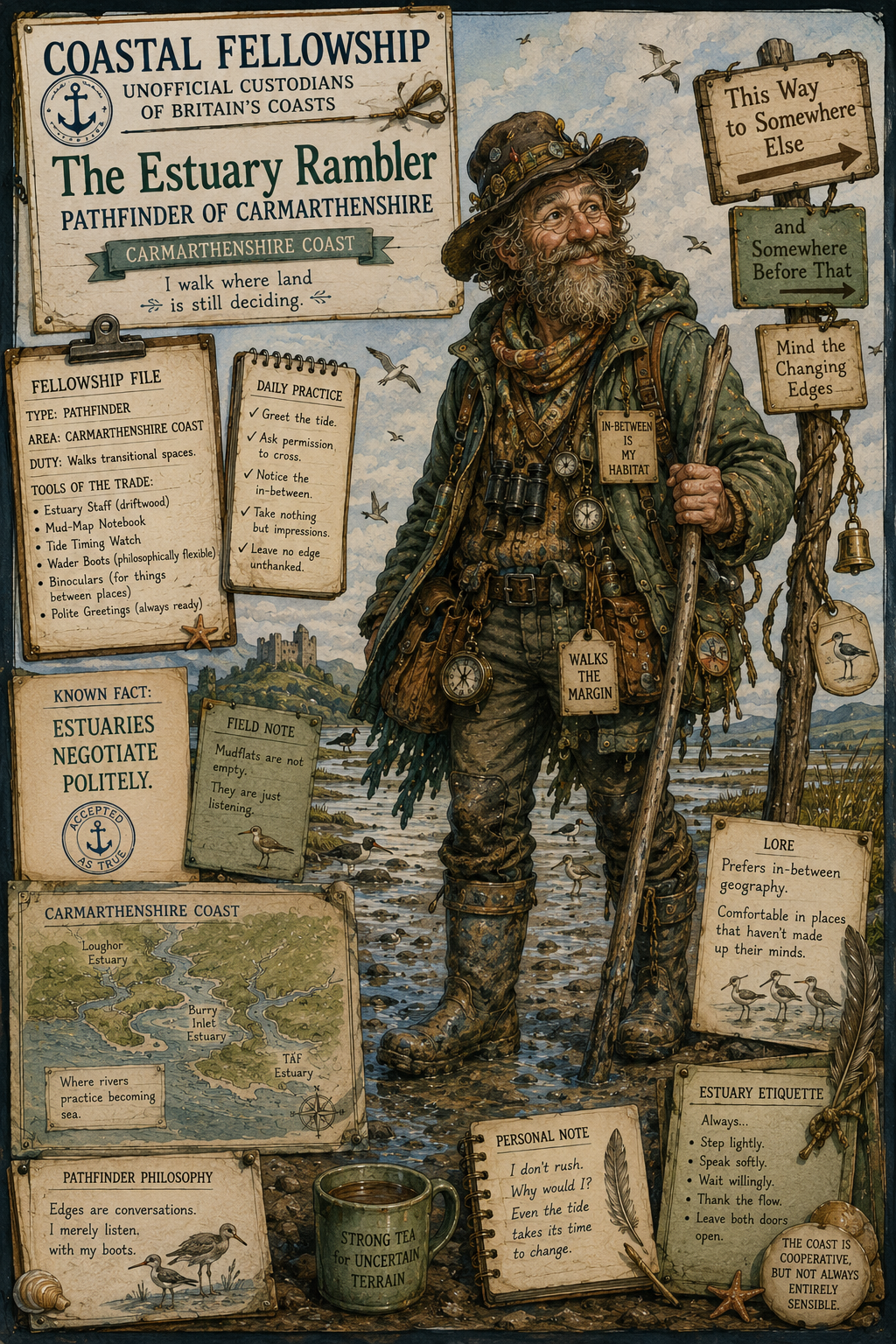
The maritime character of the Carmarthenshire coast is closely associated with its broad tidal estuaries, particularly the Taf, Tywi, Gwendraeth and the Burry Inlet, where navigation, crossing and shellfish gathering have long been governed by the state of the tide. The coastline from the Burry Inlet to Pendine includes working harbours, former landing places and extensive intertidal flats. In practical terms, local coastal knowledge has traditionally depended less on open-sea voyaging than on reading tidal channels, sandbanks and mudflats.
Ferries were an important means of crossing the estuaries before fixed bridges provided more dependable routes. On the Loughor, travellers formerly used a tidal ford and ferry, timing journeys to the water level; a movable-span bridge was completed in 1833 while allowing vessels to continue upstream. The Tywi crossing between Ferryside and Llansteffan likewise remains associated with ferrying, and a modern ferry service has continued the basic function of carrying people across the estuary. The survival of the route is a useful reminder that these waterways are not simply scenic margins but active tidal passages whose conditions change markedly through the day.
Laugharne developed around a tidal harbour and the River Coran, with the wider Taf estuary providing sheltered water. Llansteffan occupies a similarly strategic position above the Tywi mouth, historically controlling an important river crossing. Further east, Burry Port developed as a harbour serving the coastal and industrial economy around the Burry Inlet. Although its commercial function has changed substantially, the harbour remains a marine facility, with berthing and other working harbour uses. Such places form the principal surviving physical evidence of a coast once more dependent on small-scale movement of people, goods and catches by water.
Cockling is the most distinctive surviving working tradition. Cockles have been gathered in the Burry Inlet and along Carmarthenshire's intertidal shore for centuries; county evidence records the practice as extending back to Roman times. The work is necessarily tide-bound. Licensed gatherers work the exposed mud at low water, traditionally using rakes and sieves, with undersized cockles returned to the beds. Modern management involves surveys and regulated harvesting, reflecting the continuing economic and environmental importance of the fishery. The scale is now limited compared with earlier periods, but cockling remains a genuine working use of the estuary rather than merely a historical association.
The social side of cockling was formerly more extensive. Museum records from Carmarthenshire document gathering on Llan-saint beach and the use of specialised tools including rakes, sieves and the locally recorded cocses. In south Wales, women also sold cooked or untreated cockles in markets and from door to door; this wider tradition included Carmarthenshire communities. These practices have largely disappeared as everyday occupations, but the terminology, tools and food customs remain part of the documented coastal culture.
Maritime continuity is also represented by rescue work. Ferryside has a lifeboat tradition, with the local lifeboat operating on the Tywi estuary and into Carmarthen Bay. The waters outside the estuary can be affected by shifting sandbanks and breaking seas, while strong tides and weather can rapidly alter conditions. Flooding records likewise demonstrate the continuing influence of high tides and storm conditions at settlements including Ferryside, Llansteffan and Laugharne.
Today the Carmarthenshire coast retains a mixture of recreational, harbour and working maritime activity, with cockle gathering remaining the clearest direct survival of an older intertidal economy. The ferries, lifeboat service, harbour infrastructure and regulated shellfish fisheries preserve practical links with the tidal environment. Cultural continuity is therefore moderate rather than complete: many former occupations have declined, but the estuaries still impose the same basic requirements of tide awareness, local knowledge and careful use of the foreshore.

Comments