





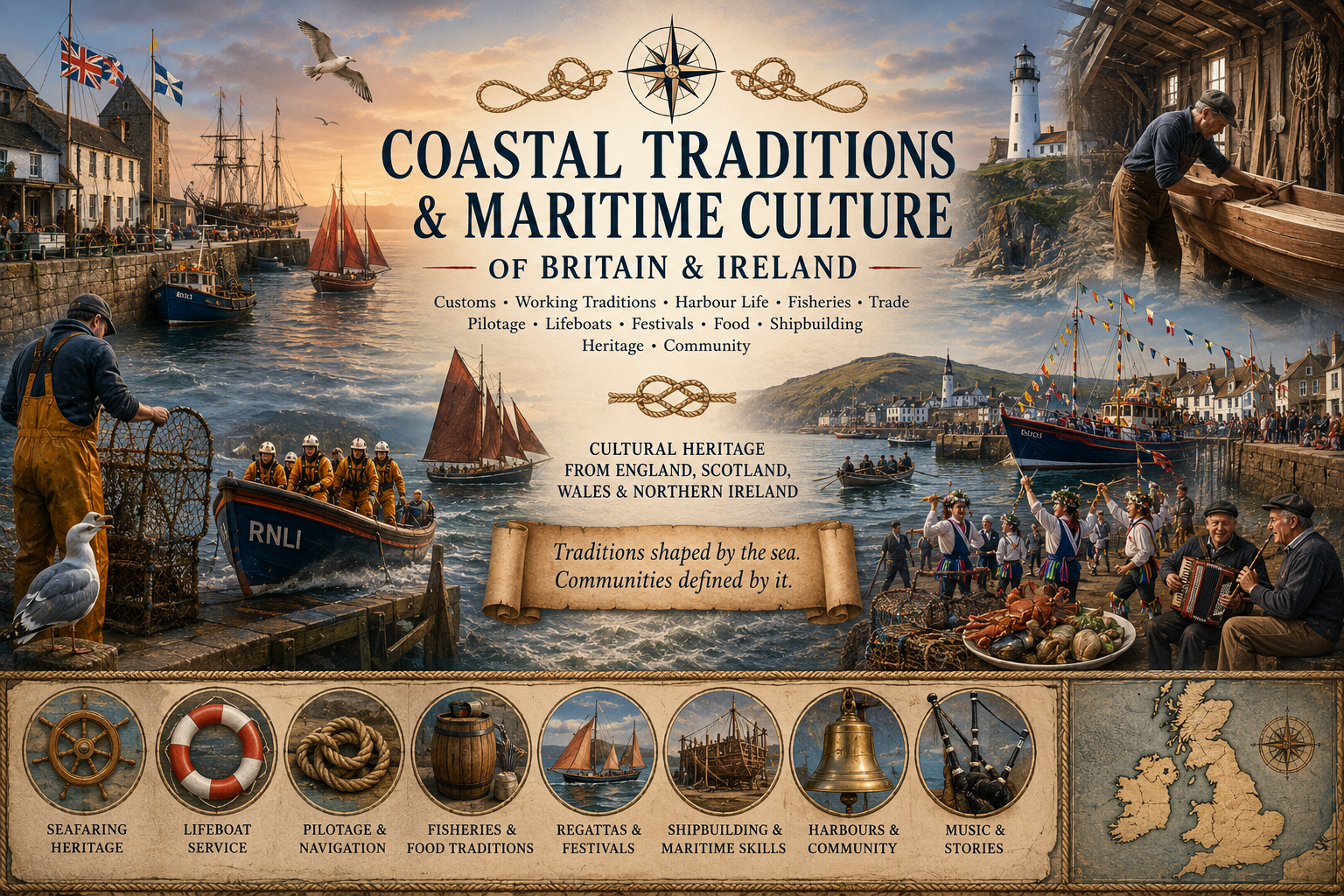
Milford Haven Waterways & Maritime Defence Heritage
South Pembrokeshire is closely identified with the Milford Haven Waterway, a deep tidal estuary extending inland through a network of creeks and sheltered reaches. Its maritime character has been shaped less by open-sea fishing alone than by the combination of sheltered water, naval activity, commercial shipping, ferry routes and port industries. The lower Haven, including Angle Bay, the entrance around St Ann’s Head and the waters towards Skomer and Skokholm, remains an active working seascape. Tidal streams, commercial traffic and changing conditions at the estuary entrance continue to influence local seafaring practice.
The principal historic maritime centre is Milford Haven, while Pembroke Dock on the southern shore developed in the early nineteenth century as a Royal Navy dockyard and garrison town. Shipbuilding became a major local occupation, with vessels constructed and maintained for naval service. The surviving dockyard fabric, defensive works and planned streets of Pembroke Dock reflect this purpose. The maritime economy subsequently broadened to include commercial docks, coastal trade, ship repair and later major energy and petroleum-related port activity around the Haven. Neyland, on the northern shore, was also associated with the railway, ferry traffic and the movement of passengers and goods across the waterway.
Small-scale fishing formed another strand of coastal life, particularly around the Haven and the exposed coast beyond its entrance. Local boats worked for shellfish and other inshore catches, although the scale and importance of fishing have varied considerably over time. The estuary itself has long required practical knowledge of tides, channels, drying ground and weather. Ferry crossings between the shores of the Haven were once an ordinary part of local movement, linking communities before road infrastructure altered the pattern of travel. The Pembroke Dock–Neyland crossing is remembered as part of this older waterborne transport system.
Defence remains an important element of the area's maritime identity. The strategic position of the Haven led to fortifications around the waterway and its approaches, including the Martello towers at Pembroke Dock and defensive positions at Angle and elsewhere on the southern shore. These were intended to control access to the harbour and protect naval and commercial installations. Their presence is a reminder that navigation here was historically connected with coastal defence as well as trade and fishing.
Working traditions have also survived through lifeboat service and volunteer seamanship. Angle RNLI operates from the south-western shore of the Haven and covers a busy area used by commercial vessels, fishing craft and recreational boats. Lifeboat crews continue to undertake rescue, towing and search work in conditions where tidal streams and the confined waters of the Haven can complicate operations. Such service is a practical continuation of an established local dependence on trained boat crews and knowledge of the surrounding waters.
There is less evidence for a single, distinctive maritime festival tradition shared across South Pembrokeshire than for a continuing pattern of working-waterfront activity. Regattas, sailing events, rowing and other organised water activities occur locally, but their form and frequency vary. The stronger continuity is found in harbour use, boat maintenance, ferry operation, fishing, lifeboat work and the daily movement of vessels through Milford Haven and the Cleddau approaches.
Modern South Pembrokeshire therefore retains a maritime culture grounded in use rather than ceremony. Milford Haven remains a significant commercial waterway, while Pembroke Dock continues to support marine engineering, ferry traffic and port-related employment. Along the lower estuary, working boats, leisure craft, lifeboats and large commercial vessels share waters whose character is still governed by tide, navigation and weather. The historical association with naval defence has not disappeared; it forms part of a broader coastal tradition in which the Haven remains both a working harbour and a navigational environment.
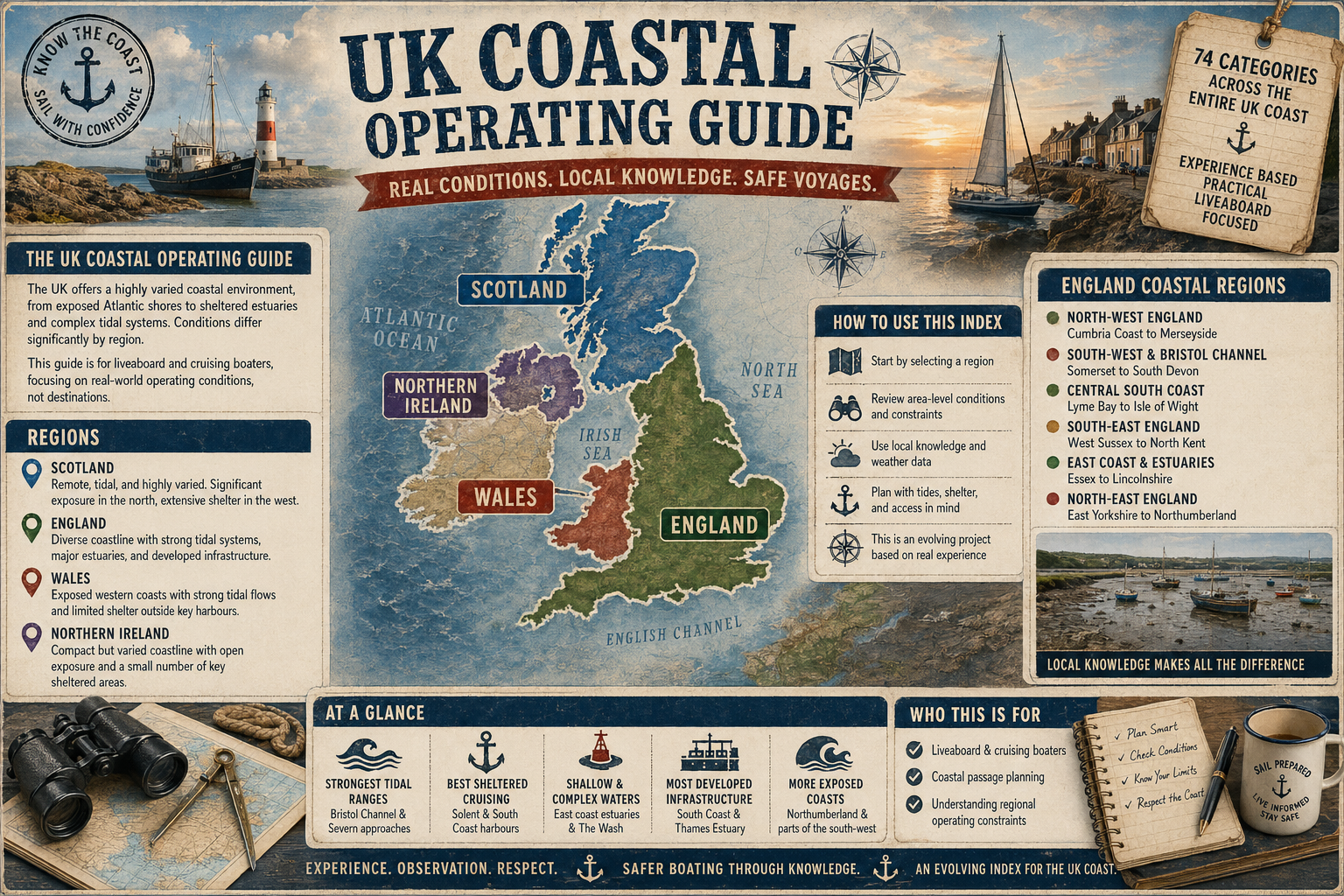
- The UK Coastal Operating Guide
- Coastal Traditions & Maritime Culture of Britain and Northern Ireland
- Coastal Myths & Legends of Britain & Northern Ireland

Comments