
Meet Esmeralda Gonzales — Legend of Railway Embankments & Hamster Whisperer

Esmeralda, or “Esmi,” is a naturalist of the highest order with a unique obsession: Pedro, the slightly bewildered hamster. Observed frequently along nationwide railway embankments, she brings chaos, charm, and a strange kind of brilliance to HamstersAHOY!
A Little About Esmi
♦ Expert observer of animals, especially those with fur
♦ Uncanny storytelling skills and literary feats
♦ A knack for turning absurdity into practical insight on marine projects
Esmi and Pedro
According to Esmeralda, every proper vessel needs a small creature of limited competence to absorb bad luck. In our case, Pedro is that creature. While he cannot operate a winch, Esmi ensures he stays at the centre of the team’s moral compass—and occasionally, the comic relief.
Next in the Series
Meet the finance wizard and boot enthusiast who keeps our slush fund afloat. Next: Dame Twinkles Toothpick III →
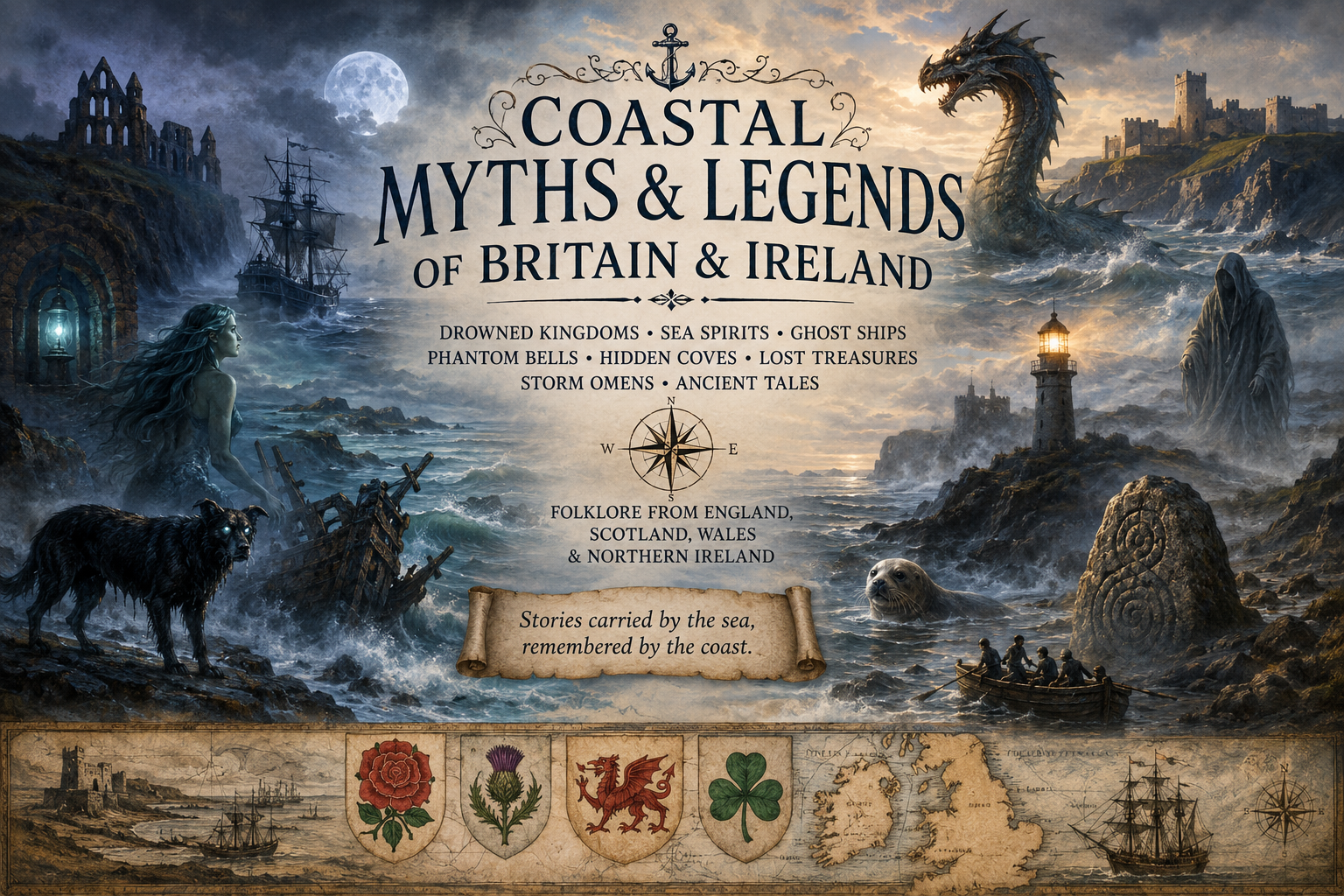
The coast of Angus, extending north from the Tay approaches towards the headlands beyond Arbroath and Auchmithie, has long carried a restrained body of maritime folklore associated with its caves, abrupt cliffs and unsettled North Sea weather. Local tradition contains recurring references to sounds and lights perceived near sea caves before periods of heavy weather, though accounts vary considerably and are rarely described in dramatic terms. Such beliefs appear to have formed gradually from generations of close observation by fishermen and coastal communities rather than from any single legend firmly attached to the district.
The waters off the North Highland coast, particularly those leading into and through The Minch, are long associated in maritime tradition with accounts of the so-called Blue Men of the Minch. These references are most often placed in the channel between the mainland of northern Scotland and the Outer Hebrides, a region exposed to Atlantic swell, rapidly changing weather, and complex tidal interactions. The tradition is widely recorded in oral accounts and later folkloric compilations, though its origins remain uncertain and should be regarded as cultural interpretation rather than documented occurrence.
Along the County Down coast, particularly between Carlingford Lough and the outer reaches of Strangford Lough, traditions concerning seal-people, commonly termed selkies, have long formed part of local maritime folklore. The stories are consistent with wider North Atlantic coastal traditions found in Scotland, Orkney and parts of western Ireland, though the County Down accounts are generally restrained in character and closely tied to fishing communities and isolated shore settlements. The folklore is strongest around rocky inlets, tidal narrows and exposed beaches where seals are commonly observed from the sea.
Off the entrance to the River Tyne, beneath the cliffs and fortifications of Tynemouth, the Black Middens have long carried a reputation out of proportion to their small extent. The rocks lie partly awash near low water and are difficult to distinguish in heavy weather, particularly under conditions of broken sea and poor visibility. Their position close to the harbour approach, combined with strong tidal movement and frequent easterly swell from the North Sea, led to numerous wrecks over several centuries. From this history arose a body of local maritime folklore strongly associated with the Tyne & Wear coast.
The stretch of coast between Bridlington and Filey, dominated by the chalk headland of Flamborough Head, is well known to mariners for its prominent landfall, strong tidal streams and the abrupt transition between the shallow waters of Bridlington Bay and the deeper approaches of the North Sea. Within this setting there exists a modest body of local tradition, occasionally referred to in antiquarian notes and coastal lore, which makes passing reference to a dragon-like creature associated with the headland. These accounts are not uniform, nor consistently documented, and should be regarded as regional folklore rather than established narrative tradition.
The broad tidal basin of The Wash has long carried associations with the reported loss of King John’s baggage train in October 1216. The episode remains among the best-known items of English coastal folklore connected with estuarial waters, and is firmly rooted in the difficult tidal conditions of the region rather than in later embellishment. Although the exact circumstances remain uncertain, the story persists in local maritime tradition along the shores of Norfolk and Lincolnshire, particularly in relation to the dangerous crossings between the former tidal channels of the Wellstream and neighbouring sands.
The wide reaches of the Thames Estuary and the low coast of North Kent have long carried a subdued body of maritime folklore associated with warnings heard or seen upon the sands. Accounts vary considerably, though most concern indistinct cries, figures, or signals reported near drying banks and channels where the tides run hard and visibility is often poor. The tradition is neither among the strongest nor most elaborate on the English coast, yet it has remained persistent in estuarial communities from Sheerness and Queenborough eastward towards Faversham, Whitstable and the approaches to the Medway.