Main Menu
- Welcome Aboard, Swabby!
- Follow The Project
- A Rust Bucket with Intentions - Rebuilding a 1980s Steel Trawler into a 60-Foot Liveaboard Coastal Cruiser
- Not a Yacht. A Possibility - Why a Neglected Steel Trawler Replaced a Westsail 40
- From Possibility to Proof - The Boat Survey That Measured Reality
- Demolition Before Design - Clearing the Past to Understand the Work Ahead
- Shore Power and Hope - Discovering the True State of the Boat’s Systems
- Foundations You Cannot See - Frames, Decks, and the Work That Makes Everything Else Possible
- Designing What Cannot Be Undone - Systems Architecture and the End of Escape Routes
- Containment Before Comfort - Rebuilding the Exterior to Survive the Coming Cold
- The Work No One Sees - Stripping Insulation and Preparing Steel for What Comes Next
- Still Moving Forward - Cold Steel, Shortening Days, and Measured Progress
- Preserve, Plan, Return - How Winter Shapes the Pace of a Liveaboard Refit
- Season Two Begins - Rebuilding a 48ft Trawler into a 60ft UK Liveaboard Cruiser
- Insights
- From Survey to Action in Liveaboard Trawler Refits - Turning Observations into Prioritized, Practical Decisions
- Labour vs. Momentum in Liveaboard Trawler Refits: Balancing Effort, Pace, and Sustainable Progress
- Managing a Liveaboard Refit Under UK Weather Constraints - Daylight, Rain, and Temperature as Project Partners
- Sequencing Steel Repairs in Older Trawlers: Stepwise Strategies, Lessons from Logs, and Practical Guidance for Hull, Deck, and Bulkhead Work
- Designing Backwards from Use: Letting the Boat Decide Its Role
- Inherited Structure and False Constraints: Knowing What Looks Structural but Isn’t
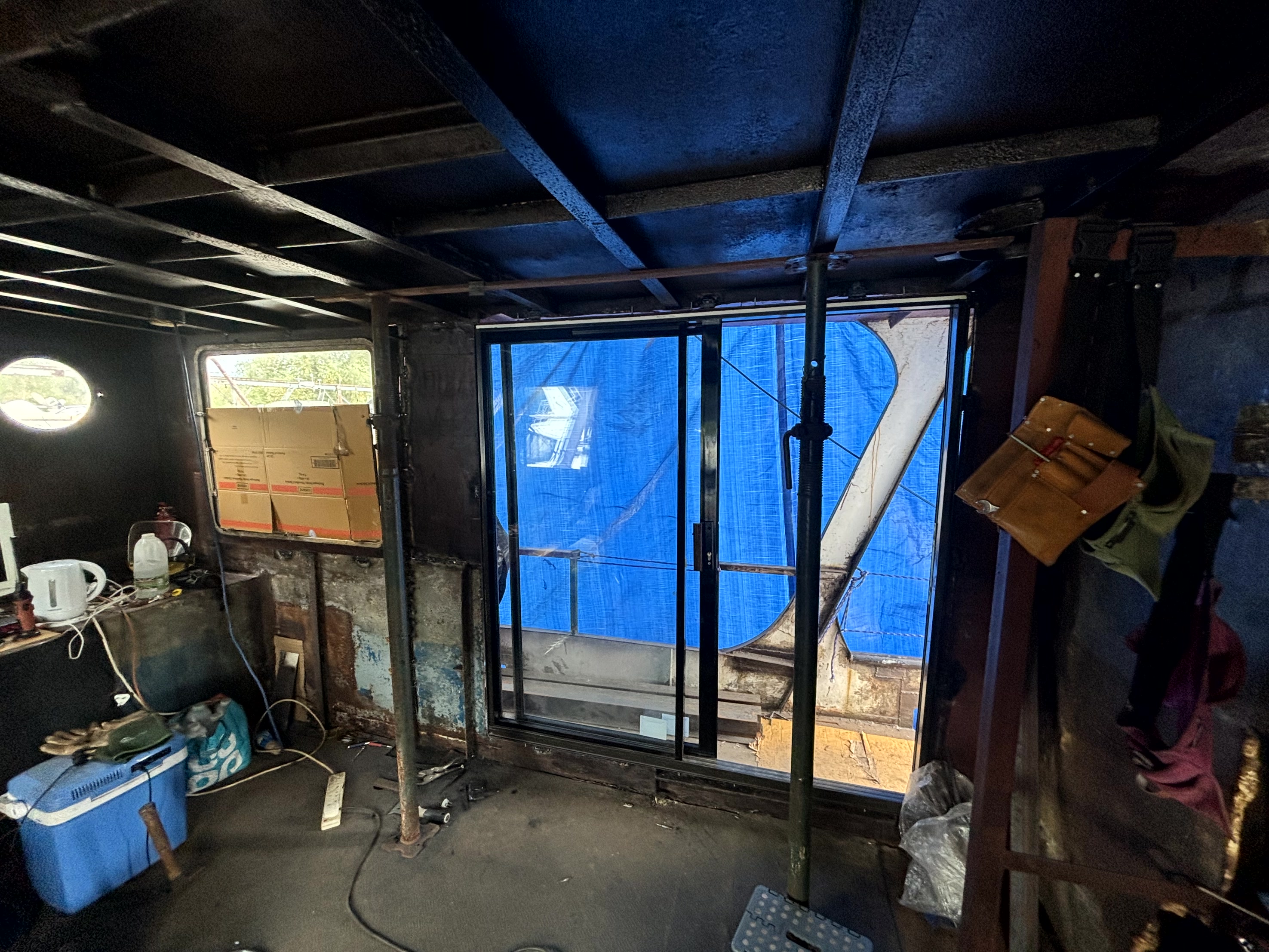
- Opening Up the Saloon: How Structure Dictates Doors and Windows
- Finding the Spine: How Structure Determines Circulation Before Space Exists
- Stairs, Sightlines, and Steel: Organising Vertical Movement Before It Exists
- Carrying Loads Vertically: Rebuilding the Saloon Deck and Accommodation Deckhead
- From Wheelhouse to Volume: Removing a Level Without Losing Strength
- Embracing Delays: How Extended Pauses Can Improve Liveaboard Refit Outcomes
- Working With the Boat’s Rhythm: How Weather and Light Dictate Task Selection
- Balancing Visibility and Progress: Recognizing Invisible Work in Liveaboard Refit
- Patience as a Structural Tool: Planning the Sequence for Seasonal Advantage
- Photography & Media
- Challenges Encountered & Lessons Learned
- Sequencing Structural Steelwork in Older Steel Boats
- Triage as a Skill: Choosing What Not to Do in Long Boat Projects
- Weather-Driven Work Sequencing in UK Boatyards
- Structural Debt in Older Working Boats
- Why Liveaboard Conversions Fail (and How to Avoid It)
- The Point of No Return in Long Boat Projects
- Temporary Measures That Preserve Long-Term Stability in Steel Boat Refits
- Distance and Logistics: How Travel Shapes Work on UK Liveaboard Projects
- Temporary Accommodation as a Force Multiplier in Liveaboard Refits
- Iterative Adjustment: The Role of Measurement and Re-Assessment in Steelwork
- Knowledge Base
- Maintenance & Upkeep
- Hull & Deck Maintenance
- Advanced Maintenance Tips: Preserving Hull and Deck Value Over Time
- Protective Coatings and Treatments for Deck and Hull Longevity
- Inspection and Maintenance Routines for Hulls and Decks
- Surface Preparation and Coatings for Long-Lasting Hull Protection
- Deck Fittings, Fastenings, and Preventing Water Ingress
- Structural Hull Repairs: When Maintenance Becomes Rebuilding
- Preventing Osmosis and Moisture Damage in Boat Hulls
- Deck Construction Methods and How to Maintain Them Properly
- Understanding Hull Materials and Their Maintenance Requirements
- Traditional and Modern Hull Construction Techniques Explained
- Mechanical & Engine Care
- Routine Inspections and Long-Term Engine Care Strategies
- Troubleshooting Common Outboard Engine Problems
- Winterisation and Seasonal Engine Preparation for Boats
- Propeller, Drive Unit, and Transmission Maintenance for Engine Efficiency
- Battery Care and Electrical System Maintenance for Boat Engines
- Lubrication Routines and Oil Care for Marine Engines
- Cooling System Maintenance and Preventing Engine Overheating
- Fuel System Care and Optimisation for Boat Engines
- Diagnosing and Preventing Common Boat Engine Faults
- Boat Engine Maintenance Essentials
- Seasonal Care
- Seasonal Safety Checks: Preventive Upkeep for Your Boat
- Electrical Systems and Battery Care: Seasonal Boat Maintenance
- Interior and Upholstery Care: Seasonal Protection for Your Boat
- Hull Protection: Seasonal Maintenance for Longevity
- Winterising Your Boat: Engine and Plumbing Care
- Year-Round Boat Maintenance: Routine Care Between Seasons
- Autumn Boat Maintenance: Preparing for the Off-Season
- Summer Boat Maintenance: Protecting Your Vessel in the Heat
- Spring Commissioning: Preparing Your Boat for the New Season
- Preparing Your Boat for Winter Storage
- Boat Maintenance and Upkeep: A Practical Guide for Safe and Reliable Ownership
- Hull & Deck Maintenance
- Liveaboard Lifestyle
- Daily Life On Board
- Mental Wellbeing and Lifestyle Balance on a Liveaboard
- Daily Routines and Time Management on a Liveaboard
- Onboard Safety and Emergency Preparedness for Liveaboards
- Storage and Organisation Strategies for Liveaboard Life
- Managing Waste and Sanitation on a Liveaboard: Staying Hygienic Afloat
- Maximising Comfort Aboard a Small Boat: Making Your Cabin a Home
- Water and Power Management on a Liveaboard: Staying Self-Sufficient Afloat
- Daily Cleaning and Upkeep on a Liveaboard: Keeping Your Boat Shipshape
- Efficient Galley Organisation on a Liveaboard: Making the Most of Small Spaces
- Morning Routines on a Liveaboard: Start Your Day Right
- The Liveaboard Lifestyle: Freedom, Simplicity and Life on the Water
- Provisioning & Storage
- Long-term liveaboard living is not supported by individual storage tricks, but by reliable systems
- Waste management is an unavoidable part of the liveaboard lifestyle
- Knowing what you have on board is just as important as having it
- Food is only part of the provisioning picture for liveaboard life
- Extended cruising places unique demands on liveaboard provisioning and storage
- Space is the most valuable resource in the liveaboard lifestyle
- Dry goods form the backbone of reliable liveaboard provisioning
- Cold storage plays a critical role in comfortable liveaboard living
- An organised galley is central to comfortable liveaboard living
- Smart food provisioning is one of the foundations of a successful liveaboard lifestyle
- Community & Social Life
- Maintaining Harmony: Conflict Resolution and Social Etiquette in Liveaboard Communities
- Staying Connected: Communication and Social Networks for Liveaboards
- Family Life Afloat: Nurturing Intergenerational Social Connections on Liveaboard Boats
- Traditions and Celebrations: Building Community Through Shared Rituals Afloat
- Cruising Networks: Maintaining Community While Moving Afloat
- Shared Facilities: How Communal Spaces Shape Liveaboard Social Life
- Hosting Aboard: Creating Warm and Welcoming Social Spaces Afloat
- Staying Connected: Online Communities and Communication for Liveaboards
- Life at Anchor: Creating Community Beyond the Marina
- Marina Communities: Building a Social Life on the Pontoon
- Daily Life On Board
- Navigation & Seamanship
- Basic Seamanship
- Anchoring Techniques and Safety: A Guide for Beginners
- Knots and Ropework for Beginners: A Guide to Safe Line Handling
- Sail Handling for Beginners: Mastering the Basics of Seamanship
- Man Overboard Drills: Essential Safety for Boaters
- Weather Awareness: Essential Knowledge for Safe Boating
- Navigation Charts and Compass Use: A Beginner’s Guide
- Understanding Tides: A Beginner’s Guide to Coastal and River Navigation
- Anchor Handling: Mastering the Art of Safe and Effective Anchoring
- Mooring Techniques: A Guide to Safe and Effective Docking
- Introduction to Basic Seamanship: Essential Skills for Every Boater
- Boat Ropework: Essential Knots, Ropes, and Seamanship Skills for Safe Boating
- Electronics & Instruments
- Optimising Your Voyage: Data Logging and Performance Analytics with Marine Electronics
- Maintaining Confidence at Sea: Troubleshooting and Calibrating Marine Electronics
- Integrated Marine Electronics: How Synergy Between Systems Transforms Navigation
- Mastering Marine Navigation: Essential Electronics and Instruments for Modern Boating
- Electronic Depth Sounders: Navigating Safely with Sonar Technology
- AIS Systems: Real-Time Vessel Tracking for Safer UK Waters
- Marine Autopilot Systems: Precision and Ease on UK Waters
- Marine Radar Systems: Enhancing Collision Avoidance on UK Waters
- Marine GPS Systems: Navigating with Confidence on UK Waters
- Safety At Sea
- Night Navigation and Reduced Visibility Safety – Staying Safe When Visibility Is Limited
- Emergency Navigation When Electronics Fail – Staying Safe Without GPS
- Anchoring Safely – Techniques, Risks and Best Practice for Boaters
- Pilotage Techniques for Harbours and Confined Waters – Navigating Safely in Close Quarters
- Safe Watchkeeping and Lookout Practices – A Cornerstone of Safety at Sea
- Weather Awareness and Forecasting for Mariners – A Practical Guide to Staying Safe at Sea
- Using Charts and Electronic Navigation Safely – Best Practice for Modern Boaters
- Collision Avoidance at Sea – Understanding the COLREGs Simply and Safely
- Understanding Tides and Tidal Streams for Safer Boating
- Passage Planning for Safety at Sea – A Practical Guide for Recreational Boaters
- Navigation and Seamanship: The Foundation of Confident Boating
- Basic Seamanship
- Sailing & Cruising Adventures
- Cruising Logs
- Tips and Tricks for Keeping a Consistent and Useful Cruising Log
- Personal Stories and Reflections: Using Your Cruising Log as a Sailing Journal
- Recording Weather and Sea Conditions in Your Cruising Log
- Digital Tools and Apps for Modern Cruising Logs
- How to Use Your Cruising Log for Boat Maintenance and Safety Tracking
- Maintaining a Cruising Log for Long Ocean Passages
- Daily Logging Routines for Efficient Sailing
- Creative Ways to Personalise Your Cruising Log
- Using Cruising Logs for Weather and Navigation Tracking
- The Essential Guide to Keeping a Cruising Log
- Destinations & Itineraries
- Sailing and Cruising Adventures: Discover Freedom, Exploration and Life Under Sail
- Family and Beginner-Friendly Sailing Itineraries
- Multi-Day Passage Planning: Logistics and Tips for Cruisers
- Cultural and Historical Cruising Itineraries: Exploring Heritage by Boat
- Seasonal Wildlife and Nature-Focused Cruising Itineraries
- Scenic Sailing Routes: Coastal and Inland Waterway Highlights for Cruisers
- UK and European Harbours: Guides and Mooring Tips for Cruisers
- Weekend Sailing Trips: Quick Escapes Along the UK’s Coast and Inland Waterways
- Planning Multi-Day Passages and Extended Cruising Trips in the UK and Beyond
- Seasonal Sailing Itineraries: Planning Your UK and European Cruising Adventures
- Exploring Coastal and Inland Waterway Routes in the UK: A Guide to Scenic Sailing Adventures
- Weather & Passage Planning
- Seasonal Passage Planning UK: Timing Cruises for Safety and Enjoyment
- Coastal Gale Navigation UK: Strategies for Weathering Strong Winds Safely
- Safe Anchoring UK Waters: Choosing Shelter and Holding for Peace of Mind
- UK Coastal Passage Weather: Forecasting and Planning for Safe Cruising
- Pilotage and Harbour Guides UK: Navigating Safely and Confidently
- UK Multi-Day Passages: Planning Extended Voyages with Confidence
- Tidal Rivers UK: Navigating Flow, Slack Water, and Coastal Transitions
- Heavy Weather Sailing UK: Preparing for Strong Winds and Rough Seas
- Seasonal Sailing UK: Adapting Passage Planning to the British Cruising Year
- UK Coastal Passage Planning: Choosing the Right Weather Window for a Safer Cruising Adventure
- Cruising Logs
- Nautical Industry News & Trends
- Boat Building Techniques
- Steelwork & Welding
- Steel Boat Building Workflow: Integrating Steelwork and Welding from Keel to Deck
- Welding Access in Steel Boat Building: Planning for Safety, Quality, and Inspection
- Professional vs Amateur Steel Boat Welding: Why Workmanship Matters
- Corrosion at Welded Joints in Steel Boats: Causes, Risks, and Prevention
- Fatigue in Welded Steel Boats: Understanding Cracks, Stress, and Longevity
- Steel Boat Repair Welding: Techniques for Safe and Lasting Structural Repairs
- Welding Distortion Control in Boat Building: Keeping Steel Hulls Fair and True
- Steel Boat Hull Construction: Frames, Bulkheads, and Structural Strength
- Welding Techniques for Steel Boats: Precision, Safety, and Structural Integrity
- Steel Boat Building Techniques: Foundations of Modern Marine Construction
- Woodwork & Joinery
- Fibreglass & Composites
- Plumbing & Electrical
- The Art and Science of Boat Building: Techniques That Shape Life on the Water
- Steelwork & Welding
- Tools & Equipment
- Design & Planning
- Maintenance & Upkeep
- Admin Articles
- Admin Contacts
- HamstersAHOY Sitemap